


How to register a resident in Diia.City? What is it and how does it work?


Diia.City is a state "sandbox" for IT companies: a 9% tax on withdrawn capital, a personal income tax for specialists of only 5%, plus legal gig contracts and official booking of key employees. In the article, I explain who can join the regime, what criteria to have (a minimum of 9 people on the team, an average remuneration of €1200, and 90% of income from IT activities), which documents to submit online through the Diia portal, and what a resident's reporting looks like. I break down the advantages and risks with practical examples so that you can honestly calculate whether Diia.City is right for your business.
This article is for those who have already built an IT business or are just dreaming about launching their own startup. Do you want to work transparently, attract investments, avoid unexpected inspections, and protect your team even in the most challenging times? Then you definitely need to understand what Diia.City is and why this regime is a real game changer for Ukrainian IT today - and how it helps companies move away from the outdated FOP model toward modern gig contracts. We will break down practical examples - who can become a resident, what advantages it offers, and what tax and legal nuances you should pay attention to. And also - how Diia.City residency allows companies to reserve key specialists.
You may also be interested in
- Full accounting support for Diia.City
- Diia.City – taxes and taxation
- Diia.City – employee reservation
- Diia.City – gig contracts
- Company registration
- Registration of Diia.City residents
- Obtaining critical status + reservation
- Critical status for Diia.City residents
What is Diia.City
There are thousands of ambitious IT entrepreneurs in Ukraine who aim to grow their startup into a global player. But the old taxation system and complicated legal requirements often become a real burden for development - and scare people away right at the start. Sounds familiar?
That is exactly why the government launched the special regime Diia.City. Imagine a next-generation business passport: instead of the classic corporate income tax - you have a tax on withdrawn capital, instead of traditional employment agreements - gig contracts, European-level IP protection, investor-friendly guarantees, and many more benefits designed for the digital economy.
The rules of the game are defined by the Law of Ukraine No. 1667-ІХ “On Stimulating the Development of the Digital Economy in Ukraine”.
Becoming a resident is voluntary: a company submits an application to the Ministry of Digital Transformation, and once it is added to the register - you are officially part of the Diia.City “club”.
By the way, for most IT companies that want to obtain employee reservation status, Diia.City residency is now practically the only effective option. In addition, Diia.City residents receive more loyal tax conditions, look more attractive to foreign clients, and inspire much more confidence among investors. However, many CEOs and business owners still worry: “Will the budget handle the new model?”, “Will international partners understand and appreciate Diia.City?”, “Is it risky to switch from the familiar FOP scheme?”. And that’s exactly what we’ll break down further.
If questions arise - don’t wait. Reach out to an accountant or legal expert who can help you understand the details specifically for your business.
How Diia.City differs from the classic IT model (with FOP contractors)
Diia.City is not just another “government initiative”, but a unique concept that previously did not exist in Ukraine - or in most countries around the world. Initially, this regime was designed solely for Ukrainian IT, but over time, defense-tech companies (for example, drone manufacturers) and developers of innovative prosthetics were also included.
What’s the core idea? Imagine an “ecosystem” where the state officially recognizes the unique way the IT sector operates and solidifies it in law. It’s like receiving an “official pass” to use flexible collaboration formats instead of outdated and rigid employment agreements.
Additionally, Diia.City offers:
- Significantly lower taxes on payments to specialists compared to standard payroll taxes in Ukraine.
- The ability to legally use globally popular instruments: NDA, stock options, convertible loans - all the tools that have long been standard in the West can now be officially applied in Ukraine.
- And most importantly - an emphasis on innovation and fast growth. Diia.City is designed so that companies can scale without bureaucracy.
Why companies choose Diia.City: key advantages
- Favorable and transparent taxation of specialist remuneration
Diia.City offers low tax rates: personal income tax (PIT) - only 5%, unified social tax - 22% of the minimum salary (not the actual salary), plus a 5% military levy. This is almost like the popular FOP model - but now fully legal and official. There is no risk that the tax authorities will show up one day and say: “Let’s reclassify everything and add huge penalties.”
- Tax on withdrawn capital (TWC)
Instead of the standard 18% corporate income tax, a company may choose the Tax on Withdrawn Capital (TWC) at 9%. Why is this appealing? Because you only pay tax when you actually withdraw money (for example, when paying dividends).
As long as you reinvest - taxes are minimal or nonexistent. Convenient, isn’t it? Especially for businesses that want to scale and avoid “eating up” part of their turnover on taxes right away.
- Flexibility in hiring: gig contracts
Diia.City residents can officially conclude gig contracts (and these are NOT traditional employment agreements!).
Imagine: a company does not need to set a work schedule - only the final result. Need a ready project by September 15? Just specify that in the contract. Thanks to this, businesses can focus on the product rather than counting hours or days an employee spent at the laptop, while the specialist manages their time the way they prefer. The only requirement - deliver the final result.
- Transparency in legal matters
“What about NDAs?” - clients often ask. Previously, NDAs were not forbidden in Ukraine, but they also weren’t clearly regulated. Under Diia.City everything becomes simpler: clear rules, proper legal framework, fewer risks. The same applies to stock options, convertible loans, and other instruments popular among global investors.
Imagine: your startup is looking for investors, and you already have legal options and NDAs aligned with international standards - your chances of success grow significantly.
All these nuances may look complicated at first, so it’s best to discuss them with a professional accountant or legal expert. Scheduling a consultation is the first step toward confidence in choosing the right cooperation model!
How to become a Diia.City resident
Becoming a Diia.City resident is not just a “checkbox” for image: reduce taxes, attract stronger specialists, and look more appealing to investors. It is a strategic decision that changes your taxation model and the rules of interaction with your team.
So where should you start? First - honestly answer the question: what does your company actually do?
If your company operates in IT, technology, or innovation, and your main income consistently comes from these activities, then Diia.City residency is definitely worth considering. But simply “fitting the industry” is not enough. It is important to make sure your company can maintain this activity profile in the future and remain within the required criteria.

To understand this, you need to take several steps:
- Assess benefits and risks. If you currently pay 18% corporate income tax, in Diia.City you can switch to the 9% tax on withdrawn capital (TWC). It looks attractive, but remember about audits, strict reporting, and income control.
- Review your collaboration model. Are you ready to replace FOP contractors with gig contracts? This is not only about legal changes but also about a new internal company culture.
- Recalculate your economics. How much money will actually remain after the transition? Will it allow you to reinvest in growth and properly motivate your team?
- Taxes for employees. In Diia.City, personal income tax is only 5%, so specialists receive more net income, and the company saves on payroll costs. This is a strong competitive advantage in attracting talent.
Want to get a consultation as soon as possible?
Leave a request and our specialist will contact you shortly
Who can become a Diia.City resident? Requirements and entry criteria
Any legal entity registered in Ukraine can become a Diia.City resident - regardless of where your office or team is physically located, and even if you work fully remotely.
The key requirement - compliance with the established criteria.
Your company has been working remotely for years or has no office in Kyiv at all? This is not a problem. The only requirement is Ukrainian registration and compliance with Diia.City rules.
If you are unsure whether your legal form is suitable - it’s better to consult an accountant or legal expert right away to avoid mistakes at the start.
1. Types of activity
The company must operate in specific fields, such as:
- computer programming, IT consulting, operation of computer equipment;
- publishing computer games and other software;
- providing software products online and offering web services for delivering software applications;
- educational activities in the field of information technologies;
- web portal operation;
- data processing and related activities (excluding providing data processing infrastructure, hosting, or hosting services);
- research and experimental development in natural and technical sciences related to information technologies;
- conducting marketing campaigns and providing advertising services using software developed with the participation of a Diia.City resident, online and/or on user devices;
- activities of esports organizers, esports teams, specialized computer centers and/or clubs for esports competitions, as well as esports broadcasting studios;
- cybersecurity of information and communication systems;
- designing, researching, testing technologies, devices, and robotics systems using computerized control systems;
- providing services related to virtual asset circulation.

2. Salary level
Starting from the month after obtaining residency status, the company’s average monthly remuneration must be at least 1,200 euros (according to the NBU rate).
3. A team of at least 9 people
The company must have at least 9 employees and/or gig-specialists. You can combine them flexibly: for example, 5 employees + 4 gig specialists.
4. Share of qualified income
At least 90% of the company’s income must come from the activities permitted for Diia.City - both for the first three months after joining and for every subsequent year.
Simplified conditions for startups
Young companies benefit from relaxed requirements to support innovative ideas and give them a better chance in the market.
In which cases your company cannot become a Diia.City resident?
You’ve already assessed the benefits and are ready to apply? Great. But now it's important to ensure that your company does not have any “prohibited” characteristics that automatically disqualify it from residency.
The law clearly defines 13 “anti-criteria.” If a company meets at least one of them, residency is impossible.
- Registered under the legislation of another country or located in another country.
- Has ≥25% state or municipal ownership in its authorized capital.
- Is a non-profit organization.
- Violates the rules for disclosing information about beneficiaries or ownership structure.
- Has owners or ultimate beneficiaries from an aggressor state or companies registered there. Exception: ownership through publicly traded companies on international exchanges (except those registered in the aggressor state).
- Has ≥25% ownership belonging to legal entities from countries included in the FATF “black list”.
- Is subject to Ukrainian or international sanctions, or is an affiliated person under sanctions.
- Declared bankrupt.
- Is in the process of termination (except transformation).
- Has a tax debt exceeding 10 minimum wages for more than 30 days.
- Violates licensing or registration requirements related to virtual asset activities.
- Engages in organizing or conducting gambling (except providing services in this field).
- A non-financial criminal-law measure under paragraph 4, part 2, Article 96-10-1 of the Criminal Code of Ukraine has been applied to the company, within the period specified in the court decision.
How is this checked?
When applying, the company confirms the absence of such characteristics. Then the Ministry of Digital Transformation submits requests: to the tax service (to verify tax debts and income), to the Pension Fund (employees), to the Unified State Register (ownership structure, directors, etc.).
What if the company is a startup?
Startups enjoy softer rules, but only temporarily. If the company does not yet meet all standard requirements but wants residency, it may use the “grace period” - until December 31 of the calendar year following the year of obtaining residency.
However, to use this simplification, the company must: meet the requirements regarding types of activity (and receive at least 90% of income from them); not fall under the anti-criteria; be registered no earlier than 24 months before applying; have income not exceeding the limit for single tax group 3 (10 091 049 UAH) in the year preceding the application, in the year of application, in the year of obtaining residency, and the following year.
Would you like to consult a specialist as soon as possible?
Leave a request and our specialist will contact you shortly
How to register a Diia.City resident
In reality, the application process is extremely simple and entirely online. No queues in offices, no permits or licenses - only digital format. Once you ensure your company meets all requirements, you just need to submit an application.
By the way, here is a step-by-step video guide from Diia showing how to submit the application.
To register, you need:
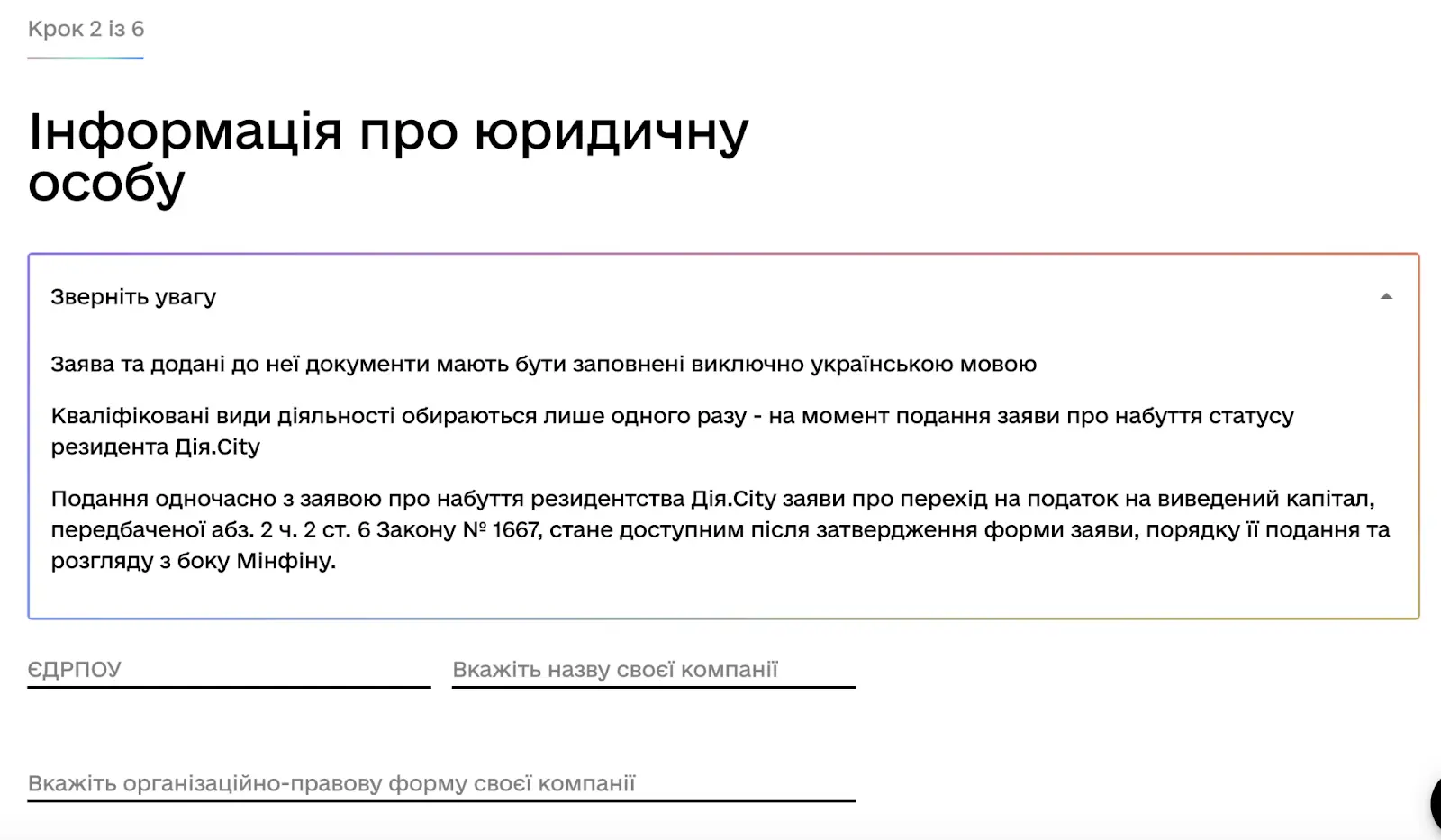
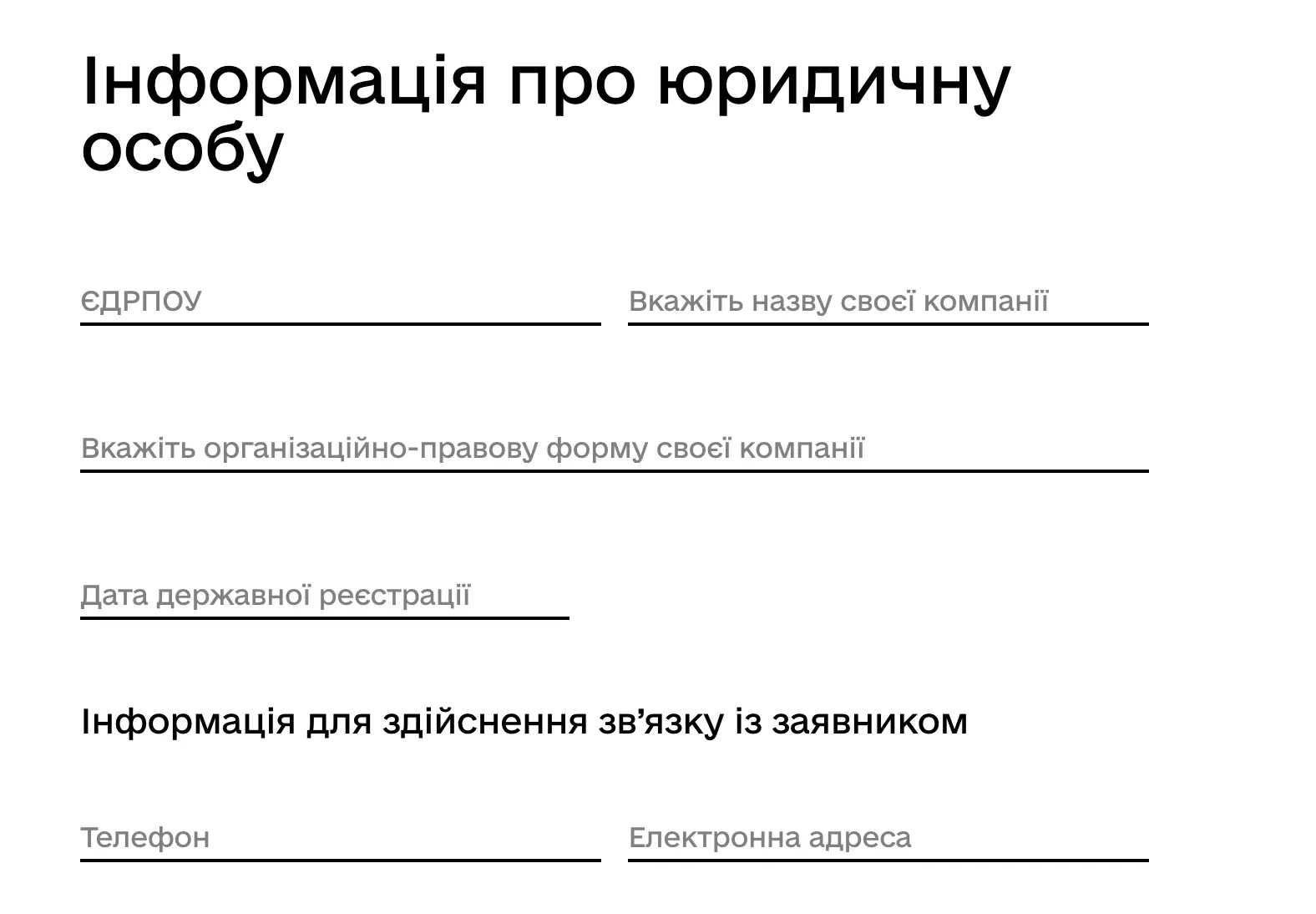
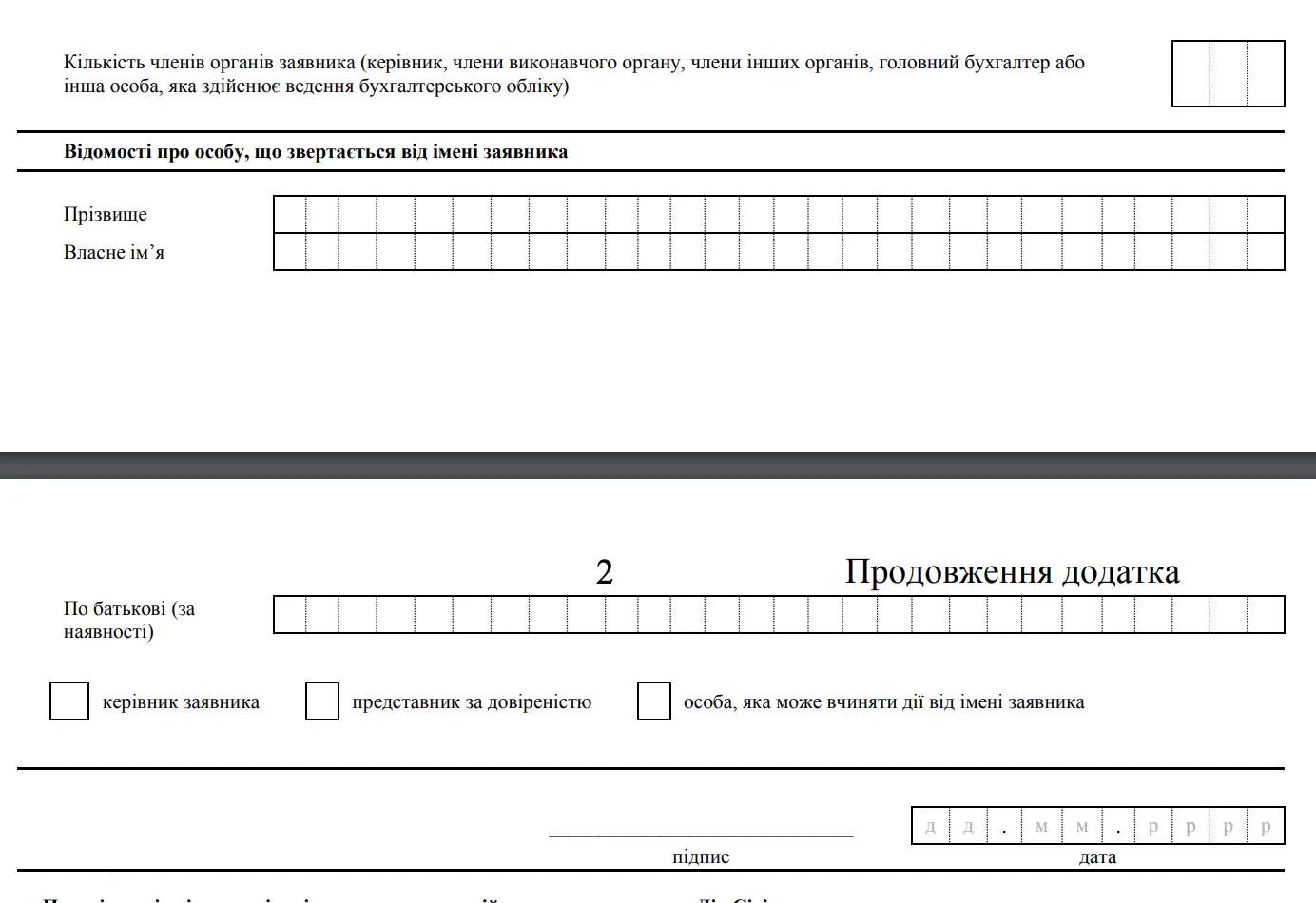
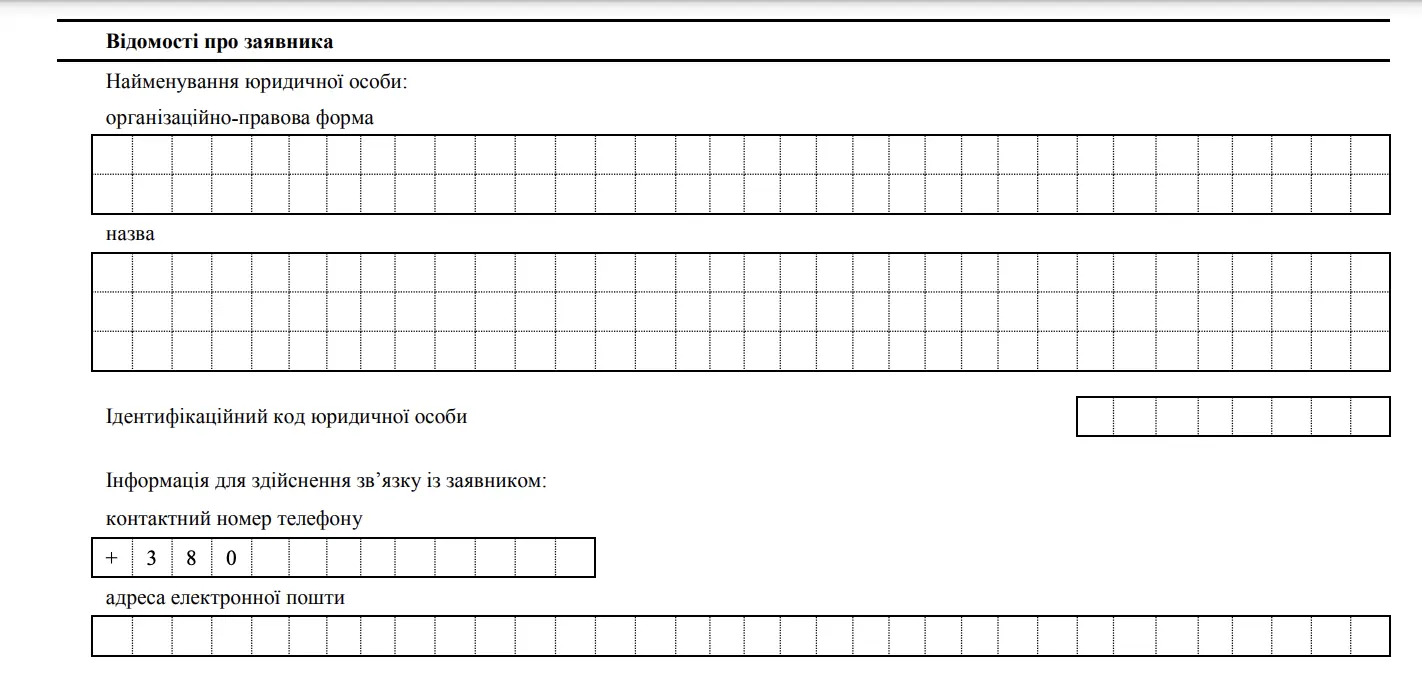
- Fill in applicant details: EDRPOU code, name, and legal form of the company.
- Specify the types of activities the company plans to perform as a resident.
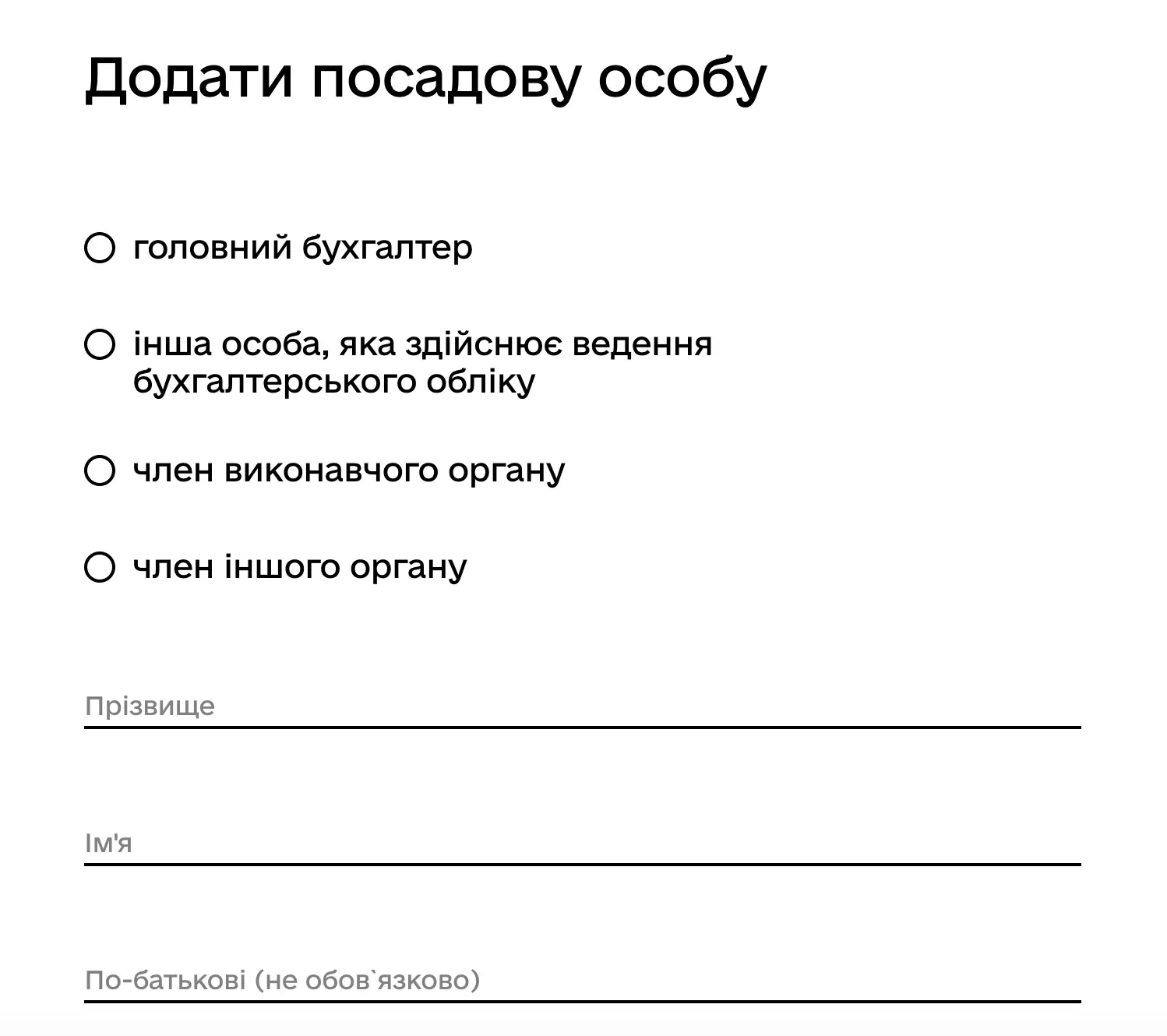
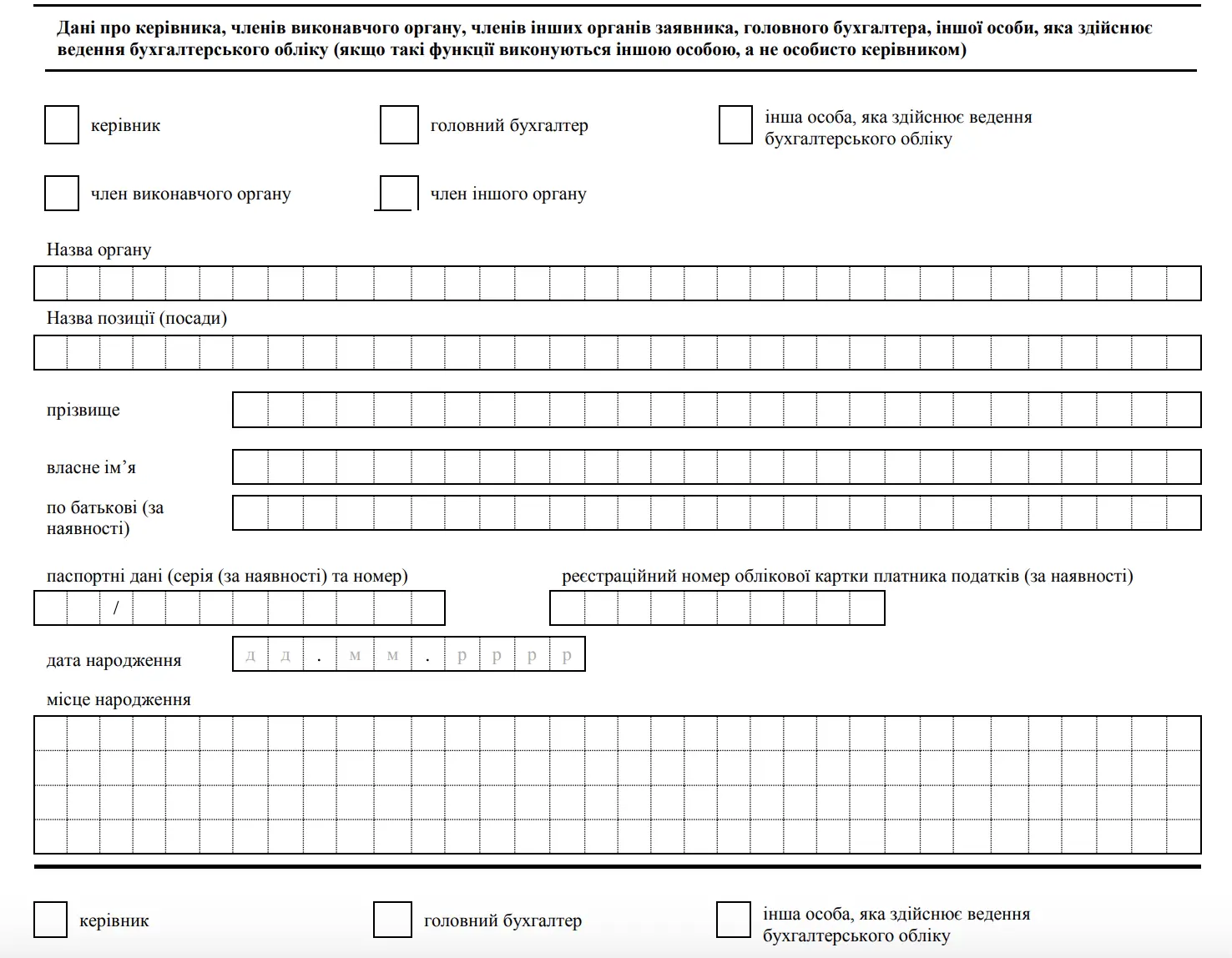
- Enter personnel data.
- Add a power of attorney if necessary.
- Sign the application with an electronic signature.
By law, the Ministry of Digital Transformation must respond within 10 working days. But in practice everything happens much faster. And now - an important nuance that is often overlooked! The principle of “silent consent” applies. This means: if you do not receive a response within 10 days, you may consider your Diia.City residency approved automatically. Convenient, right?
The Ministry's decision - return of the application without review, approval, or refusal - is sent to your e-mail with full explanations. And all approved companies are added to the official Registry of Residents of Diia.City. You receive notifications both by e-mail and in your Diia account.
Why your residency application may be returned without review

The company's registration data is incorrect or contains errors.
There is no record in the Unified State Register confirming the company's registration - for example, if an individual entrepreneur (FOP) tries to obtain residency.
No confirmation has been provided that the company does not fall under the anti-criteria.
No confirmation has been provided that the company will comply with the established requirements.
The Unified State Register has no information about the authorized person who submitted the application, or their authority cannot be confirmed (for example, if a representative applies without a power of attorney).
The applicant requested the return of the application.
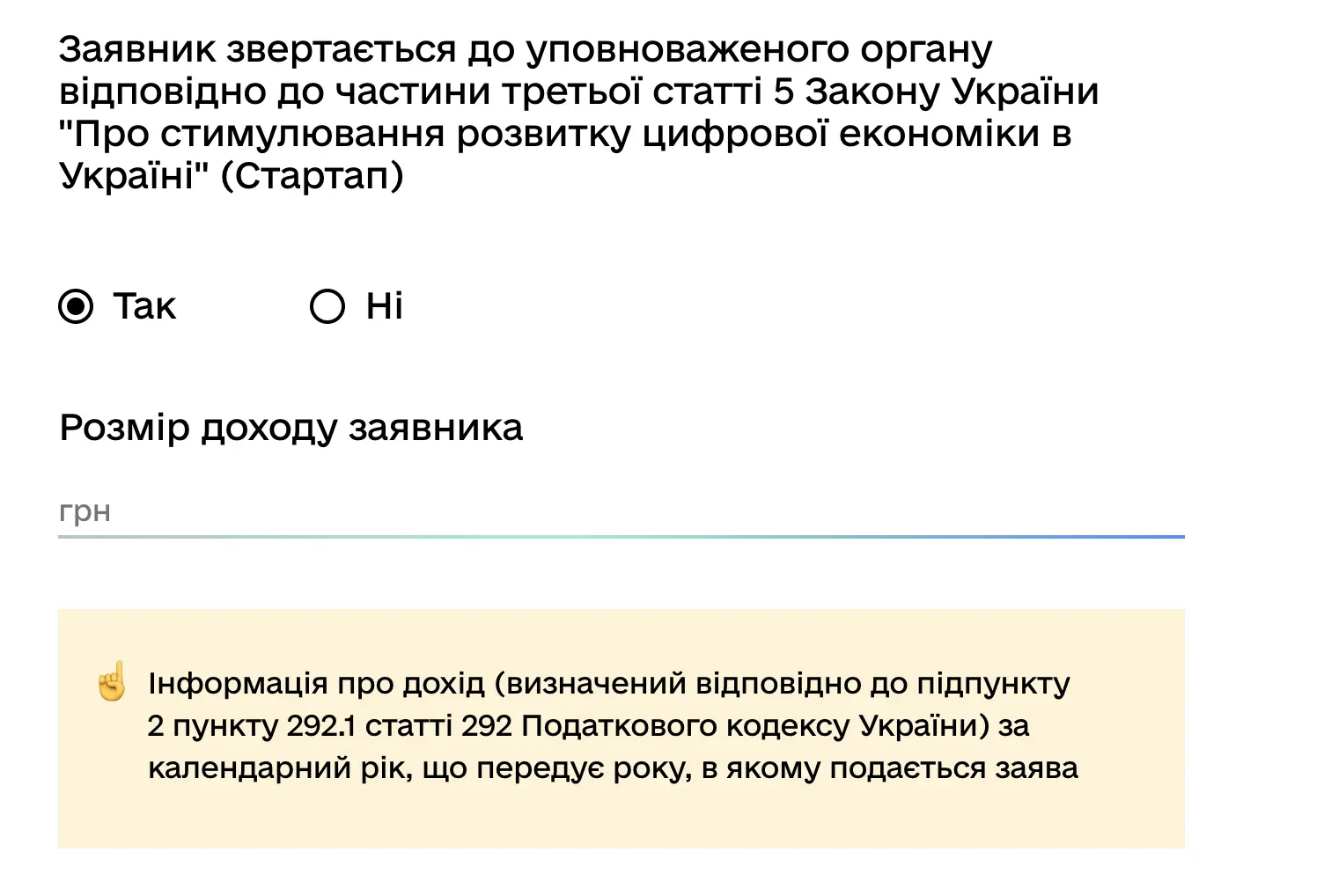
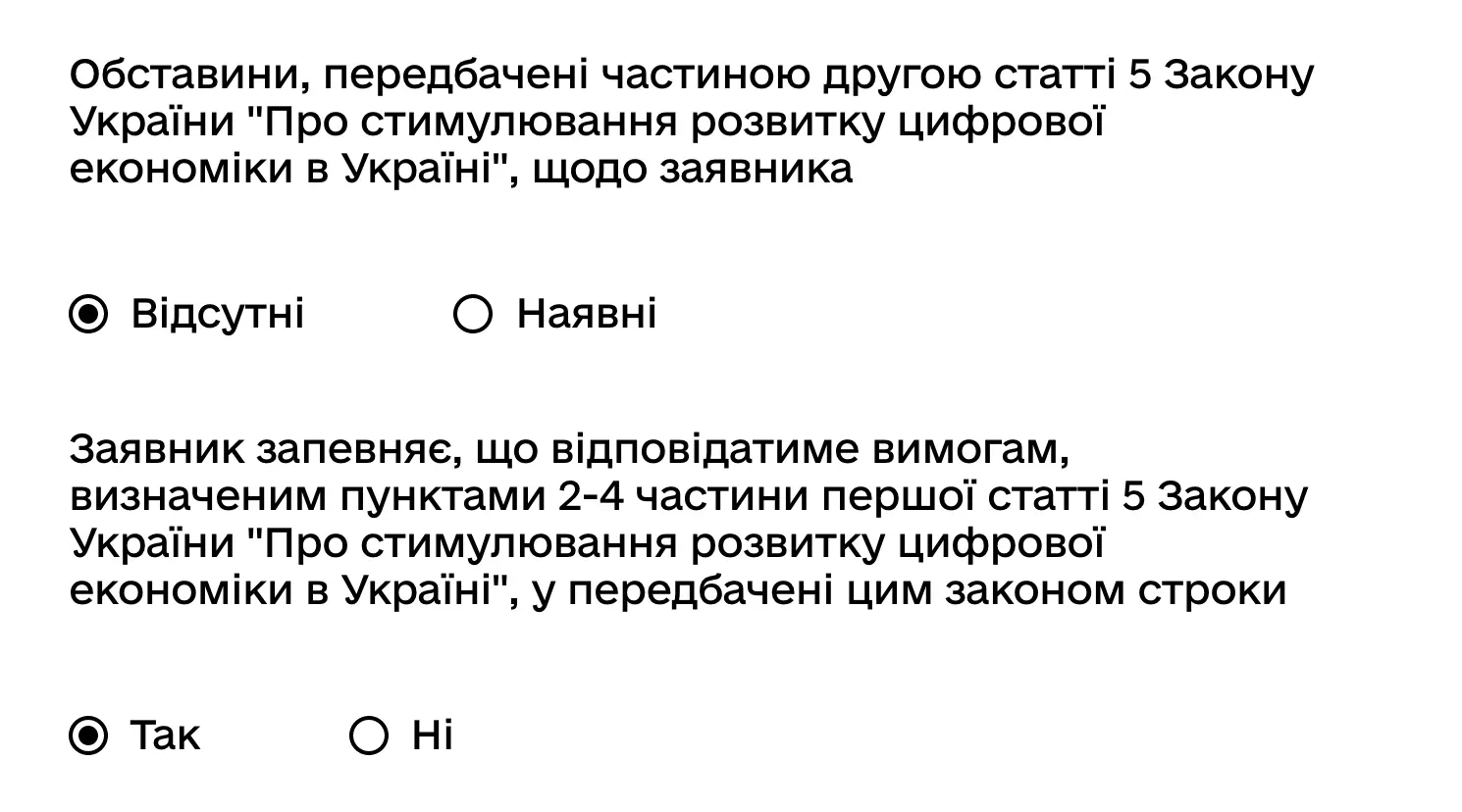
Examples of applications and instructions:


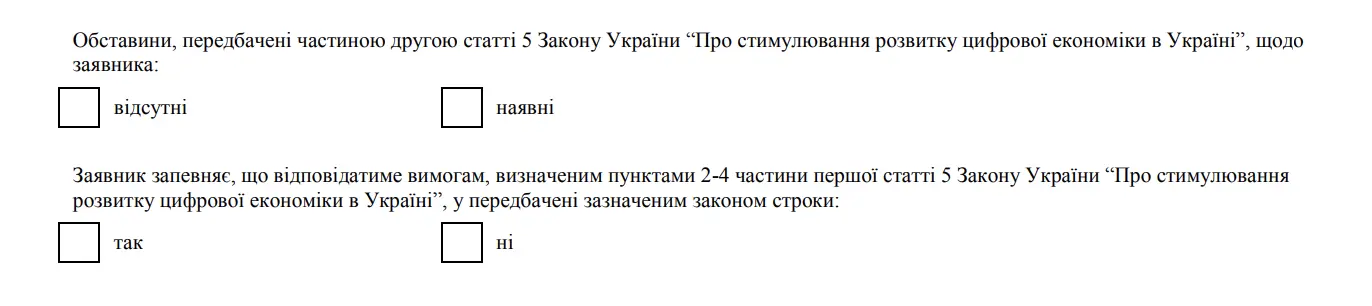
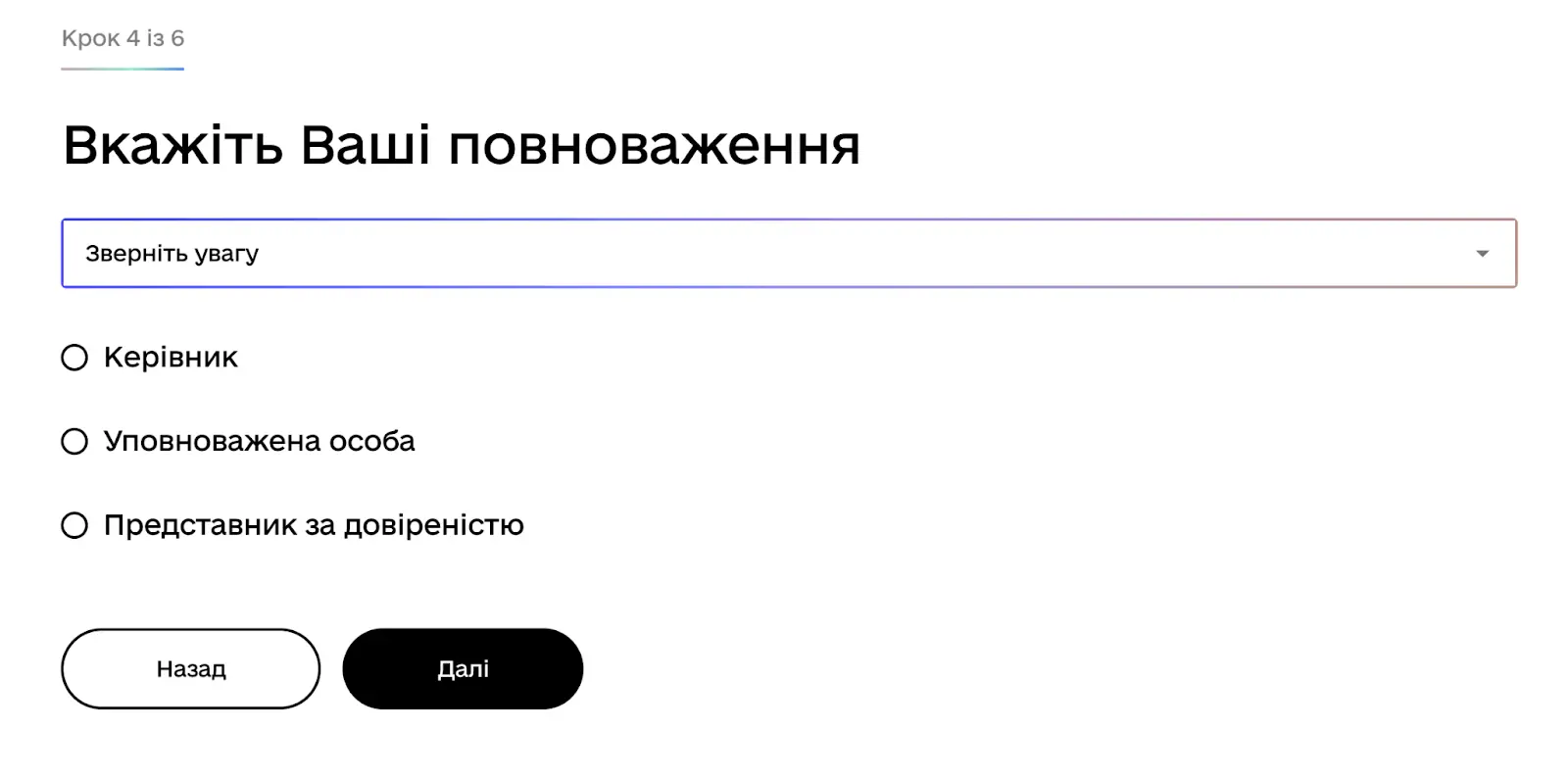
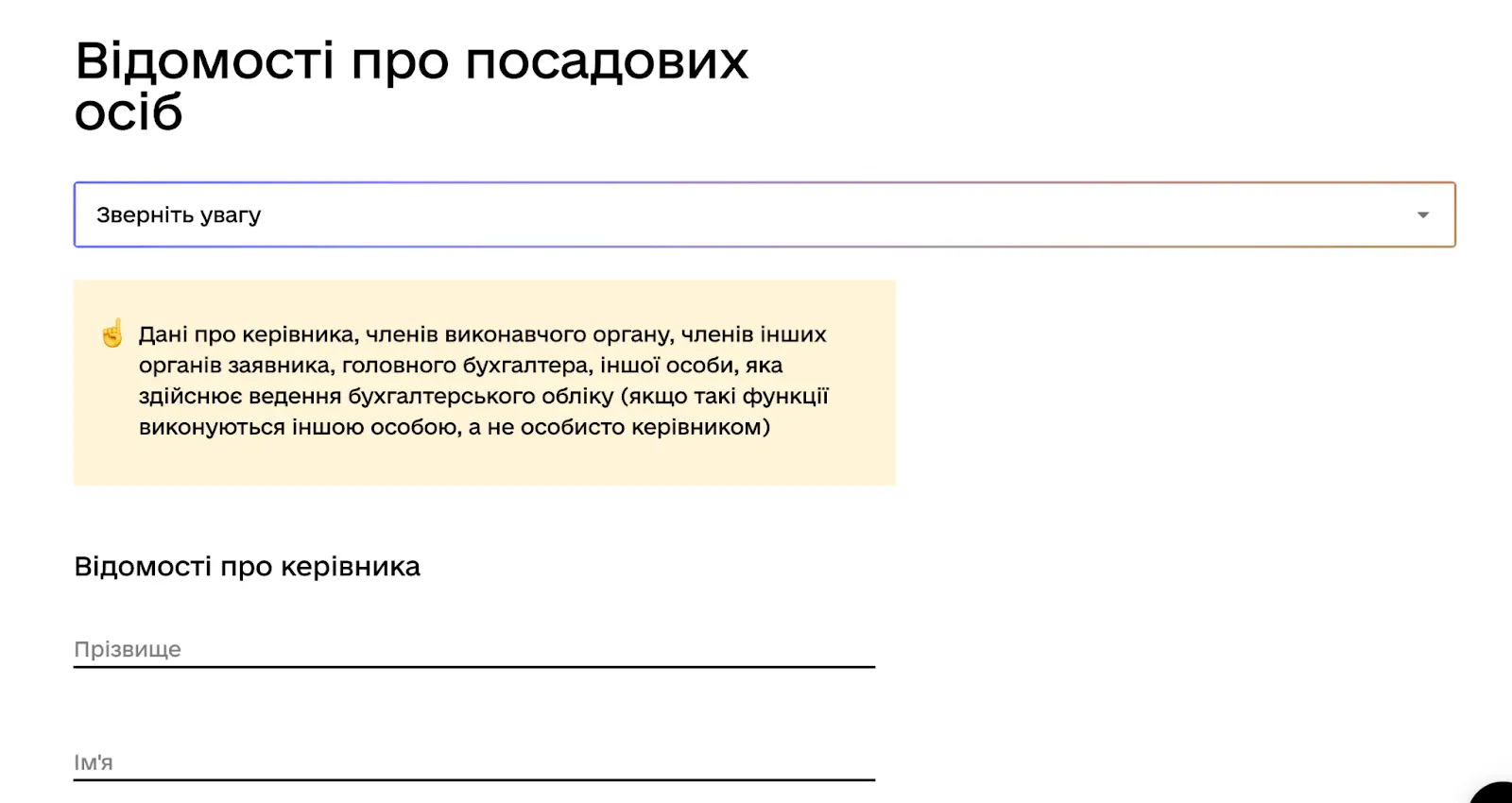
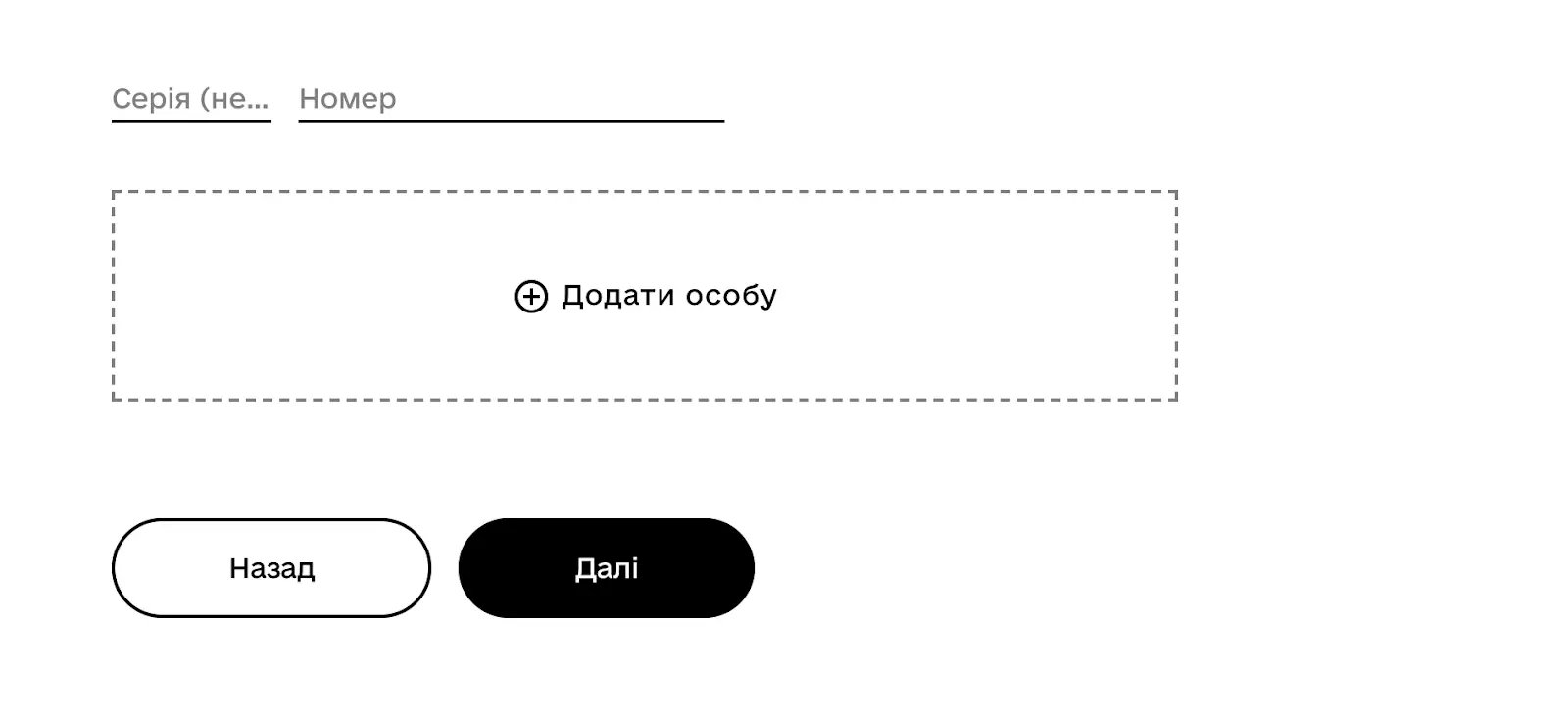
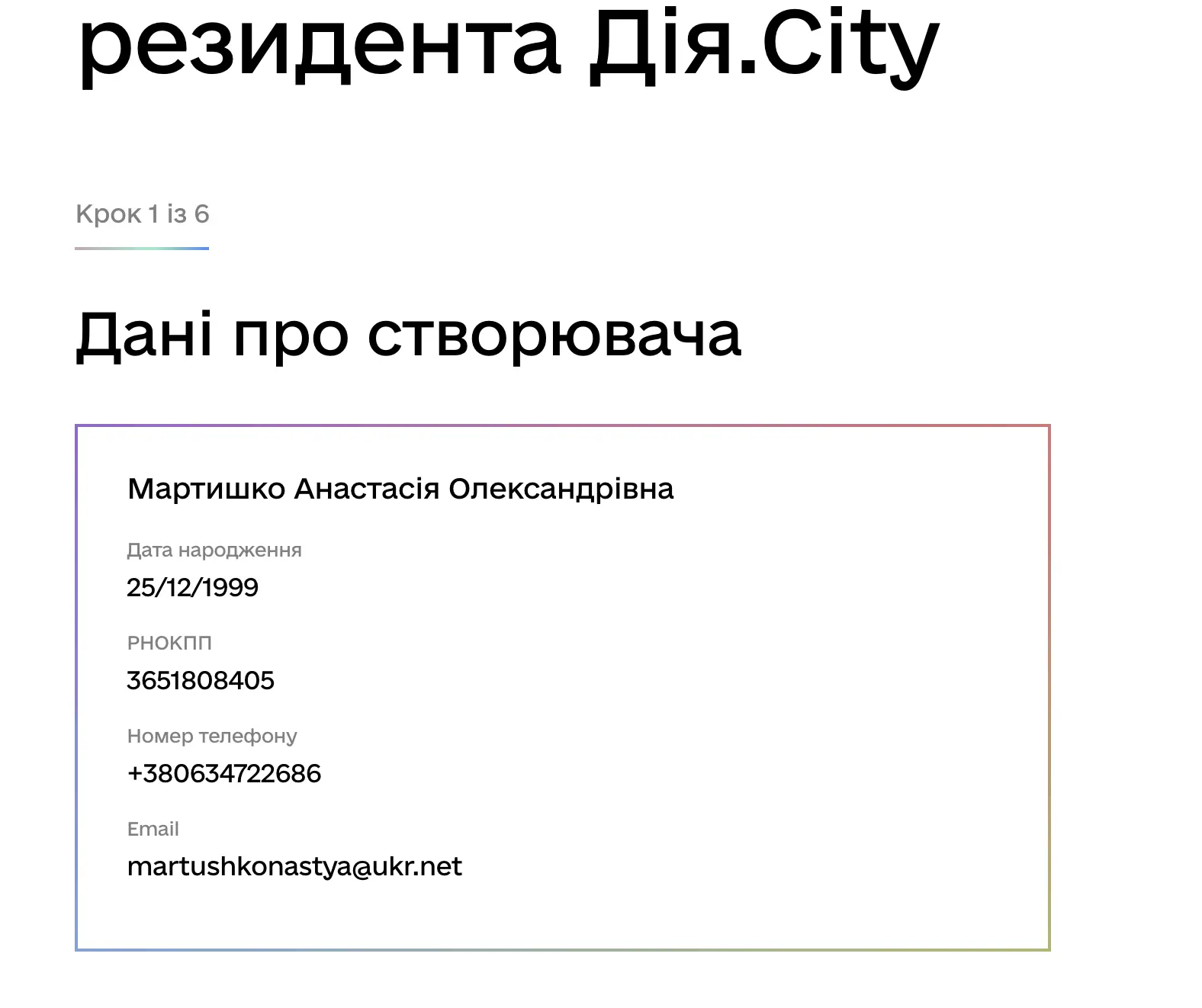
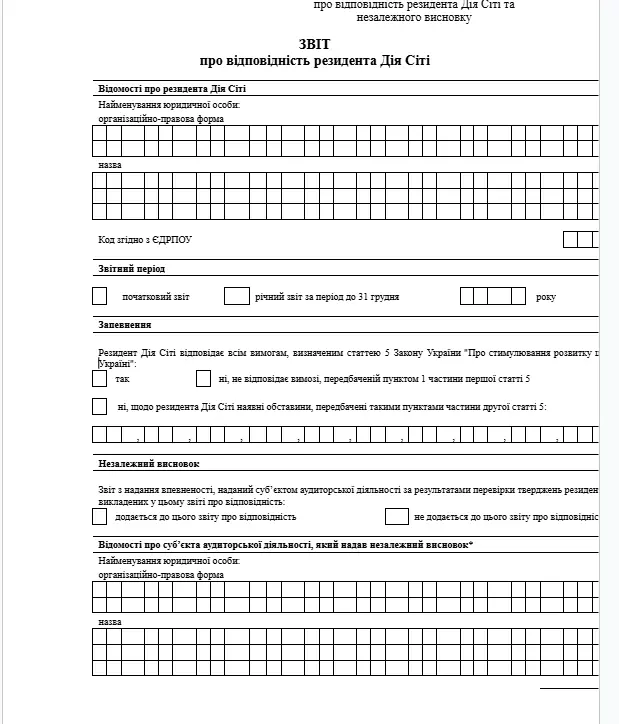
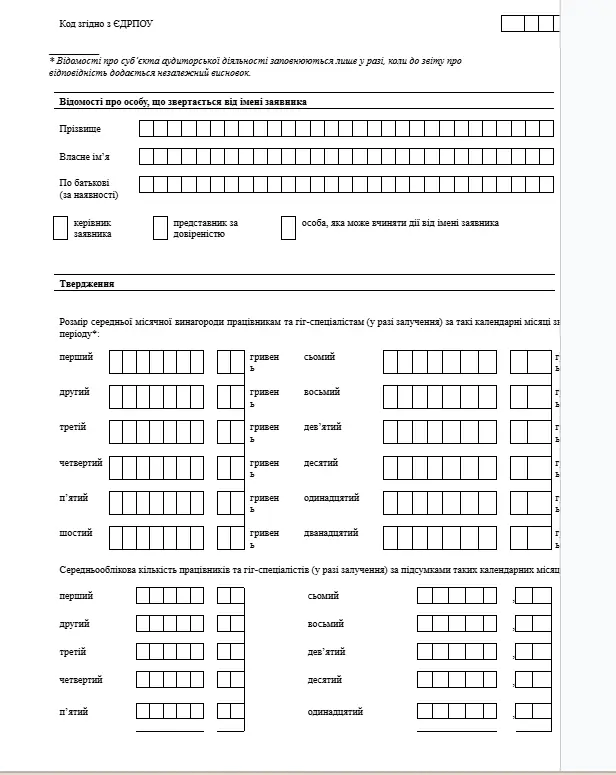
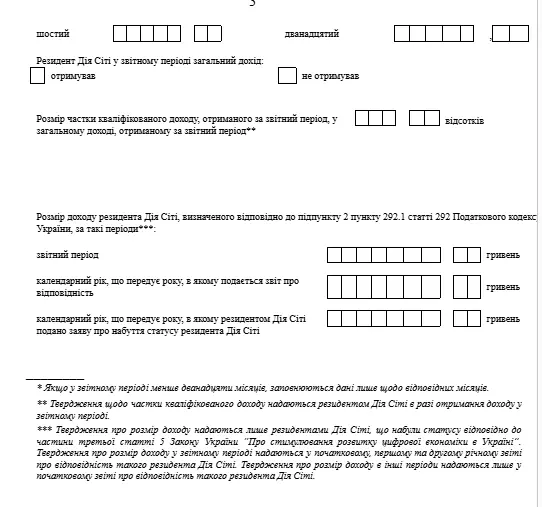
Reporting and taxes of a Diia.City resident
1) Types of reports and deadlines
The compliance report is submitted by everyone holding Diia.City residency. This is required by the Law of Ukraine No.1667 “On Stimulating the Development of the Digital Economy”.
- Initial report - for the first 3 full calendar months after obtaining residency. Important: this report must be submitted within 6 months after receiving the status. An independent auditor’s opinion must be attached, unless you fall under the exception.
- Annual report - covers the entire calendar year (January 1 - December 31). The first annual report is submitted for the period from the month following the month of residency approval until the end of the year. An auditor’s opinion must also be attached.
Please note that the auditor’s opinion must be provided by a certified auditing entity - the list is published on the ACU website.
How is the submission date determined?
The submission date is considered the moment you receive automatic electronic confirmation of acceptance. Therefore, it is important to keep this confirmation.
2) Resident taxes: what the rate consists of
- Personal income tax (PIT) - 5%
- Unified social tax (UST) - 22% of the minimum wage
- Military levy - 5%
Regarding corporate tax - you can choose:
- 9% tax on withdrawn capital
- or 18% corporate income tax.
3) How to switch to the special tax regime?
To apply the preferential taxation of Diia.City, it is important not to forget one more step - to submit a special electronic application. It can (and should!) be sent together with the residency application. Why is this important? Under the Tax Code, if the application is submitted on time, you automatically become a taxpayer under the special regime from the first day of the month following the quarter in which you were added to the registry. Imagine applying but “forgetting” this additional application: in that case, the preferential taxation begins later - or may be lost entirely. Don’t take the risk!
Example:
Booking employees in Diia.City
For most IT companies, Diia.City residency is practically the only way to begin the employee booking process. But is simply “obtaining the status” enough? First, a Diia.City resident must obtain the status of a critically important company for the economy. To qualify, it must meet the following requirements:
- No tax debts (a certificate is required).
- The average salary in the company - at least 3 minimum salaries (25,941 UAH in 2026).
Once the company receives this status, it may proceed with booking employees. However, certain rules also apply here.
Only military-liable men aged 25 to 60 can be booked. Women and conscripts/reservists are not eligible for booking.
Before booking, the company must: check military registration documents; assess the possibility of deferments; plan the booking.
Restrictions: booking usually does not exceed 50% of staff, or another percentage agreed with the General Staff or the Ministry of Economy.
Diia.City residents are allowed to book specialists for 12 months with the possibility of extension.
Booking an employee is usually successful under the following conditions:
- Up-to-date employee data: the employees must have updated records.
- No TCC search notices.
- The person must be on military registration. If they updated their data but their account shows “Not on military register,” such individuals cannot be booked.
- If individuals previously had the status “limited fitness”, they must pass the military medical commission on time, otherwise their data is not updated.
After successful booking, you obtain the legal right to send booked employees on business trips abroad. In addition, the law allows these categories of employees to travel for foreign vacations.
Diia.City Resident - your mini-guide
- Evaluate your company realistically.
Don’t chase trends - first consider whether Diia.City fits you. Is your business truly IT? Can you meet the requirements for income, team size, and salaries? - Calculate the benefits.
Don’t rush to apply. Calculate how much tax you will actually save, how much you can pay your team “net,” and whether the new rules are convenient for you. Diia.City is not only about lower taxes but also about flexibility and legality. If unsure - ask an accountant. - Gig contracts are not scary.
This is not a “horror story” but a useful tool: specify the result - receive payment. For many IT specialists, this is even more comfortable than working as FOPs. - Audit and reports are your friends.
Submit reports on time, don’t delay. An auditor is not the tax authority - it is your insurance policy against misunderstandings. Always keep proof of submitted documents. - Employee booking is real, not magic.
Don’t delay obtaining the critically important status if you want to book your team. But remember - you need “clean,” updated documents and must meet all requirements. - When in doubt - consult.
One call to an accountant or lawyer now can save you weeks and thousands of hryvnias later. Don’t hesitate to ask even “silly” questions.
Would you like to discuss cooperation personally?
Leave a request and our specialists will call you shortly