

Taxation of foreign currency income for individual entrepreneurs (FOP) in Ukraine on Wise and Payoneer: 6% or 23%?

If you are a sole proprietor (FOP) working with foreign clients – a designer, marketer, developer, or copywriter – sooner or later you face the question: how should you receive payments from abroad?
FOPs who receive payments from foreign clients via Wise or Payoneer often believe that it is enough to pay 5% single tax. However, in practice, a single mistake in the accounting model can lead the tax authorities to reclassify the income as personal (individual) income. In that case, instead of 6% in taxes, the entrepreneur risks paying 23% plus penalties.
This article will cover all the nuances of taxation for foreign currency receipts via Wise and Payoneer: what the official tax authorities say, the potential risks, and how to operate legally without incurring fines. Special attention will be given to the responsibility for not repatriating foreign revenue to Ukraine and receiving payments through Wise and Payoneer.
Wise and Payoneer: What These Payment Services Are and Why They Are Under Tax Scrutiny
Before diving into taxation, let’s understand what Wise and Payoneer are and why these payment systems are so popular among Ukrainian sole proprietors (FOPs) working with foreign clients.
What is Wise?
Wise is a British fintech company that provides international money transfer services. Its main advantage is low fees and real interbank currency exchange rates without additional markups.
What is Payoneer?
Payoneer is an American payment system specializing in B2B payments and working with international marketplaces (Amazon, Upwork, Fiverr, etc.).
Important: These are not regular bank accounts but payment systems providing electronic money services. According to the Tax Code of Ukraine, third-group single tax payers are not allowed to engage in activities related to issuing or circulating electronic money, or performing operations with payment cards or other payment devices, which are conducted according to international payment system rules.
How FOP Payments via Wise and Payoneer Are Taxed
Currently, Ukrainian tax legislation does not have a unified position on whether sole proprietors (FOPs) registered in Ukraine can receive funds through these payment systems and use them for personal purposes without mandatory repatriation of the currency to Ukraine. Taxes are paid under the standard taxation system for third-group FOPs.
Main aspects:
- Income is considered the amount converted into hryvnia on the date the funds are received, according to the official NBU exchange rate.
- Tax authorities consider that receiving funds on these payment systems constitutes electronic money, which is prohibited for single tax payers.
The main tax risk with Wise and Payoneer is that the tax service may classify funds in these accounts as electronic money rather than as a FOP bank account. For single tax payers, using electronic money in entrepreneurial activity is prohibited. This position is explicitly confirmed by the tax authority in the official clarification.
Key Steps and Recommendations for Entrepreneurs When Receiving Payments
1. Choosing a Payment System
The most popular payment systems for receiving international payments include:
- PayPal: Convenient for small businesses and freelancers, allows quick receipt of funds from abroad. Note: In Ukraine, PayPal has limitations – withdrawing funds to bank accounts is not available.
- Payoneer: Suitable for entrepreneurs working on international marketplaces and receiving payments in multiple currencies.
- Wise (formerly TransferWise): Offers low fees and favorable currency conversion rates. One of the most popular systems among Ukrainian FOPs.
- Stripe: Used by many online stores and services for payment processing.
When choosing a payment system, consider the following factors:
- Transaction fees
- Speed of fund receipt
- Ability to withdraw funds to a bank account in Ukraine
- Support for different currencies
- Security and transaction protection
- Ability to open a business account (critically important!)
2. Account Registration and Setup
Opening an Account
After choosing a payment system, you need to open a business account, not a personal one. To do this, follow these steps:
- Go to the official website of the payment system.
- Select account type: Business / Company
- Fill out the registration form with your FOP details (name, EDRPOU/ITN, contact information)
- Upload documents confirming FOP status (extract from EDR, FOP certificate)
- Confirm registration via email.

Account Setup
After registration, configure your account to receive payments:
- Specify a bank account for withdrawing funds (mandatory: FOP foreign currency account in a Ukrainian bank).
- Select the currency in which payments will be received.
- Set up notifications for transactions and payment confirmations.
- Ensure two-factor authentication is enabled for security.
3. Issuing Invoices
An invoice is a document confirming the provision of services or sale of goods and contains the payment details. Key elements of an invoice:
- Issue date
- Invoice number
- Seller and buyer details (company name, contact information)
- Description of goods or services (detailed, according to your registered KVED codes)
- Quantity and price
- Total amount due
- Payment details (your Wise/Payoneer account information)
An invoice can be sent to the client via email or through specialized invoicing platforms (e.g., FreshBooks, QuickBooks). Ensure the client has received and confirmed the invoice.
Tip: Keep copies of all invoices – they are required for tax reporting and potential audits.
4. Receiving Payments
After sending the invoice, monitor the incoming payment. Most payment systems automatically notify when funds are received. Payment confirmation may include:
- Email notifications
- Notifications in the payment system dashboard
- SMS notifications (if enabled)
After receiving the payment in Wise/Payoneer, transfer the funds as soon as possible to your FOP foreign currency account in a Ukrainian bank. Log into your account in the payment system and submit a withdrawal request. The process can take from a few hours to several days depending on the payment system and bank.
Do not use funds directly from Wise/Payoneer (via card or ATM) – tax authorities may consider this as using electronic money, which is prohibited for single tax payers.
5. Accounting and Reporting
Each received payment should be recorded in accounting. This helps to:
- Monitor the financial status of your business
- Prepare for tax audits
- Analyze income and expenses
- Track proximity to the simplified tax system income limit
Received income must be declared and the corresponding taxes paid. To comply:
- Determine the taxable income amount
- Fill out tax declarations according to legislation
- Pay taxes within the established deadlines
If it’s complicated, delegate your
accounting to professionals
Our experienced accountants will analyze your business, consider all nuances, and ensure complete order in your reports and taxes.
Rules for Receiving Funds
If you receive funds via Wise or Payoneer, it is important to follow certain rules to minimize tax risks:
- Use a business account, not a personal account.
- Funds must be transferred to a FOP foreign currency account in a Ukrainian bank.
- The payment chain should look like this: the client pays for services to Wise or Payoneer → funds are transferred to your FOP foreign currency account → income is recognized on the date of currency receipt according to the official NBU exchange rate.
- Keep all documents: contracts with clients, invoices, confirmations of transfers from Wise/Payoneer to your FOP account.
- Monitor official clarifications from tax authorities – legislation may change. Example of the official position of the State Tax Service.
It is important to choose the most advantageous option that allows you to avoid tax penalties and protect your business. In case of doubt, consult an experienced accountant or tax advisor.
Documentation and Income Verification Requirements
To avoid fines and administrative sanctions, it is important to have the following documents:
- Contracts with clients (in English or Ukrainian) clearly describing services, costs, and deadlines.
- Invoices for each payment with issue date, number, description of services, and amount.
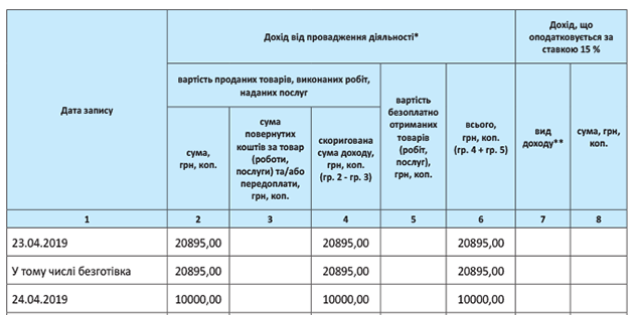
- Excel table to record incoming funds: date received on Wise/Payoneer, date transferred to FOP foreign currency account, NBU exchange rate on the date received, and converted amount in UAH.
- Confirmation of transfers from Wise/Payoneer to your FOP foreign currency account (statements, transaction screenshots).
These documents will be needed for both quarterly reporting and possible tax audits.
Individual Tax Consultations (ITC): Do They Protect FOPs?
ITCs provided by various tax authorities do not offer a unified solution regarding taxation of foreign currency receipts. Moreover, they often contradict each other, creating additional confusion for entrepreneurs. Key points:
- Foreign currency proceeds from exports must be received in Ukraine within the settlement deadline established by the National Bank of Ukraine. As of 2026, the general deadline is 180 calendar days (NBU Resolution No. 18 dated February 24, 2022); for certain categories of goods, the deadline in 2026 is 270 days. The exact deadline should be checked at bank.gov.ua.
- The funds must be credited to the sole proprietor’s foreign currency account by the end of the tax year.
The problem is that different regional tax authorities may give different answers to the same question. Therefore, it is recommended to always rely on official clarifications from the central office of the State Tax Service and keep all documents confirming compliance. This means the final risk lies with the entrepreneur. That is why working with such payment services without a proper accounting model is not optimization, but a tax risk.
Possible Penalties and Tax Consequences
If the tax authorities can prove that this is personal income, the following penalties may apply:
- 18% personal income tax and a 5% military levy on the total amount of income.
- An administrative fine ranging from UAH 51 to UAH 136 for violating tax legislation.
- Cancellation of single tax payer status, with all income taxed as an individual’s income (18% + 5% = 23% instead of 6%).
- A fine for understating tax liability – 10% of the underpaid amount (Article 123 of the Tax Code of Ukraine), or 25% in cases of intentional understatement.
- Interest charged for each day of delayed tax payment.
Example:

UAH 85,000
underpayment

UAH 21,250
25% penalty
That is why it is very important to comply with all the rules and keep all documents confirming that the funds were received specifically as an individual entrepreneur (FOP).
Recommendations for Individual Entrepreneurs (FOP)
1. Always have contracts and invoices
Entrepreneurs must have all necessary documents confirming the receipt of income. This helps avoid issues during tax audits and proves that the funds were received specifically from business activities, not as personal income.
2. Open business accounts
When receiving payments through payment systems such as Wise and Payoneer, it is important to open business accounts rather than use personal ones. This is critical to confirm that the income was received by the individual entrepreneur (FOP).
3. Convert currency on the date of receipt
Income is the amount converted into hryvnia at the exchange rate on the date the funds are received. It is important to record the NBU exchange rate for that day – it determines your tax base.
4. Compliance with tax regulations
Received income must be declared and taxes paid according to the taxation system of a third group individual entrepreneur – 5% single tax + 1% military levy on turnover. It is also worth paying attention to individual tax consultations (ITCs), which may contain specific requirements and recommendations for your region.
5. Keep income records
Create an Excel spreadsheet to record incoming payments to payment systems: the date of receipt of funds to Wise/Payoneer, the date of transfer to the FOP foreign currency account, the NBU exchange rate on the date of receipt, and the converted amount in hryvnias, as well as the date the funds are credited to the foreign currency account and the applicable NBU rate. This will help you track income volume and tax amounts payable, and will also serve as evidence for the tax authorities during audits.
Conclusion
To avoid issues with the tax authorities when working through Wise and Payoneer:
- Check the compliance of your registered KVED codes – the types of services in contracts and invoices must match your officially registered business activity codes.
- Specify exact types of services in contracts and invoices – not just “consulting” or “services”, but a detailed description such as: “landing page design development”, “setting up Google Ads campaigns”, “blog article copywriting”, etc.
- Comply with all tax requirements: use business accounts, transfer funds to the FOP foreign currency account, keep all documents, and submit declarations on time.
- Follow official clarifications from the tax authorities – legislation changes constantly, and new requirements may appear.
It is important to choose the most beneficial option that will help avoid tax penalties and protect your business. Wise and Payoneer can be convenient tools, but only with the correct accounting model. At buh.ua, we do not just consult – we take responsibility for tax logic, accounting, and protecting entrepreneurs during audits.
Would you like to consult
with a specialist as soon as possible?
Leave a request and our specialist will contact you shortly