Individual entrepreneurs of group 3 in Ukraine are the most popular small business format due to simple registration, affordable taxes and minimal bureaucracy. But behind the convenience are dozens of nuances: settlement rules, prohibited activities, restrictions on working with banks and reporting requirements. In this material, we analyze in detail taxes, reporting deadlines, registration of individual entrepreneurs, bank accounts, receiving funds, PRRO, limits and practical advice so that you can avoid mistakes and fines and conduct business calmly and legally.
Contents of the article
Individual entrepreneurs of group 3 are the favorite format of small business in Ukraine. It is not for nothing that this group remains the most popular among entrepreneurs: simple registration, minimum bureaucracy and relatively low tax rates are the perfect combination for a start. Especially if you are on a single tax. At first glance, everything looks simple: 6% of income (along with military duty), SSC - and work in peace. But behind this “simple” there are dozens of nuances that can cost you both money and nerves. In this article, we will analyze everything about paying taxes, deadlines, fatal mistakes, practical cases and fines.
Individual entrepreneur of group 3: general information
A sole proprietorship in the third group is the most popular and universal model of work among entrepreneurs. There is almost complete freedom here: you can provide services, sell goods, work with companies that are VAT payers, and even with clients from abroad. You can accept money from individuals or legal entities; from Ukraine or from abroad; for goods or services - without restrictions. In addition, this is the most profitable group, because a single tax is paid on the income received for each quarter, and in its absence it is not paid at all. However, if you had no income, from January 2025 you will have to pay the SSC, because this is your contribution to pension and social security. But more on that later.
Despite its universality, there are things that are strictly forbidden for individual entrepreneurs in the third group. And if you violate these rules, you can automatically lose the right to be on a single tax. And this is another level of responsibility, including fines.
Remember: an individual entrepreneur in group 3 must work only with monetary forms of payment. What does this mean? Only money - either cash or non-cash to the account.
You cannot:
- to barter,
- provide repayable financial assistance,
- whether to transfer gift certificates as a form of payment.
No “you give me a product, I’ll give you a service” or “we’ll pay you back later”! This is not allowed in the third group! And if the tax office sees this type of settlement, the individual entrepreneur will automatically be removed from the simplified system. You can also get a fine and then pay crazy taxes.
In addition, there are certain types of activities that are generally prohibited in the third group. If you plan to engage in
- organising concerts or public events,
- gambling or lotteries,
- currency exchange or various financial or postal activities,
- technical testing and research, then Group 3 is not suitable for you.
These are all red flags. With such KVEDs, you can't be in the third group, and even if your business "seems to be somewhere nearby" - it's better to check and make sure. Because even a small mistake in KVEDs can turn into serious problems.
Registration of individual entrepreneur group 3
If you still decide to register an individual entrepreneur, then let us immediately encourage you: this process is not at all complicated. You can simply submit an application through Diya - select the KVEDs, click “send”, and in 2-3 days the individual entrepreneur is already registered. And you can find step-by-step instructions for opening an individual entrepreneur through Diya in our video on the channel.
So, by registering an individual entrepreneur in the third group - you are entered into the register immediately, that is, from the moment of submitting the application.This means that from this day on you are officially an individual entrepreneur and can conduct business or already have responsibilities that you don't even realize you have.
And here, many people mistakenly think that it is not necessary to check your entrepreneur status after submitting an application to the Diya. But there are situations when the Diya either does not forward your application to the tax office at all, or the tax office refuses, and you do not even know about it.
Therefore, it is MANDATORY to check whether you have indeed been granted the status of a single tax payer. This is easy to do on the tax authority website - look for yourself in the payer’s credentials. If you see that your group is the third, everything is fine. If it’s empty, then something went wrong.
And another important point regarding registration. At the exit, that is, after registration, you must have two documents in your hands before you start accepting payments.
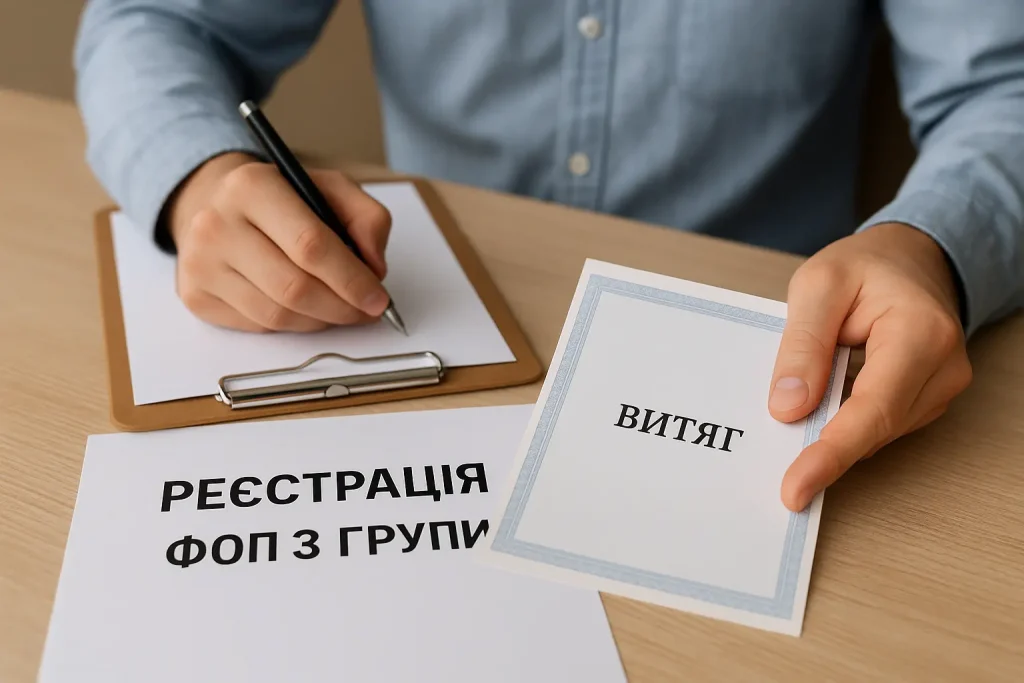
The first is an extract from the Unified State Register,which confirms that you are registered with the Ministry of Justice. It is issued by the Ministry of Justice. And the second is an extract from the single tax payer . It can be found in the payer's electronic account. Please do not neglect this. This is not just a formality. Without these documents, you may be fined, even if you are already officially registered. Check it, keep it for yourself, and only then start working.
Individual entrepreneur bank account
Now let's deal with a very important issue - a bank account for an individual entrepreneur.
1) When you open an account, the bank will ask you how much you plan to receive. Don't be afraid - specify more. It won't be a burden.you with additional taxes, but the higher the estimated turnover you declare, the less likely it is that the bank will start checking your every transaction through financial monitoring.
2) Remember: the bank will monitor you very closely for the first six months. This is like a kind of “trial period”. And if your payments seem suspicious, the account may be blocked. Therefore, it is better not to experiment.
3) Large amounts of cash that you withdraw from your account are also a trigger for the bank. If you often “withdraw cash” - you may run into a check or blocking.
4) Although the limit for an individual entrepreneur in the third single tax group is quite high, banks divide it by month. In general,an individual entrepreneur in the third group may receive payments totaling 1,167 minimum wages, which in 2026 is UAH 10,091,049. This is the annual turnover limit. And if you significantly exceed this conditional threshold - the bank may initiate a review.
Would you like to consult with a specialist as soon as possible?
Leave a request and our specialist will contact you shortly.
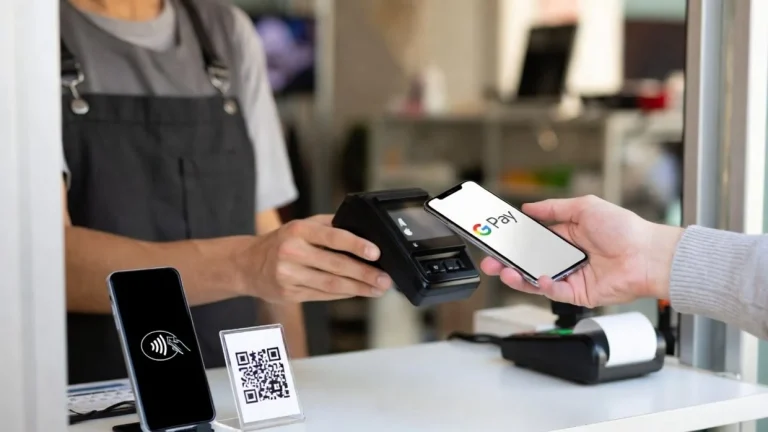
How to accept funds for individual entrepreneurs? Do individual entrepreneurs in group 3 need a PRRO?
Once you have registered your sole proprietorship and opened an account, the next question is how to accept funds. And this is where the fun begins. It is important to set up the payment acceptance process so that everything is legal and without unnecessary headaches.
Let’s start with the limits. If you are in the third single tax group, you can earn up to 1,167 minimum wages per year. That is UAH 10,091,049. in 2026. And this is your official annual turnover limit.
And you can receive this money in 2 ways:
to a bank account. But not to a regular card! You must definitely open an account specifically for an individual entrepreneur;
cash. And since receiving cash is a settlement transaction, it requires the use of the PRRO in any case.
For example, if you are an IT professional working through Upwork or receiving payment from abroad, you don’t need a cash register. If you sell jewelry for cash, you need one. If you do massage and receive payment from a client in cash, you also need one. If you provide services online and receive payment via acquiring or AIBAN, you don’t need a cash register.
There are other things to keep in mind to avoid serious costs. A group 3 sole proprietor may have any number of employees, but from 8 employees the quota for hiring people with disabilities applies. The penalty for missing it was abolished by Law No. 4219-IX of 15.01.2025 and replaced with a quarterly contribution: 40% of the average salary × 3 months × the number of unfilled positions, reduced to 50% during martial law. If you receive payment for an activity not listed in the register, you can lose the simplified system. The same applies if you exceed the income limit or owe more than UAH 3,060 for two quarters in a row.
And one more thing: you can't just pay from a sole proprietorship account to an individual. All such payments are subject to an 18% income tax rate and a 5% military levy.
If you haven't dealt with PRROs yet, you can watch our video on the channel, where we talk about the most profitable options for software RROs and their registration.
Payment services for individual entrepreneurs of group 3. Which ones to choose, which is more profitable?
Today, many people use international payment services - such as Payoneer, Wise, Revolut, Paxum, VIM, etc. So: an individual entrepreneur in group 3 has the right to receive money even through these services - the main thing is that all funds are eventually deposited into the individual entrepreneur's official account in a Ukrainian bank.
Only after that can you pay taxes and be sure that there are no claims against you. If you received money on a conditional Payoneer - and did not transfer it to an account in Ukraine, but simply declared income. Such a scheme is risky, especially considering that banks and the tax office synchronize data today.
So remember the rule: according to the tax authority, income arises on the date the funds reach the payment system and is taxed as business income if the funds are transferred to the sole proprietor's account at a Ukrainian bank within the reporting period. If the money stays in the system or goes to a personal card, the tax authority will tax it as an individual's income at 18% plus 5%.
Payment of taxes to individual entrepreneurs in group 3
An individual entrepreneur in the third single tax group has three main taxes in 2026:
5% single tax on turnover;
1% military levy, also on turnover;
And USC (unified social contribution)- this is a fixed amount, currently UAH 1,902.34 per month, but it is paid once per quarter as a single payment. This is UAH 5,707.02.
RegardingVAT, then most individual entrepreneurs in group 3 are not VAT payers. But you can become one. Then the taxes will be as follows: 3% EP, 1% military duty, and of course SSC plus VAT. Usually, individual entrepreneurs become VAT payers at the request of clients who need suppliers with VAT. And then certain features and burdens arise. First, a separate tax invoice must be registered for each sale. Second, the income and expense book is kept not in a free form, but in a strict state form. And third, mandatory inventory accounting is when you keep a list of all invoices for the purchase of goods that you then sell.
So, in short, an individual entrepreneur in the third VAT group has more reporting, responsibility, and requires attention to each document.
Reporting, deadlines
All reports of individual entrepreneurs of group 3 are submitted quarterly, using the cumulative method, and not every month. That is:
in the report for the first quarter (January-March), you indicate income only for this period;
but in the report for the second quarter - you already show the amount for the first plus second quarters,
in III - the amount for three quarters,
and in IV - for the whole year.
You have 40 calendar days after the reporting quarter to submit reports.
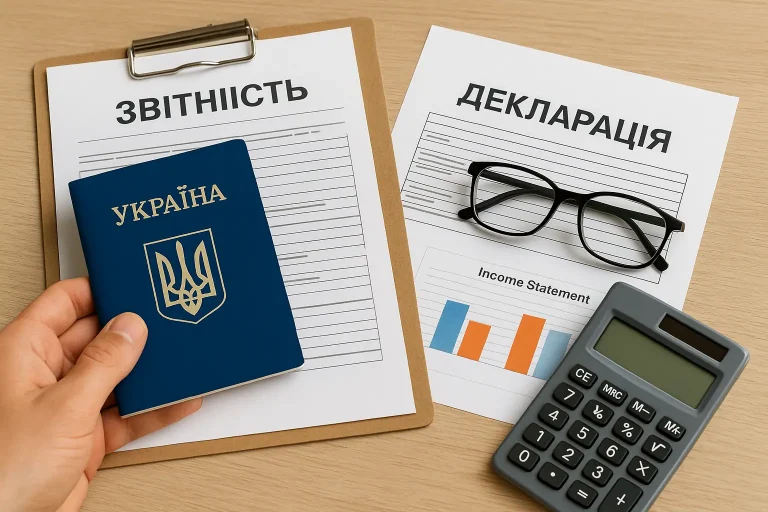
And attention! It is in the report for the 4th quarter that the supplement on the Social Security Contribution is added, where you indicate that you paid contributions to the pension fund. And only then are these contributions taken into account in your insurance experience.
Who can avoid paying the EUC?
We remind you that there are categories that may not pay the social security contribution - these are old-age pensioners, persons with disabilities, mobilized self-employed persons, those for whom the employer pays, as well as persons registered in temporarily occupied territories. However, the social security contribution and military levy (5% and 1%) are always paid if there is income.
And if there is no income, you only pay the SSC from taxes and submit a report. Otherwise, the chronology of the cumulative report is violated.
An important clarification - if you are a mobilized entrepreneur, then for the entire period of your military service you are exempt from paying taxes and filing reports. This also applies to self-employed individuals: if you were mobilized or signed a service contract, the obligations to pay taxes and file reports are “put on hold” for this time. Such changes have already come into force thanks to Law No. 4505, which introduced relevant amendments to the Tax Code.
Can an individual entrepreneur in group 3 change their tax group?
In general, a Group 3 sole proprietor (FOP) can change their tax group - for example, switch to Group 1 or Group 2, or even choose Group 3 with VAT. The tax group can be changed quarterly by submitting an application no later than 15 calendar days before the beginning of the quarter. The number of such changes during the year is not limited. However, do not confuse this with another rule that imposes a limit of "once per calendar year." This rule does not apply to changing groups, but to switching from the general taxation system to the simplified taxation system (subparagraph 298.1.4 of the Tax Code of Ukraine). In other words, if you voluntarily switch from the single tax system to the general taxation system, you can return to the simplified system only once a year. However, within the simplified taxation system, tax groups can be changed every quarter.
*If you have any doubts about which group to choose or when to submit an application, don't hesitate to contact us: with FOP accounting in Ukraine handled by our team, you will not miss any deadlines.
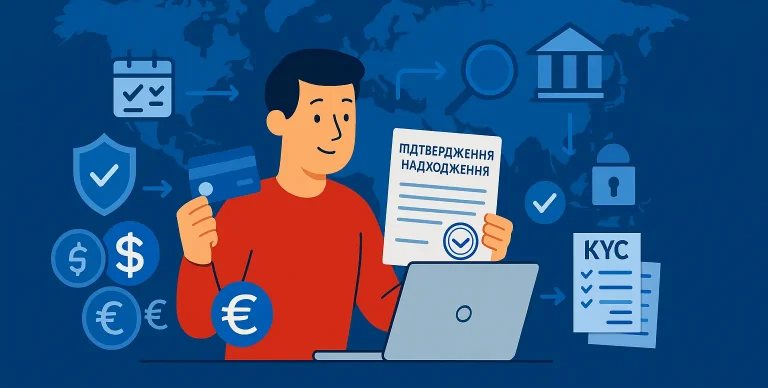
Confirmation of receipt of funds to the individual entrepreneur's account
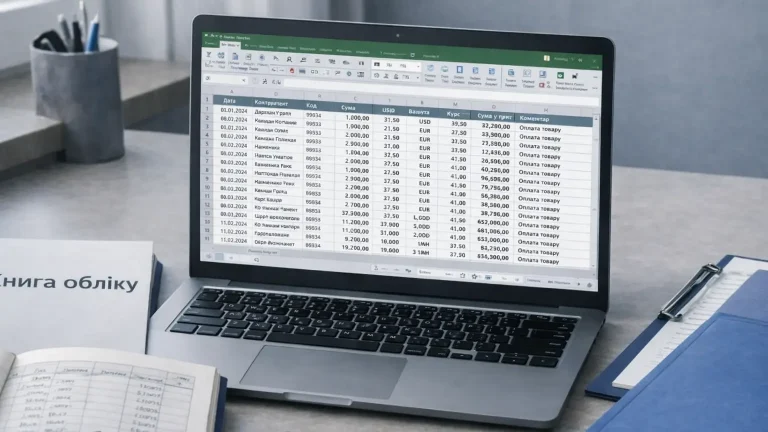
In fact, everything is not so complicated here. If you are an individual entrepreneur in the third group and receive money, you need to be ready to show the tax office or the bank where this money came from. It is most convenient to have a bank statement on hand. If you work with cash, keep Z-reports from the cash register. For the third group, the income accounting book is more “for checking”, the main thing is to have statements or checks.
And don't forget about contracts, invoices, deeds, and delivery notes. Without these papers, you can run into a fine - currently it's 1,020 hryvnias. Some people wave their hands: “Oh, I'll pay the fine and that's it!” But it's not that simple: if a dispute arises with a client or the bank decides to “poke around,” it will be difficult to prove anything without documents.
Therefore, it is better not to play the lottery. Keep all the documents so that you do not run around in a panic later and do not remember where that contract went. If you do not want to deal with papers - outsource it to an accountant. It is easier, cheaper and really saves nerves.
By the way, not only classic contracts are suitable for individual entrepreneurs. There are also specific options - for example, a commission, agency or freight forwarding contract. The trick here is that the income of an individual entrepreneur is not calculated on the entire amount that came in, but only on your agency fee - and it is from this part that you pay taxes. But there is a nuance: such contracts require very careful preparation of all primary documents. Here, every receipt, every act is really worth its weight in gold, because they prove that you did everything correctly.
How can a group 3 individual entrepreneur spend his income?
And now let's move on to the most interesting part. Let's analyze how an individual entrepreneur in the third group can spend their already taxed funds. Let's start with the basic one: your individual entrepreneur tax return is official proof that you received income legally. And this is enough to buy an apartment, a car or other expensive things - and not worry about being asked about the origin of the money.
How to withdraw funds from an individual entrepreneur account? Hryvnia and currency
If you receive hryvnia, you can safely withdraw cash (we recommend no more than 50% of what you received), or transfer funds to a personal card and pay for everything you need from it: purchases, utilities, even trips.
Now about currency. If the money has been deposited into a foreign currency account of an individual entrepreneur, then now, due to wartime restrictions, it is not possible to pay for everything in this currency directly in Ukraine - there are certain limits from the NBU. Therefore, it is better to clarify with the bank which payments are allowed.
But you can either keep this currency as long as you want - no one is forcing you to sell it; or exchange it for hryvnia and continue spending it like regular hryvnia: withdraw, pay, transfer.
About keeping savings in foreign currency abroad. Internet schemes such as "move hryvnia to your personal card and top up Wise or Revolut with 100 thousand" do not work the way they are described. The NBU treats topping up foreign electronic accounts as quasi-cash, and the UAH 100,000 monthly limit applies only from foreign currency accounts - such operations from hryvnia accounts are not among the permitted ones. Besides, Wise does not let customers with a Ukrainian address hold a balance. The legal route is to buy currency at a Ukrainian bank and keep it in a foreign currency account here.
Practical advice for individual entrepreneurs of group 3
1. If you rent out a room and the contract separately specifies the compensation for utilities, this is immediately a tax risk. The tax office may decide that you have violated the rules and either transfer you to the general system, or add taxes as for an individual - 18% personal income tax + 5% military levy. How to avoid this? Just include all “utilities” in the total rent amount. This is easier, calmer, and there are no unnecessary questions for either the tax office or you.
2. The second piece of advice concerns the jewelry business. Here, without the third group, there is no way, but the main thing is- clear accounting. You must have all invoices for each unit of goods with the name, seller and documents indicated. If something is missing, the fine can be up to 100% of the cost of the goods sold without documents.
3. The third point concerns income received through Payoneer, stock platforms, and other foreign platforms. You may receive such payments, but for them to qualify as legal income of a sole proprietor (FOP), subject to 5% single tax and 1% military levy, the funds must be transferred to the FOP's foreign currency account at a Ukrainian bank and declared. If the money remains in a foreign account and is not included in the tax return, the tax authorities may treat it as the income of an ordinary individual - subject to 18% personal income tax, 5% military levy, and possible penalties.
Important: it is no longer possible to conceal foreign accounts. Ukraine has joined CRS - the automatic exchange of financial account information - so the State Tax Service receives information about the foreign accounts of Ukrainian residents directly from other countries (read more in our article about CRS). Therefore, the only safe strategy is to transfer foreign currency to the FOP's account and declare the income on time.
Useful video
Individual entrepreneur group 3 2025: Avoid mistakes - taxes, reporting, limits, fines and income withdrawal!
Conclusion
Being an individual entrepreneur in the third group is really convenient and profitable. But it is also a big responsibility, because behind the simplicity of this system there are many nuances: correct cash management, tax payment, selection of KVEDs, reporting and many other points. If you miss something, you can get a fine or lose the right to work on a simplified system, and this is a completely different story with higher taxes and hassle. If you have any questions, contact the bukh.ua team, and we will advise you.
Source Documents for Sole Proprietors: What You Need and How Long to Keep Them
Taxation of Diia.City Residents: Rates, Limits, Exit Capital Tax vs Corporate Income Tax
3% with VAT or 5% without VAT in 2026: which is better for Group 3 of the single tax
Entrepreneur Income Record Book 2026: how to keep it, where to download forms, penalties for absence
Declaration of Property Status and Income for Individual Entrepreneurs (FOP) on the General Tax System in Ukraine in 2026
CRS Agreement: Will the tax authorities find out about foreign accounts? Which institutions share information under CRS, and what data about you will the tax authorities receive?
How to withdraw money from Payoneer in Ukraine - methods and fees
Sole Proprietor and Foreign Currency Income: How to Calculate Income in Dollars and Avoid Overpaying Taxes
When Do Individual Entrepreneurs (FOPs) Need a Payment Terminal and a Cash Register (RRO) and How to Avoid Fines
What to do if your account is subject to financial monitoring and blocked in Ukraine? How can you confirm the origin of your funds? How can you resolve these issues?