

When Do Individual Entrepreneurs (FOPs) Need a Payment Terminal and a Cash Register (RRO) and How to Avoid Fines

“We accept cash only”… It used to be a common phrase, but today it can cost you a significant amount. Even if you sell at a market or are a sole proprietor (FOP) in Group 1. Have these new requirements really been postponed, and how can you operate without violations in 2026? Let’s break down who is required to use RRO/PRRO, how to work without a physical terminal, and where the biggest fines are hidden.
Postponement for Group 1: Is It Really That Simple?
The government portal has published a decision to postpone the mandatory use of payment terminals for Group 1 sole proprietors (FOPs) until the end of martial law and for three months thereafter.
Sounds like you can relax? Not quite. Although terminals for Group 1 are “on pause,” the state still requires gradual digitalization.
If you trade at a market but your neighbors already accept cards – you are losing the competition. Customers find it more convenient to pay with a smartphone, and the state encourages this trend to reduce the share of the shadow economy.
What Cashless Payment Methods a Sole Proprietor Must Provide
The text of the Cabinet of Ministers resolution states that merchants must ensure the possibility of cashless payments using electronic payment instruments, applications OR devices.
Key rule: the entrepreneur provides the option, and the customer chooses the payment method.
You cannot restrict the customer. The phrase “terminal only” or “card transfer only” is a violation. The customer must be free to choose the most convenient cashless payment method.
The most common mistake among beginners in 2026 is assuming that if the bank has installed a terminal for you (or you have set up Tap-to-Phone), you no longer need to issue fiscal receipts because “the tax office already sees the money in the account.”
Remember: a POS terminal is only a way to receive money from the customer. RRO/PRRO is the reporting tool to the state confirming that the sale has taken place.
Even if the bank sends you a statement recording every cent, without a fiscal receipt the sale is considered “shadow trading.” In 2026, the tax authorities use automated reconciliation algorithms: they see the total acquiring turnover through your bank and instantly compare it with the number of receipts in the State Tax Service system. If the amount in the bank is higher than in your PRRO reports, expect a request for clarification or an on-site inspection.
Scheme No. 1: Offline Trade Without a POS Terminal (Tap-to-Phone, QR Code)
If you have a shop or a market stall, you do not have to rent an expensive terminal from a bank:

Tap-to-Phone:
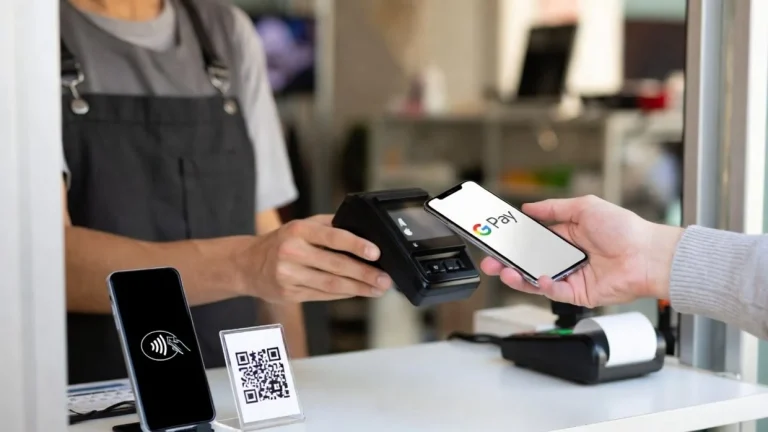
Install an application (for example, “Terminal” by PrivatBank or “OschadPAY”) on your smartphone. Now your phone is your terminal.

QR codes and IBAN:
Print a QR code linked to your business account. This fulfills the requirement regarding payment applications.
In 2026, the tax authorities pay special attention to discrepancies in timing between payment and receipt fiscalization. Significant or systematic delays may be treated as violations. Try to issue the receipt immediately or use PRRO systems that automatically generate a receipt after a successful terminal transaction.
QR code: when is a receipt required and when is it not?
This is where a fine line exists, and many sole proprietors end up facing penalties.
- You provide the customer with a QR code for payment using bank details (IBAN): The customer scans the code, and their banking app opens with your account details already filled in. They confirm the payment. This is a bank transaction. A fiscal RRO receipt is not required in this case (although issuing a sales receipt or invoice is still recommended).
- You provide a QR code linked to a payment form (LiqPay, WayForPay, etc.): The customer scans the code, enters their card details, or pays via Apple Pay/Google Pay within the browser. This is a settlement transaction. In this case, a fiscal PRRO receipt is mandatory.
If you want to operate legally without a cash register (mainly relevant for service providers), switch customers to payments using full IBAN account details.
Scheme No. 2: Payment in an Online Store and Upon Delivery
For e-commerce, a physical terminal is not required. It is enough to use:
- Internet acquiring (LiqPay, Wayforpay).
- IBAN payments.
Nuance with “Nova Poshta”: If the customer pays upon receipt (cash on delivery), the RRO receipt is issued by the financial company (for example, NovaPay). In this case, you as the seller do not issue a receipt. However, if the customer paid for the product on the website before shipment, you are required to include a fiscal receipt in the parcel.
When a customer pays you 1,000 UAH through a terminal, the bank deducts its commission (for example, 1.5%), and 985 UAH is credited to the sole proprietor’s account. What amount should be indicated in the PRRO receipt? Exactly 1,000 UAH. You must fiscalize the full price of the goods paid by the customer. If you issue receipts for the “net” amount (minus the commission), the tax authorities will treat this as underreporting of income.
PRRO Offline Mode: What to Do During Blackouts?
In 2026, internet stability remains an issue. If the connection is lost:
- You may operate in offline mode for up to 36 consecutive hours (but no more than 168 hours per month).
- Your PRRO must have reserved fiscal numbers.
- As soon as the internet connection is restored, all accumulated receipts must be automatically transmitted to the State Tax Service within one hour.
Fines for the Absence of a Terminal and RRO in 2026
The risks of operating “in the shadows” significantly outweigh the cost of legalization:
Warning: Accepting payments to a personal card is not just a violation – it creates a risk of being charged 18% personal income tax + 5% military levy on the entire turnover, as the tax authorities do not recognize these funds as business income.
Installing a cash register often entails another obligation – maintaining inventory records. In 2026, this applies to:
- Sole proprietors (FOPs) on the general taxation system.
- VAT payers.
- Those selling “high-risk” goods: complex household appliances (subject to warranty), medicines, medical devices, and jewelry.
If you fall into this category, you must not only issue receipts but also confirm the origin of every item on your shelves with supplier invoices. The penalty for failing to maintain inventory records is double the value of unrecorded goods at their selling price.
Who Does Not Need a Payment Terminal?
- Group 1 FOPs: The postponement for terminals is still in effect.
- Frontline areas: Entrepreneurs in cities included in the list of active combat zones (Kharkiv, Zaporizhzhia, Kherson, etc.) may operate with cash only. However, keep in mind that the list is dynamic and must be checked monthly on the Ministry of Reintegration website.
FAQ: Payment Terminals, RRO, and Cashless Payments
Can you accept card payments without an RRO?
It depends on the FOP group and type of activity.
Group 1 FOPs may accept card payments without an RRO, as the postponement for the use of RRO/PRRO is currently in effect for them.
Group 2 and 3 FOPs cannot accept card payments without a fiscal receipt: every cashless payment (via terminal, Tap-to-Phone, or internet acquiring) must be accompanied by an RRO/PRRO receipt.
Is a QR code considered a cashless payment?
Yes, it is.
A QR code payment (through a banking app to the FOP’s IBAN account) is a cashless payment method and complies with legal requirements regarding payment applications.
However, if such payment qualifies as a settlement transaction for Group 2–3 FOPs, it must also be fiscalized through an RRO/PRRO.
Does a Group 1 FOP need a terminal in 2026?
There is no obligation, but it is allowed.
For Group 1 FOPs, the postponement of mandatory terminal use remains in effect during martial law and after its termination.
At the same time, the entrepreneur may voluntarily accept cashless payments (terminal, Tap-to-Phone, QR code) if it is convenient for customers and the business.
Can you accept payments to a FOP key card?
Yes, under certain conditions.
Payment is allowed only to a key card linked to the FOP account with the correct payment purpose specified.
For Group 2–3 FOPs, such payment is considered a settlement transaction and requires issuing an RRO/PRRO receipt.
Accepting payments to a personal individual card is a violation and may result in account blocking and additional tax assessments.
What happens if you accept payments to a personal card instead of a FOP account?
The tax authorities do NOT recognize funds received to a personal card as business income. For the State Tax Service, this is considered “individual income not related to business activity.”
Consequences: additional assessment of 18% personal income tax on the entire turnover + 5% military levy + a tax evasion penalty of 25–50% of the tax amount. The bank account may be blocked, and the right to use the simplified tax system may be revoked.
Conclusion
Is it possible to work with a terminal but without an RRO?
- Group 1 FOP: Yes, it is possible (if you want convenience for customers).
- Group 2–3 FOP: No. If you use a terminal (or Tap-to-Phone), every transaction must be accompanied by a fiscal receipt.
In 2026, printing a paper receipt is not mandatory – send it to the customer via Viber or display a QR code. It is modern, cost-effective, and environmentally friendly. Not sure which PRRO to choose or how to set up Tap-to-Phone? The buh.ua team will help you implement a cash register and terminal turnkey, without unnecessary stress.
If it feels complicated, delegate your
accounting to professionals
Our experienced accountants will analyze your business, take all nuances into account, and ensure complete order in your reports and taxes.