

How Sole Proprietors Accept Foreign Currency Payments

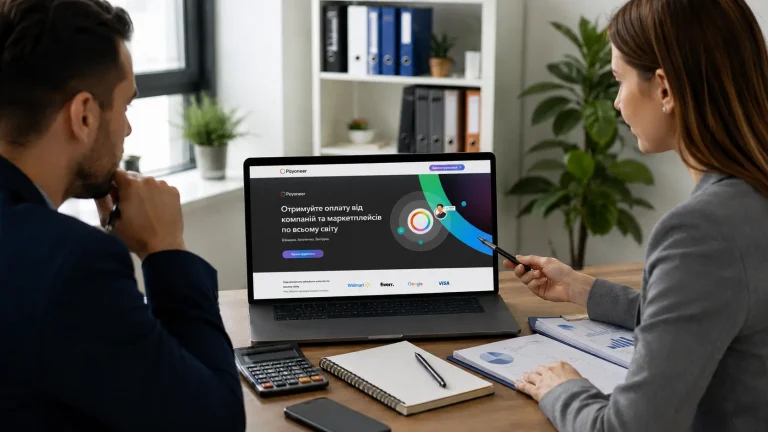
How can an individual entrepreneur accept payments from abroad in foreign currency without running into problems with the tax authorities? This is a question most entrepreneurs face. Some simply refuse such orders - and lose thousands of dollars because they are not sure how to prepare the documents correctly. Others do it incorrectly - and overpay taxes, receive fines, or lose their single tax payer status. All of this can be avoided if the rules are understood before the payment, not after the first inspection by the State Tax Service.
In this article, we will explain how an individual entrepreneur can accept payments in foreign currency in 2026: what documents are needed for payments from abroad, how to prepare a foreign economic activity contract or invoice, how to calculate foreign currency income using the NBU exchange rate, and why cryptocurrency requires special caution.
How an individual entrepreneur can accept payments in foreign currency
You should think about how to document a payment from abroad not when the money reaches your account, but much earlier. Most problems arise precisely because the individual entrepreneur did not prepare the documentary basis in advance.
Step 1. Open a business account for the individual entrepreneur. Income from business activity may only be received into an individual entrepreneur business account. A personal account is not suitable for this purpose - and if a foreign currency payment is received there, it automatically becomes the income of an individual with the corresponding taxation: 18% personal income tax + 5% military levy.
If the client pays in foreign currency, a separate foreign currency account is required. There are two options here:
Does the bank offer a multi-currency account? Choose it if clients pay in different currencies. Then you will not have to open several accounts and track each one separately. In principle, there are no restrictions on the number of accounts: theoretically, you can have many accounts in different banks.
Important: before choosing, it is worth checking the bank's conversion terms and fees - they may differ significantly.
Another important point: foreign currency proceeds cannot be transferred directly to a personal foreign currency account. It is also often not possible to withdraw foreign currency in cash from a business account - except in certain cases, such as business trips abroad.
The standard process is as follows:
- sell the foreign currency through the bank
- the hryvnia is credited to the business account
- transfer the money to your personal card
Sometimes some banks process this operation through double conversion:
foreign currency → hryvnia → foreign currency
Formally, this is a workaround of the restriction, but the banks themselves cover the commission costs that arise. Before using this option - check with your bank whether it offers it and under what terms.
Step 2. Check whether you are violating the conditions of your single tax group. This is where most questions arise for individual entrepreneurs in Group 2.
| Goods | Services | |
|---|---|---|
| Individual entrepreneur, Group 2 | Allowed | Not allowed |
| Individual entrepreneur, Group 3 | Allowed | Allowed |
Under the law, an individual entrepreneur in Group 2 may receive payments from non-residents only for goods. Not for services. If an individual entrepreneur in Group 2 receives a foreign currency payment for services from a foreign client, the consequences are serious:
- cancellation of single tax payer status,
- retroactive transfer to the general tax system
- additional tax charges for the entire period, together with fines and penalties.
That is why it is important to clearly check the conditions of your individual entrepreneur tax group.
If an individual entrepreneur provides services to non-residents, the only correct solution is to switch to Group 3 of the single tax system before the first such payment. Remember that the application must be submitted 15 days before the start of the new quarter.
Step 3. Decide on the format of your relationship with the foreign client. Will this be a one-time cooperation or an ongoing arrangement? This determines which documents are better to use. The bank and the tax authorities must also understand the basis for the funds received: who is paying, for what, and why this exact amount. Without this - requests, delays, and potential payment blocking. We will explain exactly what this document should look like and what it should include in the next section.
Does your individual entrepreneur tax group allow you to receive payments from abroad?
One incorrect payment - and the tax authorities may cancel your simplified tax system retroactively. The buh.ua team will review your business model and find the right solution for you.
What documents are needed to receive payments from abroad
When a payment comes from a foreign client, the bank looks not only at the amount - but also at whether this payment can be linked to a specific agreement. If it cannot - requests, delays, and potential blocking of funds may begin until the circumstances are clarified.
The basis here is an agreed set of documents where everything matches logically: the amount, currency, and payment purpose. For example, a discrepancy between the invoice and the SWIFT message is already a reason for questions.
Here is what should be included in this set of documents:
- Invoice - the main document for each payment received. For the export of services, an invoice in electronic form is sufficient. It should include:
- the parties
- the subject matter
- the amount
- the currency
- the payment deadline.
Some payment systems allow you to create an invoice directly in the system, for example, Payoneer.
- Certificate of completed work. The bank may request it for currency control. Even if an invoice is enough in your model, a certificate may sometimes be needed upon request. It is better to have it prepared in advance.
- International contract for foreign economic activity. It is needed to define the rights and obligations of the parties, as well as to settle potential conflict situations in advance. It does not have to exist only in the classic "paper" form. Read more about it in the next section of the article.
Payment purpose in SWIFT MT103. This is field ":70" in the SWIFT message - and it is exactly what the bank relies on. It should include a reference to the number and date of the contract, invoice, or other document under which the funds were received. If the client filled in this field incompletely or incorrectly - a free-form letter will be needed, where the client clarifies exactly which document the payment was made under.
- Bank statement. It confirms the fact that the funds were received. This is a primary document that records the date, amount, and currency of the payment. Keep it together with the other documents for each payment.
Depending on the specific transaction, the bank may request additional documents. But all of them must not contradict each other - if there is any discrepancy, the bank will ask for an explanation. And if there is no explanation - the funds may be held until the circumstances are clarified.
Important: for foreign currency receipts, the bank may carry out currency supervision and request supporting documents. And if the client ignores the bank's request - the bank may delay the transaction or request an explanation as part of currency supervision and financial monitoring.
How to draft a foreign economic activity contract?
A foreign economic activity contract is an agreement between a Ukrainian entrepreneur and a foreign partner. It defines the rights and obligations of the parties: who pays whom, for what, and on what terms.
But there is an important detail: a foreign economic activity contract does not necessarily have to look like a classic paper document with signatures and seals. According to Article 6 of the Law of Ukraine "On Foreign Economic Activity", for the export of services an agreement may be concluded by:
In other words, if you agreed with the client in correspondence and issued an invoice - this may already have the force of a foreign economic activity contract. But such correspondence must be kept.
What should be included in a foreign economic activity contract
Regardless of the form, the document should record the key terms:
- subject matter of the contract - what exactly you sell or provide: goods, services, description;
- price and currency - the amount and the currency in which payment is made;
- payment method and deadlines - prepayment, post-payment, partial payment;
- details of both parties - complete and correct, because if they change, an additional agreement is required;
- liability of the parties and dispute resolution procedure - which law applies and where the dispute is considered.
And if the details changed after signing - it is better to prepare an additional agreement. Without it, problems may arise during bank control.
Services for signing a foreign economic activity contract
If the client is abroad and there is no way to exchange paper copies - you can sign the agreement online using a qualified electronic signature. There are both Ukrainian and international platforms:
But there is a nuance: Ukraine has not yet concluded agreements on the mutual recognition of electronic signatures with all partner countries. Therefore, if the contract is signed using an electronic digital signature - there is a risk of questions about its validity from the foreign counterparty or during dispute resolution. So for serious contracts, it is worth involving a lawyer at the document preparation stage - so that the form of signing does not become a ground for challenging the agreement.
How to calculate an individual entrepreneur's income in foreign currency
For an individual entrepreneur on the single tax system, the rule is simple:
income in foreign currency is recorded on the date the funds are credited to the business account.
That is, on the day the funds are received, the foreign currency amount must be converted into hryvnia using the NBU exchange rate - and this exact hryvnia equivalent is reflected in accounting records and in the tax return. The algorithm is as follows:
the money is credited to the foreign currency account → record the date → check the NBU exchange rate for that date → convert the amount into hryvnia → include it in income
Often, the bank statement already includes the hryvnia equivalent at the NBU exchange rate - in that case, there is no need to look up the rate separately.
One more nuance: there is no mandatory sale of foreign currency. This means it may remain in the business account at a Ukrainian bank for an unlimited period of time. For tax accounting, the important date is the initial receipt of the funds - not the moment when you later decide to sell the currency.
Should bank fees be deducted from income
In international transfers, the bank often charges a fee. As a result, the actual income may be lower than the amount stated in the invoice. In this situation, you should rely not on the bank statement, but on the supporting documents.
For example:
If the invoice, contract, or certificate states 1,000 dollars, but 990 dollars were credited to the account because 10 dollars were taken as fees - the income for the individual entrepreneur is still considered to be 1,000 dollars, converted into hryvnia at the NBU exchange rate on the date of receipt.
But if both the documents and the actual amount credited to the account show 980 dollars - then the income is determined based on this exact amount.
So for tax accounting, it is important that the amount in the documents matches the amount you report as income. In this model, fees are expenses. But for an individual entrepreneur on the single tax system, this does not give the right to reduce income, because simplified tax payers do not take expenses into account.
Should exchange rate differences be taken into account
Foreign currency income is recorded once - on the date of receipt at the NBU exchange rate. A later exchange of foreign currency into hryvnia no longer changes this income amount. If you sold the currency at a higher or lower rate - it does not matter for the tax return.
But there is a nuance: the tax authorities sometimes try to include a positive exchange rate difference in income if the exchange rate turns out to be higher than the NBU rate on the date of receipt. A negative exchange rate difference, on the other hand, is not taken into account - for a simplified tax payer, it is an expense. And if the tax authorities insist on their position, the matter often reaches the court stage. Such tax disputes are better settled with a specialist.
But if you work through Payoneer or Wise - this is a separate topic with its own rules regarding the income date and tax rate. Read more in our article "Taxation of foreign currency receipts for individual entrepreneurs using Wise and Payoneer".
Can an individual entrepreneur accept payment in cryptocurrency
Some foreign clients offer to pay in cryptocurrency. It looks convenient - but there are serious restrictions here, and they apply both to simplified tax payers and to individual entrepreneurs on the general tax system.
The reason is that cryptocurrency in Ukraine still does not have a clear legal status. It is not hryvnia, but it is not foreign currency either - it is more like a "commodity". This means that payment in cryptocurrency may be classified, for example, as a barter transaction. In other words, an exchange of a service or product not for money, but for another product.
At the same time, legislation in this area is actively developing. And the regulation may change significantly in the near future. Therefore, before making any decision regarding crypto - it is worth checking the current status of the law.
Cryptocurrency for individual entrepreneurs on the single tax system
Barter is directly prohibited for simplified tax payers. And if cryptocurrency falls under the definition of barter, it is also prohibited. If crypto is still accepted, the tax authorities may additionally charge 15% of the amount of such transaction and deprive the individual entrepreneur of single tax payer status. In other words, one such payment from a client - and the entrepreneur is removed from the simplified tax system.
Cryptocurrency for individual entrepreneurs on the general tax system
There is no direct ban on cryptocurrency. But if the transaction is classified as a barter transaction, it has its own consequences for accounting and taxation. How exactly it should be reflected depends on the specific situation. And if the draft law comes into force, the taxation of cryptocurrency income will change. You cannot do without an accountant's consultation here - the cost of a mistake may turn out to be higher than the amount of the transaction itself.
FAQ: common questions about foreign currency transfers
On what date should an individual entrepreneur determine foreign currency income if the money first arrived in Payoneer or Wise, and a few days later - in the entrepreneur's account in Ukraine?
The tax authorities may rely on the date the funds were received in Payoneer and Wise, not on the date of their later transfer to a Ukrainian bank. That is why it is safer to record income using the NBU exchange rate on the date the funds were received in Payoneer or Wise, and also to keep a statement from that system.
Does double income arise after selling foreign currency?
No. For an individual entrepreneur on the single tax system, income arises not when the foreign currency is sold, but when it is received. After that, the amount is simply converted into hryvnia. The later sale of the foreign currency itself does not create new income.
Can I show only the part of the amount that I actually transferred to the individual entrepreneur's account as income?
No, this is a very risky approach. If, for example, you received 1,500 dollars, but transferred only 1,000 to the individual entrepreneur's account, you should not show only this 1,000 as income. Take the full amount into account. Otherwise, it will look like incomplete reporting of income.
Can money be withdrawn from Wise or Payoneer directly to a personal card?
This is not recommended. It is safer to transfer funds only to the individual entrepreneur's account, not to a personal account in Ukraine. Otherwise, the risk increases that these funds will be treated not as the entrepreneur's business income, but as income of an ordinary individual - with higher taxation.
Is it mandatory to pay tax specifically from a foreign currency account?
No. Tax can be paid from a hryvnia account. The main thing is that the payment is made on time and in the correct amount.
Can money be kept in Payoneer or Wise for a long time without transferring it to the individual entrepreneur's account?
It is not recommended. The longer the funds remain in such a system, the more questions may arise about the income date, the completeness of its reporting, and documentary confirmation. That is why it is less risky to transfer them to the individual entrepreneur's account without unnecessary delays.
Conclusion
Receiving payments from abroad as an individual entrepreneur is completely possible. But proper documentation, confirmation, and reporting are critically important. Most problems do not arise because of the foreign currency payment itself, but because of the details: the invoice does not match the SWIFT message, an individual entrepreneur in Group 2 received payment for services, the foreign currency was credited to a personal account, or the bank requested documents that simply do not exist. Each of these situations may lead to a blocked payment, additional tax charges, or removal from the simplified tax system.
So, if you are only starting to work with foreign clients or already receive foreign currency payments - it is better to check your model in advance than to deal with the consequences after an inspection by the State Tax Service.
Do you receive foreign currency payments and doubt whether everything is correct?
A mistake in the documents - and the tax authorities may issue a fine or additional tax charges. That is why it is better to audit your business with specialists before an inspection by the State Tax Service.