

How to switch back to simplified tax system for sole proprietor in 2026

Returning to the simplified tax system after the general one is a process with clear rules and tricky nuances related to dates. If you miss the application deadline or fail to consider the reason for switching to the general system, you may lose the right to return to the simplified system until the next quarter or even for a full year. As a result - you will overpay tens of thousands of hryvnias in taxes and lose the opportunity to return to the single tax at the required time.
In this article, we will explain: when a FOP can return to the single tax, what documents are required for the transition, and what must be checked before submitting the application to avoid rejection.
FOP: general or simplified tax system?
Returning to the single tax is a question that arises for most FOPs who have switched to the general system. However, the procedure and deadlines for returning to the simplified tax system directly depend on the reason for the transition.
Why a FOP switches to the general system
Reason 1. Most entrepreneurs know what happens if they exceed the FOP income limit. This is the most common reason why a FOP moves from the simplified system. If a FOP exceeds the limit even by 1 hryvnia, 15% single tax is applied to the excess amount. From the beginning of the next quarter, the entrepreneur moves to a higher group or to the general system. Here are the current income limits for FOPs in 2026:
| Single tax group | Income limit |
|---|---|
| Group 1 | 1 444 049 UAH |
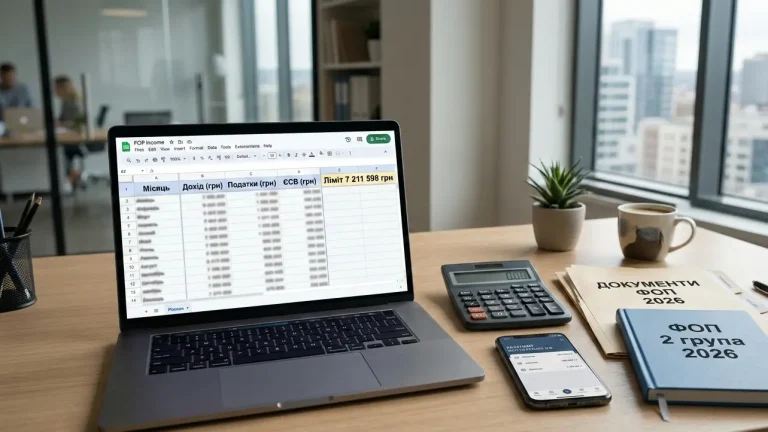
| Group 2 | 7 211 598 UAH |
| Group 3 (3%, 5%) | 10 091 049 UAH |
Reason 2. Tax debt is another common situation. If the single tax debt remains for two consecutive quarters - the tax authority cancels the single tax payer status, and the FOP automatically switches to the general system.
Reason 3. Violation of group conditions. Each single tax group has clear restrictions - on types of activity, counterparties, and income limits. For example:
A FOP designer in Group 2 creates orders for a furniture manufacturer - LLC. However, a FOP in Group 2 cannot provide services to legal entities. This is a violation of group conditions - and the entrepreneur must either switch to Group 3 or to the general system.
Reason 4. Temporary lack of income. Sometimes switching to the general system is a conscious decision, not a result of a violation. If a FOP temporarily has no income - under the general system they do not pay either the single tax or SSC for themselves. For a "sleeping" FOP, this can be more beneficial than staying on the simplified system.
Other reasons. For example, barter transactions, working with cryptocurrency, or other activities that do not fit within the simplified system rules.
Why a FOP returns to the simplified system
After switching to the general system, most entrepreneurs sooner or later want to return - and there are several important reasons for this:
- Simple administration. The advantages of the simplified system - fewer tax nuances, clearer accounting, and easier reporting.
- Predictable tax burden. For most FOPs, this is more important than the theoretical benefits of the general system.
- Change in income situation. For example, a FOP switched to the general system due to lack of income, but after a few months started working actively again - and realized that the simplified system is more beneficial again.
When you can return to the single tax and when you will have to wait longer
The timing for returning to the single tax depends on the reason why the FOP ended up on the general system: voluntarily or by decision of the tax authority.
Returning to the simplified system in the standard way
If a FOP voluntarily refused the single tax, the key factor is the date of switching to the general system. There is a general rule:
you can become a single tax payer only once during a calendar year under the standard procedure (voluntary transition).
That is why in most cases returning to the single tax within the same year is no longer possible. In practice, it looks like this:
if a FOP switches to the general system from the second, third or fourth quarter - they will be able to return to the single tax only from the next year.
Returning to the single tax after switching from January 1 is a separate case. If a FOP was a single tax payer in the previous year and switched to the general system exactly from January 1 - they can return to the simplified system within the current year. For example, switched to the general system from January 1, 2026, worked for a quarter and realized it is not beneficial - you can return from April 1, 2026.
Switched to the general system from:
April 1
July 1 2026
October 1

Can switch to the simplified system from:
January 1, 2027
Can switch to the simplified system from:
January 1, 2026
Switched to the general system from:
April 1
July 1 2026
October 1
How to return to the single tax after cancellation of single tax payer status
The tax authority has canceled the single tax payer status - this is a more complex situation. You cannot return to the simplified system immediately after settling the debts.
There is a penalty period: the FOP must wait for four full consecutive quarters from the date the tax authority made the cancellation decision. Only after that can you submit an application to return.
Example 1. The tax authority canceled the single tax payer status on March 15, 2026 - that is, in the first quarter.
1st quarter 2026 + 4 full quarters = 2nd quarter 2027
That means you can return to the simplified system only from April 1, 2027 or later.
Example 2. The tax authority canceled the single tax payer status on December 31, 2025 - that is, in the fourth quarter.
4th quarter 2025 + 4 full quarters = 1st quarter 2027
That means you can return to the simplified system only from January 1, 2027 or later.
Important: the fact that four quarters have passed is decisive. Filing reports and settling debts are necessary conditions, but they do not отменяют the obligation to wait for this period.
Afraid of making a mistake on the general tax system?
The buh.ua team will handle all your accounting - and help you get through this period without unnecessary penalties.
Conditions for returning a FOP to the simplified system - checklist
Conditions for returning to the simplified tax system are not only about deadlines, but also compliance with the requirements of the selected group. Before submitting an application to return a FOP to the simplified system, check:
- income limit,
- number of employees,
- types of activities,
- no tax debt,
- date of single tax cancellation.
If at least one condition is not met - you will receive a refusal and will have to wait for the next quarter, fix the issue and submit the application again. This means lost time. To avoid risks - check your situation with an accountant.
Conditions for FOP Group 1
FOP Group 1 may:
- have no hired employees,
- sell goods only at retail markets or provide household services to individuals.
Additionally, check: whether there is no tax debt and whether the single tax payer status has not been revoked during the last four quarters.
Conditions FOP Group 2
FOP Group 2 may:
- provide services to individuals or other single tax payers,
- produce or sell goods,
- have up to 10 hired employees or none at all.
But there are exceptions. FOPs cannot stay in Group 2 if they:
- provide real estate intermediary services,
- provide internet access services
- work with jewelry made of precious metals and stones.
Conditions FOP Group 3
FOP Group 3 may:
- have an unlimited number of hired employees,
- have no employees at all.
Additionally, check for any FOP group: whether there is no tax debt and whether the single tax payer status has not been revoked during the last four quarters.
How to apply for returning a FOP to the single tax - step-by-step guide
This is a standard application for switching or returning to the single tax system. To return to the single tax, a FOP submits to the tax authority:
| application form F0102003 | income calculation for the previous calendar year |
The key rule - no later than 15 calendar days before the start of the quarter from which you want to operate under the single tax again.
Step 1. Determine the return date and check the deadline. Decide from which quarter you want to return to the single tax - and immediately check whether the application deadline has passed. If it has - you will have to wait for the next quarter. If there are doubts about the conditions - start with a tax audit. This will help avoid rejection.
Step 2. Complete application F0102003 and prepare the income calculation for the previous year. In the application, specify the selected group and required details. The calculation confirms that your income meets the group limits.
Step 3. Submit the documents. The submission date determines whether you can return to the single tax from the desired date.
Estimated submission deadlines:
| Return date to the single tax | Application submission deadline |
|---|---|
| From April 1 | By March 16 |
| From July 1 | By June 16 |
| From October 1 | By September 16 |
| From January 1 | By December 16 |
Tip: do not wait until the last day. If there are doubts about the deadline - submit the documents earlier. A missed quarter means several more months on the general system.
FAQ: most common questions about returning to the simplified system
Can you return from the general tax system to a different FOP group instead of the previous one?
Yes, if the FOP meets the requirements of the selected group. The tax authority will check income limits, number of employees, types of activities, absence of debt, and other criteria for that group.
Can you return to the single tax if a FOP has tax debt?
In practice - no, the debt must be settled first. The presence of tax debt is one of the reasons why a FOP does not meet the requirements for returning to the simplified system.
What happens if you miss the application deadline for switching to the single tax?
In this case, you will not be able to return to the single tax from the desired quarter. You will have to wait for the next quarter and submit the application again within the established deadlines.
Can you return to the single tax if the status was revoked due to violations?
Yes, but not immediately. If the tax authority revoked the single tax payer status, you must wait until four consecutive quarters have passed since that decision.
Can you return to the simplified system after exceeding the FOP income limit?
Yes, if the deadline for returning has already come and the income for the previous calendar year meets the limit of the group the FOP wants to switch to. If the status was revoked by the tax authority, you must additionally wait until four quarters have passed.
Conclusion
Returning to the single tax is not just a matter of desire, but of timing and compliance with requirements. If you switched to the general system voluntarily from January 1 - there is a chance to return within the same year. In all other cases - only from the next year. And if the status was revoked by the tax authority, you must wait at least four quarters, regardless of whether the debts have been settled.
Preparation before submitting the application is just as important. Check income limits, number of employees, types of activities, and absence of debt. One mismatch - and returning to the simplified system will have to be postponed.
Want to return to the single tax without the risk of rejection?
The buh.ua team will check deadlines, conditions, and prepare all necessary documents - so that your return is successful on the first attempt.