


What to do if your account is subject to financial monitoring and blocked in Ukraine? How can you confirm the origin of your funds? How can you resolve these issues?

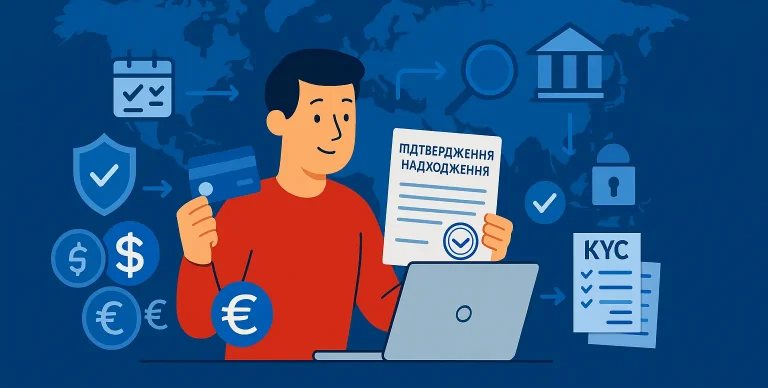
Was your account blocked and your money stuck? Banks now work more rigorously through financial monitoring and carefully verify every transaction. However, there is no need to panic: in most cases, the shells can be unblocked if you correctly explain the costs and quickly submit the required documents.
In this article, we will explain why account blocking happens, what steps can help you regain access to your funds, and how to prepare an official explanation.
What Is Financial Monitoring and Open Banking?
Today, we increasingly hear about financial monitoring - this is when a bank closely monitors your transactions to prevent money laundering. Due to the harmonization of Ukrainian legislation with the EU and the new rules of the National Bank, banks are required to block suspicious transactions and sometimes even terminate relationships with a client or report to law enforcement agencies.
Clear transfer limits have now been established:
- for high-risk clients – up to 50,000 UAH per month,
- for others starting from 2025 – between 100,000 and 150,000 UAH.
If the amount is higher, you must confirm the source of funds.
But don’t confuse all this with open banking, which also launched in Ukraine on August 1!
Open Banking is all about convenience: you will be able to view and manage all your accounts in different banks through a single app - for example, in Privat24 or Monobank. If each bank currently has its own application, open banking will allow you to check balances and make payments from all accounts in one place - provided you give your consent. Open banking itself does not affect financial monitoring and does not increase government control - your banking secrecy remains strictly between you, the bank, and the National Bank of Ukraine.
For example, if you have accounts with PrivatBank, Monobank, and Raiffeisen, after the launch of open banking, you will be able to manage them all from any “convenient” app. Meanwhile, banks will continue to keep your information secure, and no data will be automatically transferred to government agencies. However, the limits and checks for large amounts are already in effect.
By the way, we have detailed videos on our YouTube channel about card-to-card transfers, how to avoid fines, and what to write in the payment purpose field so that the tax authorities don’t misinterpret it.
Why Does Financial Monitoring Take Place?
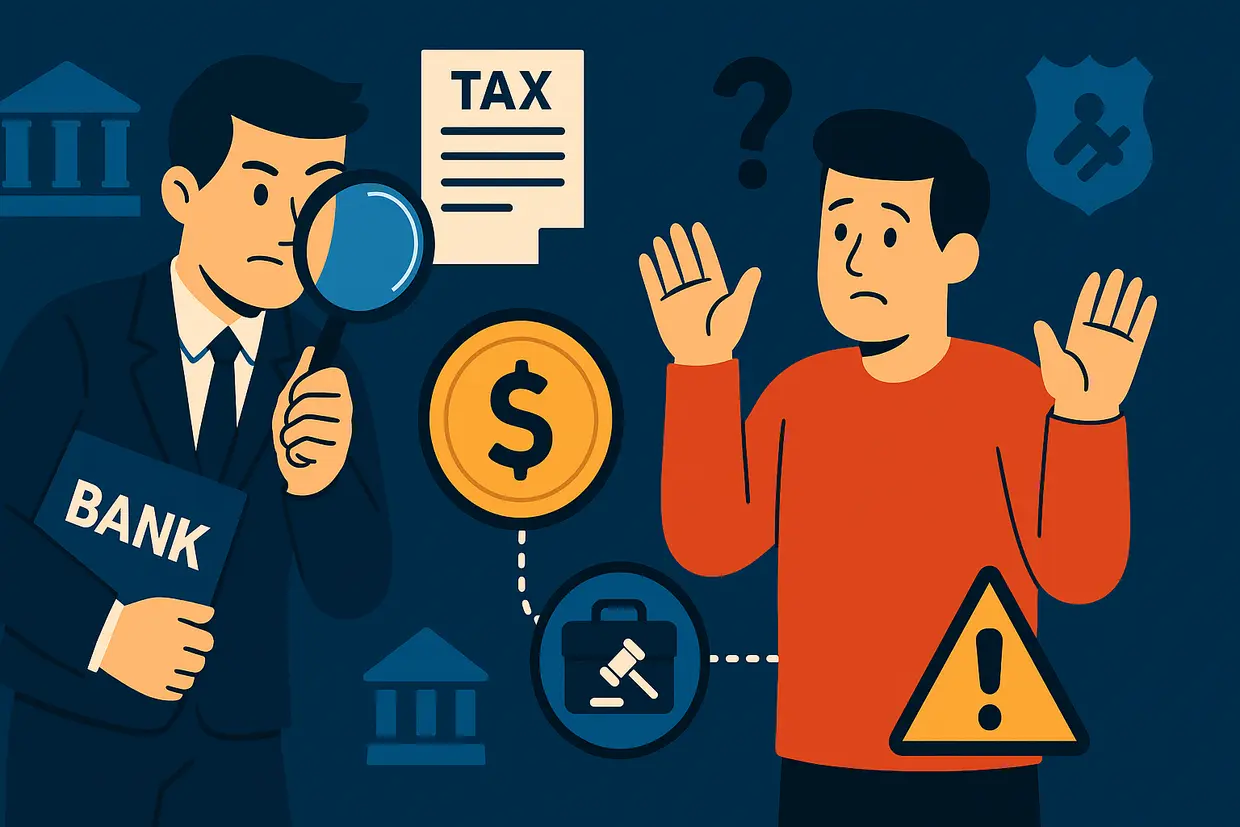
In general, banks “pay attention” to your payments and carefully check transactions because they want answers to two main questions:
- are your incomes taxable,
- and is your activity legal and compliant with the law.
Banks are obliged to determine where the money comes from - whether it is official or “something shady” - and whether you have paid taxes. If you cannot prove this, your transaction may be suspended, your account blocked, or cooperation may be completely terminated. By law, the bank must report suspicious transactions to the State Financial Monitoring Service, and then the information may be forwarded to the tax authorities or law enforcement.
And yes, banks do this not because they are curious about your life, but because they face huge fines for violating financial monitoring regulations. Moreover, when an account is frozen or blocked, simply writing to the bank’s chat is not enough. You must provide an official written explanation in which you describe the origin of the funds and confirm their legality.
By the way, our accountants have already prepared a template for such a letter. You can view examples here.
What to Do If Your Account Is Blocked?
- Stay calm
Don’t panic or argue with the chat operator. Aggression or complaints will only reduce your chances of quick unblocking. - Find out the reason for blocking
Contact the bank calmly: clarify why exactly your account was blocked and which documents need to be provided. It’s convenient to do this via chat or online banking. - Prepare a written explanation
Write an official explanation and attach copies of supporting documents. You need to clearly prove:
- the origin of the funds;
- the nature of your transactions;
- that the income is legal and taxes have been paid.
- Analyze your bank statement
Open your statement from the beginning of the year and review all deposits and transfers. Make short notes next to each transaction so you can quickly navigate when answering the bank’s questions. - Don’t argue with the bank
Avoid phrases like “why are you asking?” or “what right do you have?”. Even if you later provide all documents, such tone may harm the outcome. - Appeal the bank’s actions if necessary
If the bank refuses to cooperate, you have the right to file a complaint to:
- The National Bank of Ukraine (NBU);
- The Financial Ombudsman Council (relevant for state banks).
According to the law, an official response must be provided within 30 days, but this period can be extended.
Legal Sources of Funds
if the transfer is from friends or relatives. To make the bank truly believe that it is a “friendly” transfer and everything is legal, ask the sender for a payment receipt from the bank - this is solid proof for the financial institution.
It is better to properly formalize the arrangement going forward by entering into a loan or financial assistance agreement using the actual date. Do not backdate documents: the bank may detect this, and it will only make the situation worse.
Submit what’s called an “informational” tax declaration - even before the official reporting period, just to record your incoming transactions.
use the legal grounds listed in Article 165 of the Tax Code of Ukraine: birthday gifts, income from selling your own harvest, scrap metal, or even financial help from relatives. Such income is not subject to taxation.
The main thing is to be honest, attach official documents, and avoid trying to “cover” everything with handwritten receipts. The bank can tell when you are not a financial entity - one or two such transactions might be accepted, but if half of your incoming funds are labeled as loans, questions will arise. If you don’t want to worry, entrust accounting and, if necessary, the account-unblocking process to our specialists - they’ll definitely find a solution.
Would you like to consult with a specialist as soon as possible?
Leave your request, and our specialist will contact you shortly
Actions of the Financial Institution and the Client After Providing Explanations About the Origin of Funds
So what happens after you submit an explanation to the bank or financial institution about the origin of your funds? In fact, there are two possible scenarios:
First - the bank accepts your explanation, the issue is resolved, the account is unblocked, and you can continue using it as usual.
Second - even with the best explanations, the bank might still refuse to unblock your account. Sometimes the bank has additional information (for example, complaints from other clients), and the decision becomes final.
It’s important to understand: if the bank decides to permanently “say goodbye,” it is almost impossible to return. The law does not guarantee the right to restore service, and court decisions in favor of clients are extremely rare. At best, after one or two years, you can reapply, briefly describe your situation, and ask for a second chance - but even that doesn’t always work.
Another useful tip: if the bank closes your account and asks you to provide another one to transfer the remaining funds, do not give the number of your main business account. It’s better to use a lesser-known bank, so if another freeze happens, you won’t lose access to the account you use daily.
In any case, it’s best to have the explanation prepared by a lawyer or accountant who specializes in banking matters.
Conclusion
Account blocking is part of the regulatory requirements that banks are obligated to follow. And yes, banks do this not because they are interested in your personal life, but because they face enormous fines for violating financial monitoring regulations. The key is to calmly and officially explain the origin of funds, prepare supporting documents, and avoid conflicts with the bank.
- Stay calm and don’t panic - emotions only make the situation worse.
- Find out the exact reason for the blocking and which documents the bank requires.
- Prepare a written explanation and attach copies of supporting documents.
Would you like to consult with a specialist as soon as possible?
Leave your request, and our specialist will contact you shortly