

How to correctly indicate the purpose of payment to a private entrepreneur in Ukraine in 2026: a practical guide


Financial transaction monitoring in Ukraine in 2026 has reached a new level. Thanks to digitalization, banks and the tax service track not only the sources of funds but also every payment purpose in real time.
Today, automated financial monitoring systems instantly check whether transactions match your KVED codes and whether you have supporting documents (invoices, completion certificates). Even a minor mistake or vague wording (“payment for services” without an invoice number) can lead to an account freeze, penalties, or, worst of all, the forced loss of your single tax status.
Why a sole proprietor should control the payment purpose
Many people think: “What difference does it make what’s written there - the main thing is that the money came in.” However, for an entrepreneur this is a critical mistake. The payment purpose is the main “document” based on which the bank and the tax office draw conclusions about the legality of your income.
An incorrect entry in the payment details can instantly lead to:
- Account blocking. The bank’s algorithms will flag the payment as “suspicious”.
- Losing the simplified tax system. If the purpose does not match your KVED codes, the tax office may switch you to the general taxation system with payment of 18% personal income tax and 5% military tax.
- Fines and inspections. Vague wording is a reason to request documents for the last 3 years of business activity.
Today, every bank in Ukraine operates under international standards KYC (Know Your Customer) and AML (Anti-Money Laundering).
According tothe Law of Ukraine No. 361-IX, banks are required to perform financial monitoring of every transaction. This means that the bank must not only know your name, but understand the economic substance of the transaction:
- What exactly did you receive the funds for? (Goods, services, invoice number).
- Do you have the right to carry out this activity according to your KVED codes.
- Does the payment amount match the scale of your business.
The detailed procedure for how banks must verify clients is defined in the NBU Board Resolution No. 65.
To avoid mistakes in payment purposes and issues with the bank, accounting must be systematic. That is why many entrepreneurs choose comprehensive support for sole proprietors, which includes monitoring incoming payments, verifying transactions, and proper preparation of reports.
Don’t want to manually check payment purposes every time?
As part of comprehensive support for sole proprietors, we monitor incoming payments, verify the wording of payment purposes, and ensure transactions comply with bank and tax authority requirements
Algorithm of safe payments for a sole proprietor
Be prepared that the bank may request documents confirming sources of income at any moment. This is a standard procedure of currency control and financial monitoring.
Before making changes to your payment procedure or accepting large amounts, we recommend consulting an accountant.
- If you sell goods
The purpose must be as specific as possible so that the bank has no questions about where the money comes from. The correct formula: What exactly + supporting document (invoice/waybill) + number and date.
“Payment for goods (office furniture) according to invoice No. 245 dated 12.01.2026. VAT exempt.”
If you are engaged in trading, never write “service” or “consultation” in the payment purpose. This is a direct path to a compliance check against your business activities.
- If you provide a service
Here it is important to specify the type of service in detail so that it matches your KVED code. Avoid the vague “Payment for services”.
Examples:
- “Payment for information and consulting services according to act No. 89 dated 15.02.2026”.
- “Payment for software development services according to invoice No. 12 dated 10.01.2026”.
- “Payment for online training services according to invoice No. 45 dated 20.01.2026”.
- Transfer from a sole proprietor’s account to a personal card
This is a legal way to receive your “net” money after paying taxes.
Example: “Transfer of net income from entrepreneurial activity after tax payment to a personal card for personal needs”.
Attention! Do not use the key card to pay for personal purchases (supermarkets, cinema, gas stations). Although it is technically possible, the tax office may interpret this as misuse of funds or require proof that the bread you bought at “Silpo” is needed for your business. First transfer the money to a personal card, and then spend it.
- If you pay another sole proprietor
In 2026, banks pay special attention to settlements between entrepreneurs.
Important nuance: when paying another sole proprietor (individual entrepreneur) for their business goods or services, you do not withhold personal income tax or the military levy from the payment - they pay these taxes themselves. To prevent the tax authority from treating you as a tax agent of an ordinary individual, ask the contractor for a copy of an extract from the Unified State Register confirming their status as a sole proprietor. You report this payment in the Unified Reporting form (Annex 4DF) under income code «157» - without tax withholding.
This applies specifically to settlements between entrepreneurs under an agreement. However, if you simply pay with a business card in a store or online shop, you do not need to submit 4DF for such a payment.
If you need to add your own money to a business account (for example, for rent or taxes): “Replenishment of own working capital. VAT exempt.”
These funds are generally not considered income, but the issue is disputable - the State Tax Service may include them in your income. Therefore, be sure to keep the top-up receipt so that during a tax audit you can prove that this is your personal money, not hidden revenue.
Common mistakes in payment purpose that can cost you dearly
In 2026, the automated systems of the State Tax Service are configured to instantly detect inconsistencies. Here are the top mistakes you should avoid:
1. The payment purpose does not match your KVED codes
This is the most dangerous mistake an entrepreneur can make.
The tax service uses automated algorithms that compare the text in the “Payment purpose” field with the list of your registered KVED codes in the Register of Single Taxpayers.
What risks does this create?
- You are obliged to independently tax the amount of such a “mistaken” payment at an increased rate of 15% (instead of the usual 5% or a fixed rate).
- You lose the right to remain on the single tax from the first day of the month following the tax quarter in which the violation occurred.
- If the violation is discovered by the tax office during an inspection, the amount may be taxed as the income of an ordinary individual: 18% PIT + 5% military tax (a total of 23% taxes on turnover).
Often, sole proprietors make mistakes due to the carelessness of counterparties or the desire to “just accept the money”:
- You have KVED 47.91 (retail trade via the internet), but the client writes: “Payment for consultation on equipment selection”. For the tax office, this is a service. If you do not have KVED 70.22 (business and management consulting) - this is a violation.
- You are a programmer (KVED 62.01), but decided to sell an old laptop through your sole proprietor account. The client writes: “Payment for goods: Dell laptop”. If you do not have trade-related KVED codes - you were not allowed to sell goods as a single tax sole proprietor.
- You rent out part of your premises, but you only have KVED codes for manufacturing. A payment with the purpose “Rent payment” will lead to immediate cancellation of your single tax status.

2. No reference to the supporting document
Writing simply “Payment for goods” or “For services” is an invitation for bank financial monitoring. Without an invoice, act, or contract number, the payment is considered “anonymous”.
3. Using the same “template” for all clients
Copying the same payment purpose (“Payment for services under contract No. 1”) for different counterparties and different amounts looks suspicious. It creates the impression of fictitious activity.
4. Accepting payments to a personal card for business purposes
This is a classic trap for beginners. Any regular payment without a clear purpose to your individual card is easily identified by the bank.
As a result - the personal card may be blocked until the source of funds is clarified, and there is a risk that the tax office will recognize these amounts as undeclared income.
Regular accounting support for sole proprietors allows such mistakes to be identified and corrected in time, before the bank or tax authorities raise any questions.
Card-to-card transfers: key risks for sole proprietors in 2026
“Card-to-card” transfers (P2P) are the fastest way to pay, but for an entrepreneur they are a high-risk zone. Bank financial monitoring systems today operate based on AI that instantly highlights typical signs of business activity on personal accounts.
If you receive funds to a personal card (not a sole proprietor account), the bank may treat this as hidden income if:
- Incoming payments are regular (for example, every day or several times a week).
- Payments come from a large number of different people.
- Payment amounts often repeat or are similar in size.
Result: Card blocking until explanations are provided, and the risk that the tax office will require you to pay 18% PIT + 5% military tax on all unconfirmed amounts.
How to safely receive personal transfers?
If a transfer is truly not related to business (for example, friends reimbursed you for lunch), teach your close ones to specify the purpose correctly: “Debt repayment”, “Gift”, “Financial assistance from a relative”.
Never write the product name, order number, or the word “thank you” (the latter is often treated by banks as hidden payment for a service).
Transfer by bank details (IBAN)
This is the most official, transparent, and safe way to accept funds. Banking apps allow such transfers in seconds, so the client’s argument “card is easier” no longer works.
- Send full details: your sole proprietor account IBAN, your TIN (tax number), and full name.
- Control the client: Ask them to обязательно indicate the invoice number or the product name in the payment purpose.
- Use QR codes: In 2026, many banks allow generating a QR code for payment via IBAN. The client simply scans it - and all details and the correct payment purpose are filled in automatically.
Switching to payments via IBAN details gives an entrepreneur three strong advantages. First, you become an “ideal client” for the bank, since all your transactions are absolutely transparent and understandable for financial monitoring systems. Second, it ensures you have an impeccable reputation with the tax office. And finally, it is convenient for you: funds go directly to the official business account, which allows you to instantly and legally transfer net income to a personal card for personal needs without additional explanations.
Payments abroad: what should a sole proprietor do?
In Ukraine, sole proprietors (FOP) have the right to make payments abroad for purchased goods or provided services. However, to avoid the bank blocking the payment and claims from the tax office, you must comply with strict currency control rules.
Requirements for the payment purpose: The purpose must be as specific as possible, match your KVED codes, and be identical to the data in the invoice. For SWIFT payments, it must also be duplicated in Latin letters.
Example: “Payment for marketing services according to invoice No. 7 dated 12.01.2026. VAT exempt / Payment for marketing services according to Invoice No. 7 dated 12.01.2026. No VAT”.
For the bank in 2026, it is critically important to have a full set of documents in digital form:
- Agreement (contract) or Public offer (in many cases, an invoice can replace a contract if it contains the terms of the deal).
- Invoice - the main document for currency control.
- Certificate of acceptance of services or a document confirming receipt of goods.
- Payment instruction (the modern name for a payment order).
Payment to a sole proprietor card
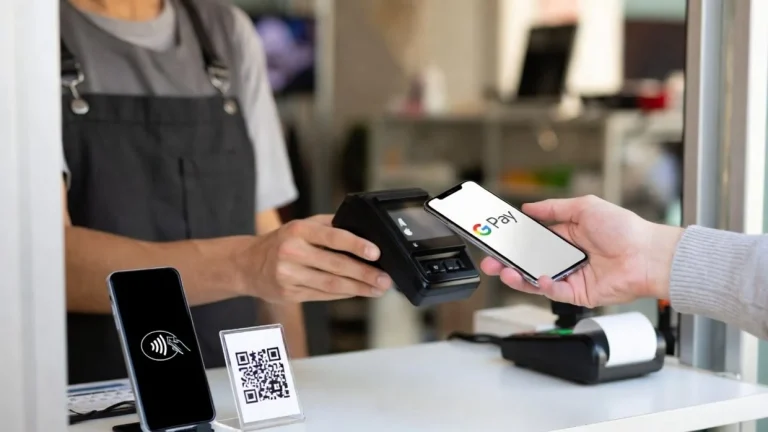
Many clients ask for a “card number” because it’s faster. This is possible, but only if two conditions are met:
If you accept payments via a key card, you are still required to issue an RRO/PRRO receipt (if your activity requires it), because such a payment is considered a settlement transaction.
Consequences of an incorrect payment purpose
An incorrect payment purpose is not just a remark from a bank clerk. It is a legal basis for sanctions:
- For sole proprietors on the simplified system: Forced cancellation of single tax status and transfer to the general system with начислением 18% PIT and 5% military tax on all questionable incoming payments.
- For everyone: Account blocking under the Financial Monitoring Law. Unblocking can take weeks and will require a pile of paper explanations.
Real case from practice: the “identical transfers” trap
One of our clients (a Group 2 sole proprietor) accepted payments for subscriptions to their service to a personal card. The amounts were small - UAH 200–500 each, but regular and from different people.
Result: The bank blocked the card due to signs of commercial activity. During the audit, the tax authority recognized these funds as hidden income. Consequences: additional assessment of personal income tax (18%) and the military levy, a fine under Article 123 of the Tax Code of Ukraine (10% of the additionally assessed tax amount), and if the tax authority proves that the violation was intentional - 25% (for a repeated intentional violation within 1095 days - 50%), plus penalties. Additionally: loss of the right to use the simplified tax system, and returning to the single tax is possible only after four consecutive quarters.
Always separate personal funds from business money. Use only an IBAN account for work.
How to avoid problems with financial monitoring
Even if you are not a sole proprietor, you are under the supervision of the bank’s automated systems. Here is how to protect your transfers:
- Specify the real purpose: Avoid empty fields or jokes in the comments (for example, “for weapons” or “for fun”). The best options are: “Gift”, “Financial assistance to a relative”, “Debt repayment”.
- Keep proof: Messenger correspondence, receipts, or loan agreements. In 2026, the bank may ask you to explain a payment from two years ago.
- Watch the amounts: Regular transfers approaching financial monitoring limits may trigger a request about the origin of funds.
- Consult in advance: If you expect a large transfer (for example, from selling a car or real estate), it is better to ask the bank in advance which documents they will need.
If you do not want to prepare explanations and supporting documents on your own, it is worth considering ongoing accounting support for sole proprietors, which includes communication with the bank, document preparation, and control of financial transactions.
Conclusion
The correct payment purpose is your “safety passport” in the financial world. This applies not only to paying taxes under code 101, but also to every hryvnia you receive from a client or partner.
Main rules for a successful sole proprietor:
- Formulate the purpose clearly (invoice number + essence of the transaction).
- Ensure it matches your KVED codes.
- Accept payments only to a business account.
Remember that transparency is the cheapest way to run a business. If you have doubts about how to оформлять documents or you received a request from the bank - specialists at buh.ua are always ready to provide qualified assistance and protect your business.
Payment purpose, IBAN, sole proprietor card, foreign currency income - all of this is part of one system.
Comprehensive support for sole proprietors from buh.ua allows you to operate without account freezes, fines, and constant monitoring of every transaction.