

Military production in Ukraine in 2026 - licenses, procurement, taxes and workforce reservation

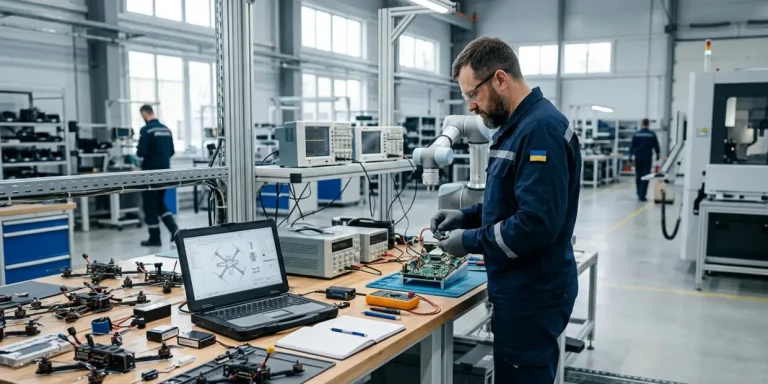
Military manufacturing in Ukraine in 2026 is a separate sector with increased state control: in some areas licenses are required, certification and codification are often needed, export control rules apply, as well as specific procurement procedures and enhanced bank financial monitoring. :contentReference[oaicite:0]{index=0}
Ukrainian entrepreneurs are increasingly entering this field: from drones and components to tactical equipment and software. But before starting, it is important to understand what exactly distinguishes defense manufacturing from “regular” business and what documents and decisions are required at the entry stage.
This article step by step: Sole Proprietor or LLC, which NACE codes/articles of association to prepare, which tax system to choose, when a license is required, how defense procurement works, what risks exist, tax incentives, and how employee reservation is оформляется.
Features of military manufacturing in Ukraine
Military manufacturing is an activity with an increased level of state control, regulatory requirements, and specific rules of interaction with banks, tax authorities, and law enforcement agencies.
Key features of the defense sector in 2026:
- Enhanced financial monitoring
Banks check ownership structure (UBO), sources of funding, defense contracts, and end recipients of products. Payments may be additionally analyzed within financial monitoring procedures. Non-transparent structure or formal documents - risk of blocking transactions.
- Export control
If products or components fall under military or dual-use goods, state export control applies. This concerns both export and import. Violation of the rules entails administrative or criminal liability.
- State secrets (in certain cases)
Working with weapons or classified defense contracts may require clearances, special information access режим, and compliance with state secrecy legislation.
- Closed defense procurement
Not all contracts go through the open system Prozorro. Some procurement is carried out through closed procedures or direct contracts - depending on the subject of the contract and the level of secrecy.
- Mandatory codification (NSN)
For most products supplied to the Defense Forces, codification is required - assigning a NATO Stock Number. Without it, products are not integrated into the military supply system and are often not accepted for delivery.
- Special tax regimes
The defense sector benefits from incentives - VAT and duty exemptions for certain categories of goods, as well as special regimes (including Defence City). At the same time, the use of incentives is subject to enhanced control by tax authorities.
- Possibility of staff reservation
Companies working for the Defense Forces can obtain critical importance status and reserve part of their employees from mobilization, provided they meet the established criteria.
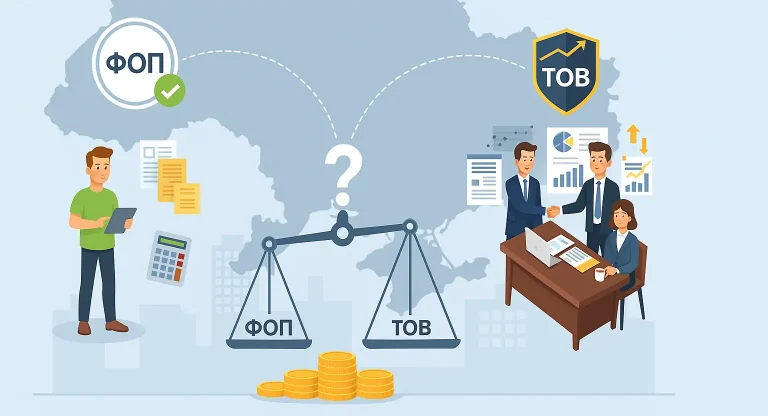
Who is military manufacturing relevant for: Sole Proprietor or LLC?
Can you operate as a Sole Proprietor, or is it mandatory to create a legal entity? It all depends on the scale and format of cooperation. :contentReference[oaicite:0]{index=0}
If you are testing the direction or working with small volumes through charitable foundations - a Sole Proprietor may be sufficient. This is a fast and simple way to legally manufacture and transfer products.
But if you plan to participate in state defense procurement, Prozorro tenders or direct contracts with the Ministry of Defense - in most cases a legal entity registration (LLC or another legal form) is required. These are the requirements typically specified in tender documentation.
Conclusion: A Sole Proprietor is suitable for starting or testing. For systematic work with the state and scaling - it is advisable to create an LLC from the beginning.
Before starting military manufacturing, it is necessary to legally confirm the right to carry out the relevant type of activity. For this purpose, NACE codes are used.
If you are already registered as a Sole Proprietor or LLC but previously worked in another field (trade, services, etc.), you need to add NACE codes corresponding to manufacturing, repair, or development of defense products.
For legal entities, this may require not only changes in the register but also amendments to the articles of association - if the list of activities is specified there. If the charter contains a general clause “any activities not prohibited by law”, it is enough to formalize a founders' decision.
Why is this important?
Without relevant NACE codes, you will not be able to obtain a license (if required), pass certification, or participate in defense procurement. A mismatch of activity types may become grounds for contract refusal or additional inspections.
Not sure which structure to choose for defense manufacturing?
Entrust business structuring to a team with experience in government contracts.
NACE codes and charter - the first legal feature of defense manufacturing.
Tax system for defense manufacturing
One of the key financial decisions is the choice of tax system. For defense businesses, two options are usually considered: the simplified system (5% single tax) or the general system (18% corporate income tax).
Calculation example:
LLC income - 9 million UAH.
Expenses - 8.2 million UAH.
- Simplified: 9 million × 5% = 450,000 UAH
- General: (9 – 8.2) million × 18% = 144,000 UAH
Difference - 306,000 UAH per year.
If expenses on components, salaries, and development are significant, the general system may be more выгодной despite the higher accounting complexity.
Licensing in military manufacturing: when it is mandatory
One of the biggest fears among entrepreneurs: "To manufacture for the military, you need a lot of permits and licenses".
The truth is that not all defense activities are subject to licensing. Moreover, many popular areas do not require a license at all.
When a license IS REQUIRED:
- Manufacturing, repair, supply of weapons and ammunition
- Handling explosive materials
- Production or circulation of special equipment, intelligence tools, special information interception tools
When a license is NOT REQUIRED:
- Software development for drones
- Manufacturing of unmanned aerial vehicles (UAVs)
- Production of individual components (boards, processors, sensors)
- Manufacturing body armor, helmets, tactical gear (if it does not relate to special equipment)
Penalty for operating without a license: from 17 000 to 34,000 UAH depending on the violation. In case of systematic violations, the license may be revoked.
A license relates to the type of activity, but the customer may require certification, testing, or codification even where a license is not required. If the product or components fall under export control (military or dual-use goods), separate permits and conclusions from the State Export Control Service are required.
How to obtain a license if it is required?
Prepare a package of documents confirming compliance with licensing conditions (production facilities, safety, organizational capacity), submit an application to the relevant licensing authority, and pay the fee - 1 subsistence minimum; in 2026 it is 3,328 UAH.
Since the requirements for documents are formalized and carefully reviewed, it is advisable to involve a specialized lawyer to prepare the package and verify compliance with licensing conditions.
Certification and NATO codification: mandatory specifics of the defense sector
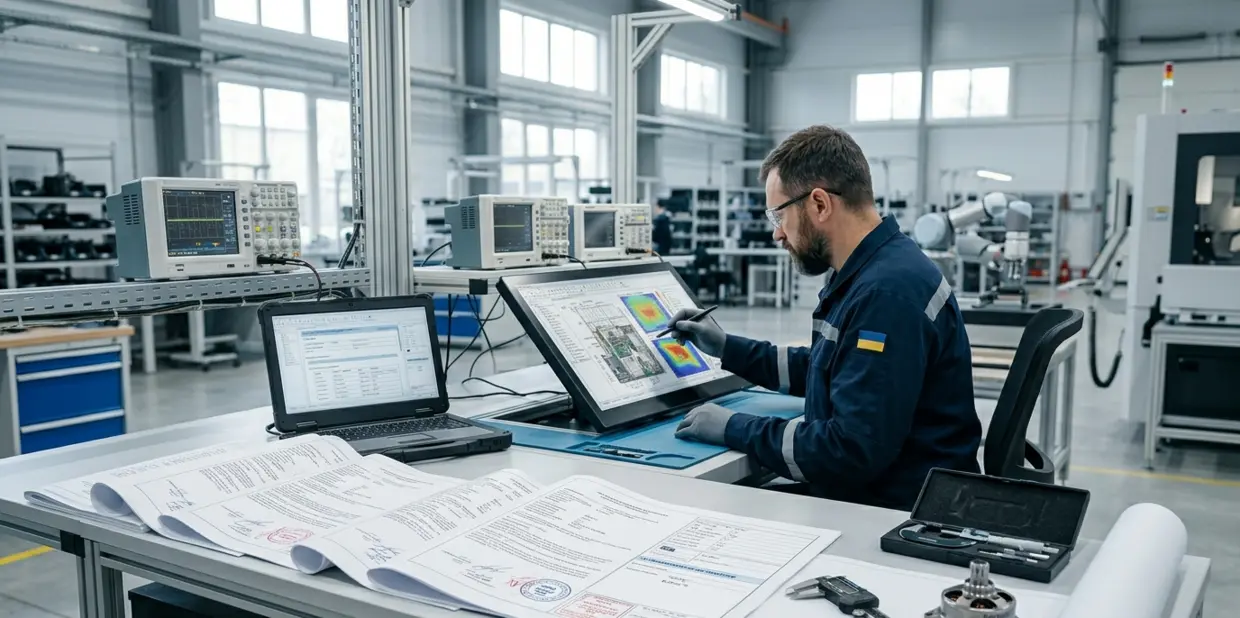
The presence of a license (if required) does not guarantee acceptance of products for supply. To work with defense contracts, certification and codification of products are usually required. :contentReference[oaicite:0]{index=0}
- Certification
To confirm compliance of products with legal requirements and standards, it is necessary to:
- develop and register technical specifications (TS);
- pass testing in accredited laboratories;
- obtain certificates of conformity (for example, DSTU 8782:2018 for body armor - if the relevant standard applies).
Without certification, products may not be allowed for defense procurement.
- NATO codification (NSN)
For most products supplied to the Defense Forces, codification is required - assigning a NATO Stock Number (NSN). This allows integration of products into the military supply system.
In practice, codification is often a mandatory contract condition even in cases where a license is not required.
For certain areas (UAVs, electronic warfare), a simplified procedure applies, but customers may set additional requirements.
Defense procurement: how to work with the Ministry of Defense and through Prozorro
You have completed everything, the product is ready. Now the main question: how to sell it to the army?
There are three main ways:
Method 1: Prozorro (official tenders)
Most public procurement goes through the Prozorro system. It is an open platform where contracting authorities publish tenders and suppliers submit their proposals.
Threshold amounts for mandatory participation in Prozorro (during martial law):
- From 100,000 UAH - goods and services (except current repairs)
- From 200,000 UAH - current repair services
- From 1.5 million UAH - works
Procurement below these amounts may be carried out without Prozorro - the customer chooses the supplier independently.
Important: Procurement related to state secrets, weapons, military equipment, ammunition, or fortifications is carried out outside Prozorro - through closed procedures or direct contracts.
Method 2: Direct contracts with military units
If simplified procurement in Prozorro has not taken place or there are specific grounds (defined by CMU Resolution No. 1178), the customer may conclude a direct contract with the manufacturer.
In practice, this means you can directly negotiate with a military unit, the Defense Procurement Agency, or the State Organization for Technological Support (DOTZ) for the supply of your products.
Method 3: Free transfer through charitable foundations
If you want to transfer products free of charge or work with a charitable foundation that finances procurement, a tripartite agreement is concluded:
- You (manufacturer) supply the products
- The charitable foundation or local government body pays
- The military unit receives the products
Or a bilateral acceptance-transfer act if you independently transfer the product free of charge to the Defense Forces.
Important: Any transfer must be properly documented - this is necessary both for your reporting and for accounting within the military unit. Before formalizing, it is advisable to check the contract structure and tax consequences together with a lawyer or accountant.
Planning to participate in defense procurement?
Prepare your business model and documents together with профиль specialists.
Risks of military manufacturing in Ukraine
The defense sector involves increased responsibility. Violations of regulatory requirements may lead not only to fines but also to suspension of operations.
Main risks:
- License revocation
Violation of licensing conditions or non-compliance with safety requirements may result in license revocation and actual termination of activities.
- Export control violations
Incorrect classification of goods or absence of permits from the State Export Control Service leads to administrative or criminal liability.
- VAT blocking
Errors in HS codes, lack of confirmation of the end recipient, or incorrect documentation may lead to suspension of tax invoices.
- Enhanced financial monitoring
Banks may suspend transactions or request additional confirmations in case of suspicious transactions or non-transparent ownership structure.
- Inspections by the State Export Control Service
Companies dealing with military or dual-use goods may be subject to inspections regarding compliance with international transfer regulations.
Tax incentives for defense manufacturing in 2026
Companies in the defense sector are eligible for certain tax incentives, but their application requires strict documentary compliance.
VAT and duty exemptions
VAT exemptions apply to the import or supply of goods if the final recipients are:
- Ministry of Defense
- Armed Forces of Ukraine
- law enforcement agencies
- volunteer formations
- contractors of state defense contracts
The exemption applies only to goods that fall under the relevant HS code categories. It is necessary to confirm that the goods match the preferential list.
Other incentives:
- Land tax exemption (for large manufacturers)
- Defence City regime: from January 2026, the first residents received benefits on corporate income tax (for reinvestment), property tax, and simplified customs procedures
Important: Tax incentives are subject to strict control. To avoid blocking of tax invoices or bank payments, maintain a complete set of documents: contracts, completion certificates, end-user certificates, customs declarations, and proof that goods qualify for preferential categories.
Export control in military manufacturing
If you plan to import components from abroad or sell your products to foreign partners, you need to understand export control rules. Defense sector companies are subject to the Law of Ukraine “On state control over international transfers of military and dual-use goods”.
Export control is required if:
- the product belongs to military goods
- the product is dual-use
- export of finished products is carried out
- certain components are imported
Permits are issued by the State Export Control Service of Ukraine.
For certain categories of goods (protective equipment, body armor, helmets, components), a simplified import procedure applies without standard permits from the State Export Control Service during martial law.
Liability for violations:
- Financial sanctions for an enterprise (legal entity): 100% of the value of the goods - if no damage has been caused to national security/international obligations, and 150% - if such damage has been caused (Articles 24–25 of the Law on State Control over International Transfers)
- Criminal: under Article 333 of the Criminal Code of Ukraine - fines up to 85,000 UAH or imprisonment up to 5 years (depending on the severity of the violation)
Reservation of employees at a defense enterprise
If your company manufactures for the army, you can obtain critical importance status and reserve your employees from mobilization.
Who grants the status:
- Ministry of Defense - for defense product manufacturers
- Ministry of Digital Transformation - for IT companies and developers of drone software
Main conditions: Availability of real contracts and documented deliveries of products to the Defense Forces (directly or through charitable foundations).
For companies applying through the Ministry of Defense: defense manufacturing must account for more than 50% of the company's activities.
Requirements for employee reservation:
- Employees are officially employed
- Minimum average salary at the enterprise - UAH 25,941 (3 minimum wages as of June 2, 2026)
- Availability of valid military registration documents
Quota: Typically, up to 50% of employees liable for military service can be reserved. If there are direct contracts with the Security Service of Ukraine, Defense Intelligence, or other special services, the quota may reach 100%.
Validity period: Up to 1 year or for the duration of the supply contract.
Submission is carried out via the Diia portal (for the Ministry of Digital Transformation) or directly through the Ministry of Defense.
In practice, if the system works correctly, reservation data appears in registers within 24 hours.
FAQ: features of defense manufacturing in Ukraine
Can a Sole Proprietor (FOP) operate in defense manufacturing?
Yes, a Sole Proprietor (FOP) can manufacture products for the army or work with charitable foundations. However, participation in government defense procurement and large contracts usually requires a legal entity (LLC).
Is a license required for defense manufacturing?
A license is required for the production and circulation of weapons, ammunition, explosives, and special equipment. Manufacturing of UAVs, software, or body armor is generally not licensed, but may require certification and codification.
What are the tax specifics of defense manufacturing?
Businesses can operate under either the simplified or general taxation system. Certain defense contracts may qualify for VAT and customs duty exemptions, provided compliance with UCC FEAC codes and confirmation of the end recipient.
What is NATO codification (NSN)?
Codification - is the assignment of a product with a NATO Stock Number to integrate it into the military supply system. For most deliveries to the Defense Forces, it is a mandatory contract requirement.
What risks are associated with defense manufacturing?
Main risks include license revocation, export control violations, VAT blocking, enhanced financial monitoring, and inspections by the State Export Control Service.
Is it possible to reserve employees of a defense enterprise?
Yes. With the status of a critically important enterprise, it is possible to reserve up to 50% of employees liable for military service (in some cases - up to 100%), provided all established criteria are met.
Conclusion
Defense manufacturing in Ukraine in 2026 is characterized by increased government control, special licensing procedures, export control requirements, defense procurement rules, and the possibility of employee reservation. This is a separate sector with its own regulatory logic and business requirements.
Producing for the Defense Forces is a real opportunity for structured business growth, but only with the correct legal and tax model from the very beginning.
Key steps to start:
- choose the organizational form (Sole Proprietor (FOP) for testing, LLC - for scaling);
- add correct NACE codes and review the charter;
- determine the optimal taxation system;
- clarify the need for a license;
- complete certification and codification;
- choose the working model: Prozorro, direct contracts, or foundations;
- check the possibility of applying tax benefits;
- if necessary - obtain the status of a critically important enterprise and arrange employee reservation.
Planning to launch or scale defense manufacturing?
Get a consultation on structure, taxation, and regulatory requirements.