

Business account for sole proprietors in 2026: key card, personal expenses and cash withdrawals without penalties

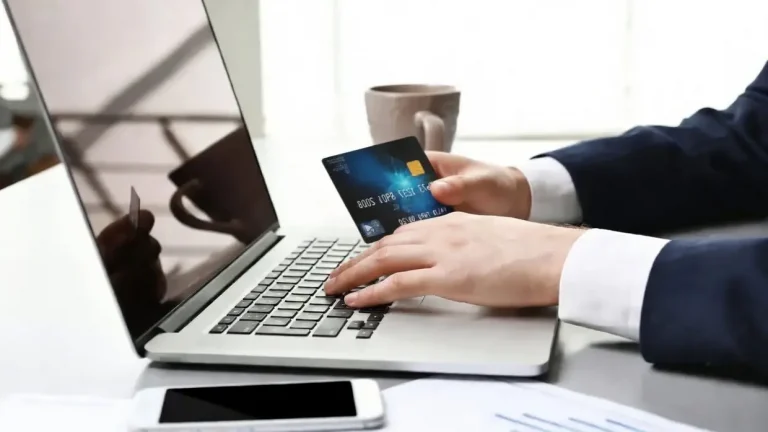
In 2026, a sole proprietor in Ukraine can freely use a business account for personal expenses and withdraw cash without penalties if they follow financial monitoring rules, do not receive income on personal cards, and correctly use IBAN and POS cash registers.
After registering as a sole proprietor, many questions really arise in the banking dashboard: can you buy groceries with a business card, how to withdraw cash correctly without triggering financial monitoring, and whether it is mandatory to open an account immediately. Most of these fears are related not to prohibitions but to misunderstanding the rules.
This article explains how a sole proprietor business account works in 2026, what the law allows, which actions create tax risks, and how to use the account without penalties or blocks.
Is it mandatory to open a sole proprietor account immediately?
Current Ukrainian legislation does not require opening an account immediately after registering as a sole proprietor. If you plan to work exclusively with cash (for example, market trading), technically you do not need an account.
However, in 2026 cashless payments are the standard. You will need an account for:
- receiving payments on a website or through a terminal;
- settlements with suppliers;
- separating personal finances and business.
Important: The number of business accounts a FOP / sole proprietor may have is not limited by law. You may have several accounts both in one bank and in different banks. If a bank refuses to open another account, this is usually related to its internal rules rather than legal requirements.
How to correctly receive cashless payments
The main headache for many sole proprietors is the payment description. The tax authority checks this line with particular interest.
The description must clearly state what the payment is for. If you are a programmer and the client writes "for apartment rent" - expect inquiries from the tax service and penalties for mismatch with your registered activity codes.
Ask clients to write specifically: "for services according to invoice No.1" or "for smartphone repair".
Lifehack: Use services such as "receiving payments from individuals" (for example, in PrivatBank). The system automatically inserts a fixed payment description, leaving the client no chance for "creativity".
Business key card - advantages and dangerous pitfalls
Every entrepreneur who opens a cashless account (IBAN) usually receives a card linked to it. This may be a "Key Card" from PrivatBank, a business card from Monobank, or from another financial institution.
What is it used for?
- Withdrawing cash from an ATM or bank cashier.
- Payments to suppliers.
- Paying office rent, fuel, and office supplies.
- Online purchases for business needs.
Can you provide the key card number for payments?
It is not recommended. A key card is designed for expenses, not for receiving money.
Banks set strict limits on incoming payments by card number (for example, up to 30,000 UAH per month in PrivatBank). Check the amount against your bank’s fees and limits, as it may change. Once the limit is exceeded, such payments may be blocked.
Fiscal receipts (POS cash register / software cash register) and cashless payments:
- Payment by IBAN details: A fiscal receipt is not required.
- Payment through a terminal, WayForPay, LiqPay or by card number: A receipt is mandatory.
Use the key card to purchase goods or withdraw cash, and provide clients with IBAN details.
Cash withdrawals and financial monitoring in 2026
You can withdraw money from a sole proprietor account, but there are rules to follow:
Withdrawing directly from the key card is expensive (usually around 1%).
If you use PrivatBank - transfer money to your personal "Universal" card and then to the "Card for payments". This allows you to minimize commission losses.
The cash withdrawal limit is UAH 100,000 per day. This is not a special limit for FOPs, but a general wartime restriction imposed by the National Bank of Ukraine (Resolution No. 18 dated 24 February 2022) for the accounts of all clients; it applies for the duration of martial law. A transaction becomes subject to mandatory financial monitoring if its amount is equal to or exceeds UAH 400,000 per individual transaction and has one of the relevant indicators, including cash-related transactions. Separately, the bank conducts risk-based monitoring: large or regular withdrawals may attract attention even below this amount.
Have questions about a sole proprietor account or cashless payments?
We will help you understand payment descriptions, the use of a business card, POS cash registers / software cash registers, and financial monitoring rules.
What is STRICTLY FORBIDDEN to do with a sole proprietor account
- Receive business income on a personal card. This violates bank rules and creates a risk of taxation at 18% personal income tax + military levy instead of the 5% single tax.
- Transfer money from a sole proprietor account to the cards of other individuals. The tax authority considers this a payment of income. You become a tax agent and must pay 23% in taxes (18% personal income tax + 5% military levy).
Want to help a friend? First transfer the money to your own private card and only then make the transfer.
- Withdraw foreign currency without conversion. It is impossible to withdraw cash dollars or euros directly from a sole proprietor account. First the currency is sold on the interbank market, converted into hryvnia, and only then you receive cash.
How to top up your sole proprietor account?
If you need to pay taxes or make purchases and the account is empty, be careful when topping it up.
If you simply transfer funds from your personal card with the description "account top-up", the tax authority may treat it as new income and require you to pay tax on it (for example, 5% for group 3).
Taxes and business purchases for entrepreneurs on the single tax can be paid directly from a personal card. It is not mandatory to run the money through the sole proprietor account.
Common myths about a sole proprietor business account in 2026
Myth No.1: A business card - only for business, otherwise a penalty
Many people believe that if you buy bread or clothes with a sole proprietor card - it is a violation.
Reality: The tax authority and banks understand that money in a sole proprietor account after paying taxes is your personal money. If you pay for groceries in a store with a business card, there is no penalty.
But there is a nuance! If you buy something that may be considered "business-related expenses" (for example, fuel or construction materials), and you do not have the corresponding activity code - the tax authority may treat this as a violation of the simplified taxation system.
Advice: For peace of mind - transfer funds from the sole proprietor account to your personal individual card and spend them however you want.
Myth No.2: If you paid another sole proprietor - you must submit report 4DF
Online advertising is an electronic service (subparagraph 14.1.56-5 of the Tax Code of Ukraine). Google and Meta are registered VAT payers under Article 208-1 of the Tax Code of Ukraine and pay this tax themselves, so a FOP / sole proprietor who is not a VAT payer does not charge anything additionally. A separate case arises if advertising is paid to a non-resident that is not registered as a VAT payer in Ukraine. In that case, the reverse charge mechanism applies (Article 208 of the Tax Code of Ukraine), and the FOP must pay VAT independently.
Reality: If you pay with a business card in retail chains or online stores, submitting information about such payments in the 4DF report is not required. No law provides penalties for the absence of such data in this situation.
Myth No.3: Paying for advertising in Google and Facebook - this is VAT for a non-resident
Companies such as Google and Meta have offices in Ukraine and pay VAT themselves. You can freely link your card to an advertising account.
Attention! If the non-resident company is not registered as a VAT payer in Ukraine, a sole proprietor (even if not a VAT payer) must independently calculate and pay this tax. If you are unsure about the company's status - it is better to pay with a personal card.
FAQ: sole proprietor business account in 2026
Can you spend sole proprietor money on personal purchases?
Yes. Funds remaining in the sole proprietor account after taxes are paid are your personal money.
Buying groceries, clothes or other personal items with a business card is not a violation and does not result in penalties.
Can you withdraw cash from a sole proprietor account?
Yes. A sole proprietor has the right to withdraw cash from a business account.
However, banks may request documents for large or regular withdrawals, so it is important to have contracts and acts confirming your business activity.
Is a fiscal receipt required when paying by IBAN details?
No. If the client pays for a product or service using IBAN details, issuing a fiscal receipt is not required.
A receipt is mandatory only when paying through a terminal, payment services or by card number.
Can you pay for advertising in Google or Facebook with a business card?
Yes. Google and Meta are registered VAT payers in Ukraine under the “Google tax” rule, so they calculate and pay VAT on the cost of advertising themselves - a FOP / sole proprietor who is not a VAT payer does not charge anything additionally.
A separate case arises only when advertising is paid to a non-resident that is not registered as a VAT payer in Ukraine. In that case, the reverse charge mechanism applies, and the FOP is required to calculate and pay the tax independently.
We have prepared a practical guide with correct payment descriptions and common mistakes made by entrepreneurs. You can get it for free - the details are in the video on our YouTube channel.
Conclusion
A sole proprietor business account in 2026 is not about restrictions, but about the correct logic of use. Money after paying taxes is yours and you have the right to manage it. Problems arise not because of personal expenses, but because of incorrect scenarios - receiving income on personal cards, transfers to other individuals, or incorrect payment descriptions.
If you are unsure how to properly process payments, work with a software cash register or use a business card without the risk of penalties - it is better to understand the rules in advance rather than correct mistakes during an audit.
Not sure how to correctly use a sole proprietor account?
We will explain how to receive payments via IBAN, use a business card, withdraw cash without the risk of financial monitoring, and avoid tax mistakes.