

How to Start Dropshipping in Ukraine Legally: FOP, Taxes and RRO

Dropshipping in Ukraine in 2026 is one of the most accessible ways to start a business without a warehouse and large investments. That is why many people start without understanding whether a sole proprietor (FOP) is required for dropshipping, what taxes will need to be paid, and whether it is necessary to use RRO/PRRO.
The ease of entry creates the illusion that there are no legal complexities. In reality - quite the opposite. Dropshipping does not have separate legal regulation, but it fully falls under tax and civil law. And ignorance of the rules does not exempt from liability. An incorrectly chosen single tax group, lack of a contract with a supplier, or absence of RRO/PRRO can turn a profitable business into a source of fines and tax claims.
In this article, we will cover: whether a sole proprietor (FOP) is required for dropshipping, which business model to choose, what taxes a dropshipper pays, how to arrange a contract with a supplier in dropshipping, and whether it is necessary to issue receipts and keep inventory records.
Is a sole proprietor (FOP) required for dropshipping in Ukraine
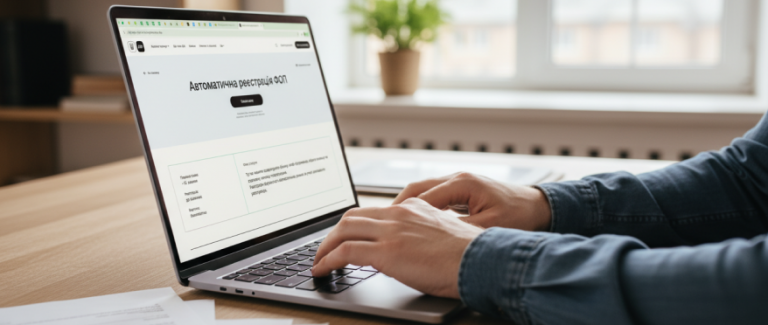
If you are launching dropshipping from scratch - the first question that arises is whether a dropshipper needs it and when to register a sole proprietor (FOP).
Dropshipping without a sole proprietor (FOP) means a constant risk of a blocked account, tax claims, and fines for unregistered business activity. Dropshipping in Ukraine does not have a separate legal definition - but this does not mean it is outside the legal framework. If you systematically sell goods, accept orders, advertise products, and make a profit - such activity has all the characteristics of entrepreneurial activity.
If you engage in business without state registration, you may face:
- a fine within the limits established by law, with the risk of confiscation of goods, funds, or other items of the offense (under Article 164 of the Code of Administrative Offenses),
- confiscation of property,
- bank account blocking due to financial monitoring,
- inability to connect acquiring, work properly with suppliers, and scale,
- no work experience record, pension, sick leave, or maternity benefits.
Registering a sole proprietor (FOP) for a dropshipper is not an unnecessary hassle but a basic condition for safe work. Of course, a sole proprietor requires accounting services. But as soon as sales become regular, it allows you to legally accept payments, connect payment services, and conclude contracts with suppliers.
Dropshipping business models: seller or intermediary
For a dropshipper, it is important which role they perform. This determines which sole proprietor group to register, how much tax to pay, whether customers will have claims against you, and even how they will be able to pay for the goods.
Important: dropshipping is an e-commerce business, and accounting for e-commerce and online stores has its own specifics that differ from a standard sole proprietor.
In practice, there are two basic models.
Model 1: dropshipper as a seller
A dropshipper as a seller is a model where a sole proprietor sells goods on their own behalf. They accept orders, receive payments, and communicate with the customer. Physically, the goods are shipped by the supplier, but from the buyer's and legal perspective - the sole proprietor is the seller.
This means full responsibility: for returns, warranties, and claims. If the sole proprietor receives payment - they must use RRO/PRRO. And the entire sales amount is considered income.
This model is suitable for those who build their own store or brand and want to scale.
| Parameter | How it works |
|---|---|
| Role in sales | Sells goods on their own behalf |
| Who ships the goods | Supplier, but responsibility remains with the sole proprietor |
| Who receives payment | Sole proprietor |
| Responsibility to the customer | Full: returns, warranties, claims |
| Payment methods | Any method, but each requires RRO/PRRO |
| What is considered income | The full sales amount |
| Documents | Sales contract, public offer, fiscal receipts |
| Who it suits | Those who build their own store or brand and plan to scale |
Model 2: dropshipper as an intermediary
A dropshipper as an intermediary is a model where a sole proprietor organizes the sale of a supplier’s goods: attracts customers, transfers orders, and manages communication. The goods belong to the supplier, and it is the supplier who bears the main responsibility to the buyer.
The main advantage of this model is that the sole proprietor’s income is only the commission, not the full sales amount. This significantly reduces the tax base. However, the model requires clear documentation: an agency or commission agreement, reports, and acts. If the actual work does not match the agreement - the tax authorities may reclassify the relationship.
This model is suitable for those who want to reduce the tax burden and are not ready to take full responsibility as a seller.
| Parameter | How it works |
|---|---|
| Role in sales | Organizes the sale of the supplier’s goods |
| Who ships the goods | Supplier |
| Who receives payment | Supplier or sole proprietor - depending on the agreement |
| Responsibility to the customer | Limited - main responsibility lies with the supplier |
| Payment methods | Bank transfer to IBAN |
| What is considered income | Only the agent’s or commission fee |
| Documents | Agency or commission agreement, agent reports, acts, public offer |
| Who it suits | Those who want to minimize tax and administrative burden |
Not sure how to start a dropshipping business legally?
The buh.ua team will help you register a sole proprietor, select KVED codes, and choose the right single tax group - so you can start without mistakes.
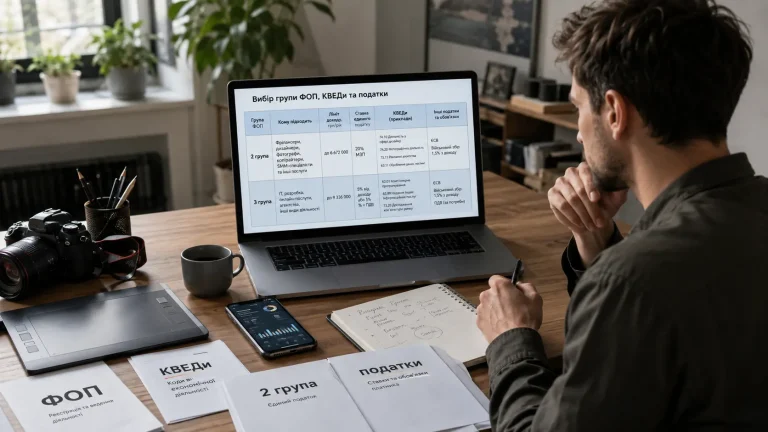
Which sole proprietor group to choose for dropshipping
The single tax group for dropshipping depends on how the business is actually structured: whether you sell goods on your own behalf or provide intermediary services to a supplier as an agent. The main options are choosing between FOP Group 2 and Group 3. This is where mistakes are most common - choosing Group 2 for its lower tax burden, while in reality Group 3 is safer.
The most sensitive issue is the circle of counterparties. If the supplier is a legal entity or a sole proprietor on the general taxation system, and the dropshipper provides intermediary services to them - staying on Group 2 is risky. Because a Group 2 sole proprietor can only provide services to individuals and single tax payers. In case of an audit, this may be classified as a violation of group conditions with additional tax assessments and retroactive transfer to the general system. In such a case, a safer option is Group 3 of the single tax.
However, if you operate under the seller model (you purchase goods and resell them in your own name), there are no restrictions: in Group 2, you can purchase from any supplier and sell goods to anyone - the supplier’s tax status is irrelevant. The issue of group classification arises specifically in the intermediary model, where the supplier is the customer of your service.
FOP Group 2 for dropshipping: advantages and risks
Group 2 of the single tax is attractive due to its fixed rate - and it is indeed beneficial if the business model meets the conditions. But this is where dropshippers make the most mistakes.
FOP Group 3 for dropshipping: advantages and risks
Group 3 of the single tax is a universal option for dropshipping. It has no restrictions on counterparties and is suitable for both sellers and intermediaries. However, taxes here may be significantly higher.
Main rule: choose the group not by the size of the tax, but by how your business model is actually structured. The tax authorities always assess the real substance of the activity, not its form - and if they differ, the consequences will be serious.
How to structure a contract with a supplier in dropshipping
Relationships with a supplier in dropshipping are not just an agreement about who accepts orders and who ships the goods. The contract determines who you are in this model - a seller or an intermediary, what will be considered your income, and who will bear responsibility to the customer. Without a properly structured contract, even a profitable business model becomes vulnerable.
What contracts are used in dropshipping (agency, commission, mixed)
In practice, three main structures are usually used for dropshipping:
- agency agreement - if the sole proprietor acts in the interest of the supplier and receives a commission for intermediary services;
- commission agreement - if the sole proprietor sells goods on their own behalf but at the supplier’s expense;
- mixed agreement - if the model combines elements of several schemes and requires more precise adaptation to actual operations.
What must be included in a dropshipping contract
- Roles of the parties. Clearly define who the sole proprietor is: an agent, a commission agent, or a seller. This determines the tax regime, documentation, and liability.
- Ownership of goods. It must be clear whether the goods remain the supplier’s property until sale or the sole proprietor sells them on their own behalf. This determines whether it is an intermediary model or an actual sale of goods.
- Who sets the price for the customer. If the sole proprietor sets the price independently - this strengthens the characteristics of a seller model. If the price is determined by the supplier - this should be specified separately.
- Who receives payment from the customer. Define whose account the funds are credited to - the sole proprietor’s or the supplier’s. The flow of money often determines the obligation to use RRO/PRRO and tax risks.
- Who ships the goods and is responsible for delivery. In dropshipping, shipping is usually handled by the supplier - but this must be explicitly stated to avoid disputes in case of delays, packaging errors, or loss of shipment.
- Who is responsible for product quality and warranties. If this is not regulated, responsibility to the customer will effectively fall on the party that appears to be the seller - usually the sole proprietor. It is better to define the supplier’s obligations regarding quality and compensation in case of returns.
- Return and compensation procedures. Define who handles returns, who reimburses delivery costs, who refunds the customer, and how the sole proprietor is compensated by the supplier.
- Documentation flow between parties. For agency and commission models, include agent or commission reports, service acceptance acts, delivery notes, and invoices. Without these, it is difficult to prove that the sole proprietor acted as an intermediary.
- Settlement procedures between the sole proprietor and the supplier. Specify when and how the sole proprietor transfers funds to the supplier, when they retain their commission, and which amounts are transit funds.
Tip: first define the actual business model - and only then build the contract around it. If done the other way around, the contract may be called an agency agreement, while in practice the activity will look like a regular sale - with all the tax and consumer consequences.
How to structure sales in dropshipping for the end customer
Public offer for an online store is a mandatory document if sales are made through a website. It regulates the relationship between the seller and the end customer and determines who is responsible to the consumer. Without it, a dropshipper operates without legal protection tools and is in a vulnerable position in case of disputes with customers.
The first thing a public offer must include is a clear definition of who the seller is. If this is missing, responsibility in case of a claim automatically falls on whoever appears to be the seller. Most often, this is the dropshipper. If you operate under a commission agreement - the seller is the sole proprietor, and this must be explicitly stated in the document.
Return conditions in dropshipping are one of the most sensitive issues because the goods are physically held by the supplier, while the customer submits claims to the party that appears to be the seller. The law guarantees the consumer the right to return goods within 14 days and request a replacement in case of defects. If the return procedure is not specified in the offer - the dropshipper is left without a clear action plan and without legal grounds to demand compensation from the supplier. The result: the dropshipper refunds the money, while the supplier bears no responsibility.
Attention: a public offer is not just a template from the Internet. Its content directly affects how responsibility is distributed between the dropshipper, supplier, and customer. If there are doubts about the wording - it is better to involve a lawyer in drafting it than to fix mistakes during a customer dispute.
Using a template offer from the Internet?
A template does not take your business model and responsibility into account. In a dispute with a customer, this can become a serious problem. Our lawyers will adapt the offer to your specific situation.
Is RRO/PRRO required for dropshipping in 2026
RRO/PRRO in dropshipping depends on who exactly receives payment from the customer.
When RRO/PRRO is mandatory
If the dropshipper receives payment from the customer - they are a party to the transaction and must use RRO/PRRO. Without this, you may face penalties. The payment method does not matter. This applies to:
- cash,
- payment cards,
- payment services,
- cash on delivery if it is issued to the dropshipper,
- acquiring (Monobank, LiqPay, WayForPay, NovaPay).
If fiscalization is not carried out - there is a high risk of additional penalties being assessed.
When RRO/PRRO is usually not required
Fiscalization is not required if the dropshipper does not receive payment from customers and only receives a commission from the supplier. In this case, the supplier conducts the transaction with the customer, and the obligation to use RRO lies with them. A dropshipper may not use RRO/PRRO if settlements with the supplier are made exclusively in non-cash form - for example, by bank transfer to IBAN without using cards or acquiring.
Payment options for dropshipping:
Which option to choose depends on the business model and the supplier. But the main rule remains the same: if the payment goes through you - fiscalization is mandatory. If you are unsure how to properly organize payments in your specific case - it is better to consult an accountant before launching rather than fixing mistakes during a tax audit.
What documents a dropshipping sole proprietor must have
Documents for a dropshipping sole proprietor are not just about accounting, but also protection during a tax audit. A common mistake is that dropshippers think that if goods do not physically pass through their hands, then almost no documentation is required. This is not true. For tax authorities and banks, what matters is not the movement of goods, but the fact of a business transaction and receipt of income.
The most important documents for a dropshipper are:
1. Contract with the supplier - a key document without which everything else loses meaning. It confirms on what basis the sole proprietor receives funds: as a seller or as an intermediary. In an agency model, the contract explains why income is only the commission and not the entire turnover. In a commission model, it defines the distribution of rights and the flow of funds. If there is no contract or it is just a template - the tax authority may independently reclassify the relationship, usually not in favor of the taxpayer.
2. Documents confirming the origin of goods - invoices, delivery notes, or other documents confirming the purchase or transfer of goods for sale. Their purpose is to prove that the supplier can be identified and that the goods have a clear origin.
3. Risky scenario: goods are purchased by an individual - for example, through marketplaces - and then sold within the sole proprietor’s business. In such a case, primary documents confirming expenses and origin of goods are often completely absent, which raises doubts about the legitimacy of business activity.
4. Agent report and service acceptance act - key documents for the agency model. The report confirms the scope of work performed, number of attracted customers, amount of funds within the contract, and commission size. The act confirms the provision of services. Without these documents, the position that income is only the commission becomes vulnerable - and it will be difficult to prove it during an audit.
5. Bank statements and payment documents - for commission or seller models. They confirm transactions and form the sole proprietor’s income for tax reporting.
6. Fiscal receipts - if the sole proprietor uses RRO/PRRO. In this model, they are part of the document package confirming the sale of goods.
Documents are needed not only for tax accounting. Banks analyze the economic substance of transactions - and if there are no contracts, invoices, or acts, the entrepreneur cannot explain the origin of funds. The result is account blocking and a request to provide explanations.
Inventory accounting in dropshipping
Many entrepreneurs believe that if there is no physical stock in a warehouse, then accounting is not required. However, for tax authorities, the key factor is not the storage location of goods, but the role of the sole proprietor in the business model.
Scenario 1. Dropshipper works as an intermediary
In an intermediary model, inventory accounting depends on whether the sole proprietor has their own goods or other inventory in their business activities, the movement of which must be confirmed by primary documents. If the goods fully belong to the supplier and the sole proprietor does not keep inventory records, the risk is lower, but the model must be supported by a contract and documents.
Therefore, the risk of inventory accounting is significantly lower if two conditions are met at the same time:
- the dropshipper does not have their own goods;
- the goods fully belong to the supplier.
Scenario 2. Dropshipper sells goods on their own behalf
If an entrepreneur receives payments from customers, sets prices independently, and is responsible to the buyer - such activity may be classified as the sale of goods. In this case, tax authorities may treat the goods as being used in the sole proprietor’s business activity, even if they are not physically stored in a warehouse. Therefore - an obligation to maintain inventory records arises.
If a dropshipper actually sells goods on their own behalf but does not keep inventory records - this is a direct risk of fines. And they are calculated not as a fixed amount, but based on turnover. With large volumes, this can be a significant amount.
FAQ: dropshipping in Ukraine - FOP, KVED codes, taxes and RRO
Which KVED codes are suitable for dropshipping?
For dropshipping, the following KVED codes are most commonly used:
- 47.91 - retail trade via mail order or the Internet (if the dropshipper is a seller);
- 46.19 - agents involved in the sale of mixed goods (if the dropshipper is an intermediary);
- 47.99 - other retail trade not in stores.
Depending on the type of goods and business model, other codes may also be added. However, choosing the wrong KVED codes may result in fines, so they should be selected carefully.
When does a dropshipper definitely need RRO/PRRO?
When they receive payment from a retail customer using acquiring. In this case, the transaction must be processed through RRO or PRRO for the full purchase amount.
What should you do with the receipt if the goods are shipped by the manufacturer and not the dropshipper?
If RRO is used - a paper receipt must be included in the shipment together with the goods. Therefore, the dropshipper must provide this receipt to the manufacturer or supplier. If PRRO is used - the receipt can be sent to the customer electronically.
Is a tax invoice required if the dropshipper is a VAT payer?
Yes. If the sole proprietor is a VAT payer and receives funds from a retail customer - they must issue a tax invoice and register it in the Unified Register of Tax Invoices.
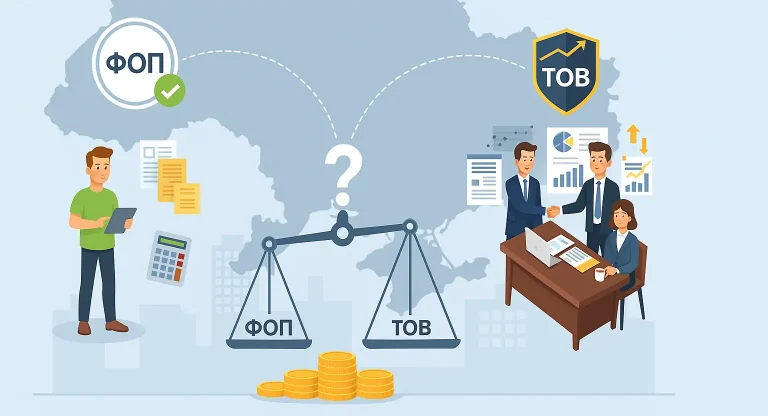
When should you choose an LLC instead of a sole proprietor for dropshipping?
An LLC is usually chosen when the business grows, involves several partners, requires regulated roles in management and income distribution - or there is a need to scale through investments.
Is a public offer required if sales are made through a website?
Yes. A public offer agreement is mandatory for a website where goods are presented - it regulates the terms of interaction between the dropshipper and end customers. Without it, the dropshipper effectively has no legal tools to resolve disputes with customers.
Can you run dropshipping via Rozetka, Prom or Amazon?
Yes. Marketplaces are one of the most common channels for dropshipping. However, there is a nuance: the terms of work differ on each platform, and some of them directly require the seller to have a registered sole proprietor or LLC. It is also important to consider that a marketplace may act as an intermediary in payments - which affects the obligation to use RRO/PRRO.
How to set up dropshipping with a Chinese supplier or via AliExpress?
If the supplier is a non-resident - for example, a Chinese company or a seller on AliExpress - additional complexities arise. First, a contract with the non-resident is required as a basis for foreign currency operations and SWIFT transfers. Second, when working with non-residents, you should separately check VAT implications for each transaction. They depend on the type of payment (goods or services), the supplier’s status, and the settlement model. Third, customs clearance is a separate issue that depends on the shipment value and delivery method.
Conclusion
Dropshipping in Ukraine is a full-fledged business activity with real tax and legal obligations. The absence of your own warehouse does not exempt you from documentation, RRO/PRRO, or responsibility to the customer.
The key takeaway: in dropshipping, the decisive factor is the role the entrepreneur performs. Seller or intermediary - this determines the single tax group, taxation model, fiscalization obligation, and the entire document flow. And if actual operations differ from what is stated in the contract - tax authorities will assess the substance, not the form.
Therefore, a properly structured model from day one will save far more than any attempt to cut costs on legal setup.
Spending more time on taxes than on sales?
Delegate the legal and accounting part to the buh.ua team - and focus on your business.