

How can a Ukrainian freelancer receive payments from abroad

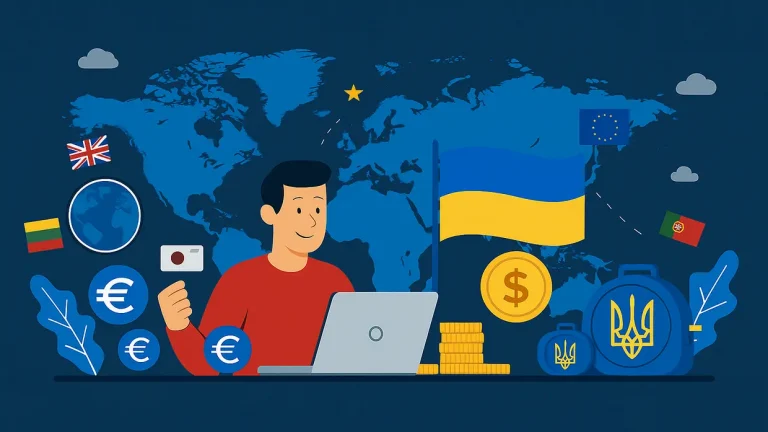
Freelancing in Ukraine has long been more than just a side hustle – for thousands of professionals, it's a full-fledged career that offers freedom, clients from all over the world, and foreign currency income. But every year, more and more questions arise: how to correctly receive payments from foreign clients, which payment systems to choose to avoid losing funds on commissions, and how to avoid violating currency laws? This guide explains how to receive payments from foreign clients in Ukraine using Payoneer, Wise, PayPal and SWIFT.
Ukrainian freelancers have long had a reputation for being responsible professionals, and for international clients, this is not only profitable but also reliable! However, many web developers and designers still don't know how to properly and profitably receive payments from foreign clients. Will commissions or double conversion eat up all their money? What's more convenient: SEPA transfers, SWIFT, Wise, or Payoneer, or maybe PayPal or even cryptocurrency? The choice is vast, but each method has its own advantages and pitfalls. In this article, we'll explore the most convenient ways to receive payments from abroad.
How freelancers in Ukraine get paid by foreign clients
It is important for freelancers to know how a Ukrainian freelancer can receive payments from abroad from international clients so they can get paid through international payment systems or bank transfers. Let's compare the most popular payment systems for freelancers.
Please pay attention to four main criteria:
commission size;
legality (is it possible to issue an invoice and conclude an agreement);
safety for the performer and the customer;
Is this method suitable for working specifically with companies?
Each method has its own "tricks":
SWIFT: for large amounts and official contracts it is often chosen;
Payoneer: for fast and minimal losses;
Wise: the Wise service for freelancers with low fees;
PayPal или MoneyGram: for online shopping or small orders.
Payment methods such as Payoneer, Wise, SWIFT, SEPA, and PayPal are convenient, but they do not guarantee complete security for both parties: there is no legal protection, official confirmation of the agreement, or support in the event of a dispute.
| Payment system | Commission | Legality (invoices/contract) | Security (escrow/protection of parties) | Suitable for companies |
|---|---|---|---|---|
| Wise | 0,5–1,5% | ❌ There is no contract or invoice (Freelancers - sole proprietors of group 3 can provide such documents, but they often do not meet the accounting requirements of the client company) | ⚠️ transaction only - no protection | ⚠️ partially (no automation) |
| Payoneer | 1–3% | ❌ receipts only, no B2B documents | ⚠️ partial protection, but often blocks | ⚠️ bureaucracy |
| PayPal | up to 5% + conversion | ❌ An invoice has no legal force if the freelancer does not have a company | ❌ risk of blocking, no arbitration | ❌ high risks and conflicts |
| SWIFT/SEPA | $10–50 | ❌ There is a payment, but there are no documents | ❌ no protection or confirmation | ⚠️ formally suitable, but risky |
| Cryptocurrency | ~1% | ❌ not suitable for accounting | ❌ complete lack of guarantees | ❌ not for B2B |
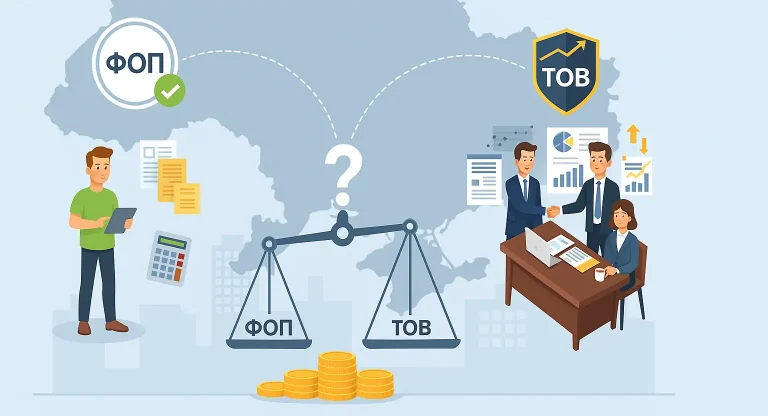
How can a sole proprietor who pays a single tax receive income from abroad in foreign currency?
In fact, it's simple: you must accept payments only to the sole proprietor's corporate account, not to a personal card or bank account - that's the basic rule. Incidentally, you can have as many sole proprietorship accounts as you like at different banks, especially if you frequently work with international clients.
To handle foreign currency, a sole proprietor opens a separate foreign currency account (or even several, or even a multi-currency account). Currency withdrawals from a personal account are not possible, but a sole proprietor account is convenient for depositing payments and operating officially.
However, there are some nuances:

In Ukraine, all payments are made in hryvnia, but foreign currency payments are permitted with international clients. The currency is first credited to your foreign currency account, but then it must be converted to hryvnia at the NBU exchange rate on the date of receipt. This hryvnia amount appears on your tax return.

It's important to note that you don't have to sell the currency immediately - it can sit in your account for as long as you need. However, officially, you can't transfer currency from a business account to a personal account (some banks resort to tricks, but these are their own nuances).
Another point: you can't withdraw foreign currency in cash directly from a sole proprietorship account - you first need to convert it into hryvnia before withdrawing it.
There is another trick with the exchange rate difference:
If you exchanged currency at a rate higher than the NBU rate, this positive difference can be counted as income - and the tax authorities sometimes monitor this, and sometimes even "catch" it and try to assess additional taxes or penalties. However, for sole proprietors operating under the single tax system, positive exchange rate differences are not included in income.
Currency control for freelancers
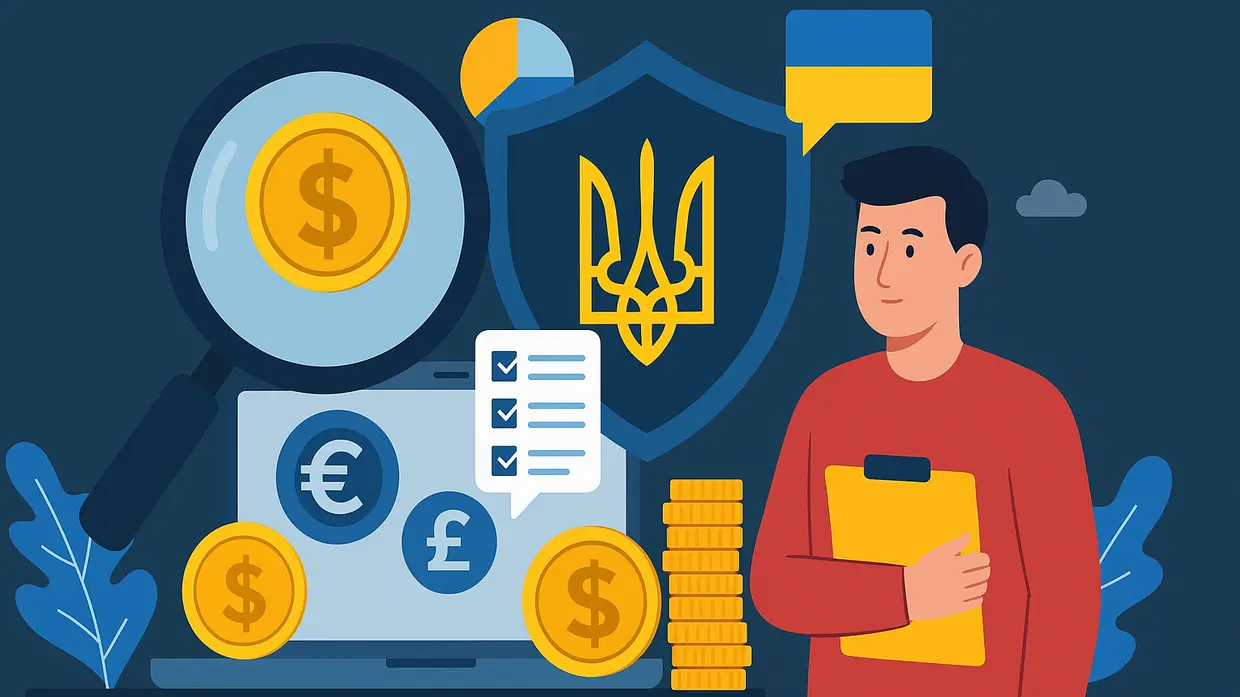
It's now easier to confirm the source of foreign currency inflows - all you need is an invoice (bill for payment) issued by a freelancer to a non-resident client. What's the point? The invoice must clearly state the services being paid for and the amount, and a signature is required only from the freelancer. Under the new rules, such an invoice is officially considered a foreign trade agreement and serves as the basis for crediting the currency to your account.
No additional contracts are needed if everything is drawn up correctly.
Consult a specialist on how freelancers can receive payments from abroad
Leave a request and our specialist will contact you shortly
Do freelancers need a contract with foreign clients
How to pay a Ukrainian freelancer from abroad? What does a client need to know?
If you're a freelancer and your client is from France, for example, and wants to pay you quickly, that's no problem now. Consider this service – Freelancehunt. You'll have all the legal confirmations for your reporting and accounting, as they're generated by their legal entity, directly in the EU. Furthermore, Freelancehunt accepts dollars, euros, and Polish zlotys for bookings made via Safe from abroad – no extra conversion fees. Everything depends on the country and the account from which the payment is made:
- Money transfers from Europe to Ukraine will be in euros.
- Money transfers from Poland to Ukraine will be in Polish zlotys.
- Money transfers from the US, Canada, or any other non-EU country to Ukraine will be in US dollars.
There are several ways to transfer money from abroad to Ukraine. The most common options include international bank transfers via SWIFT, payment services such as Wise and Payoneer, and electronic systems like PayPal.
Example: Imagine you are a web designer from Ukraine and you received an order for a website from a client in New York, the price is $200.
By the way, our accountants can calculate all the pros and cons in detail based on your individual request and select the most profitable option for you.
You can learn more about how freelancers accept payments from abroad in the section on international payment services.
Earning income in cryptocurrency
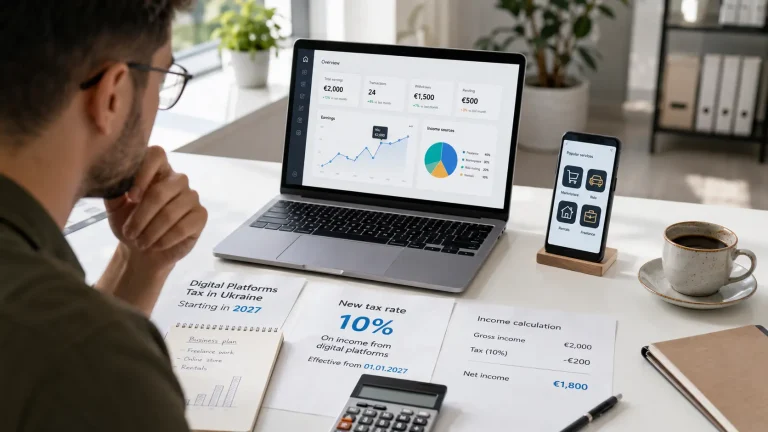
Currently, there is a clear rule in Ukraine: for sole proprietors paying the single tax, payments can only be made in cash - either cash or bank transfers. The legal currency in Ukraine is the hryvnia, but foreign currency is only permitted if you are receiving payment under a foreign trade contract.
Cryptocurrency, in fact, does not yet have official legal status in Ukraine - it is not recognized as either a currency or a financial asset, and there are no clear rules for working with it in the legislation. However, changes are announced for 2026 in draft law No. 10225-d.
In practice, if you're on the single tax system, you can't accept cryptocurrency payments. Why? Because for simplified taxpayers, any transaction where a service is exchanged for a product rather than money is considered a transaction. And cryptocurrency isn't "money," but a product → it's a barter transaction. And barter is prohibited for sole proprietors on the single tax system! For doing so, you could be charged an additional 15% tax on the amount and even lose your simplified tax system membership.
However, if you operate under the general tax system, cryptocurrency payments are not directly prohibited. However, this is still barter, and it's crucial to complete all paperwork correctly. In this case, be sure to consult with an accountant.
How to withdraw currency?
What documents freelancers need to receive payments from abroad
Primary documents aren't just bureaucratic window dressing, but your primary insurance against audits. Even if a sole proprietorship operates on a single tax system, income accounting must be based on primary documents confirming receipts and tax payments. Think memory space or a Gmail account are enough? No – the tax authorities will ask for the documents.
Useful video
Frequently asked questions
How can a freelancer receive money from abroad?
A freelancer can receive payments from abroad in several ways: via a SWIFT bank transfer, international payment systems Wise, Payoneer or PayPal. The choice depends on the client’s country, the payment currency and the commission conditions.
How is a freelancer paid by a foreign company?
Usually payment to a freelancer from a foreign company is made through international payment systems or bank transfers. A client can send money via a SWIFT transfer to a foreign currency account, or use services such as Wise, Payoneer or PayPal. To receive payment, the freelancer usually issues an invoice with payment details, after which the funds are credited to the account and can be withdrawn to a Ukrainian bank or card.
Which payment systems for freelancers are best for receiving payments from abroad?
Today there are several popular payment systems for freelancers that allow receiving payments from foreign clients. The most commonly used are Wise, Payoneer and PayPal. These services support international transfers, allow receiving payments in different currencies and withdrawing funds to bank accounts in Ukraine. The choice of system depends on the client’s country, the payment currency and the commission size.
What is Payoneer for freelancers and how does this payment system work?
Payoneer for freelancers - is an international payment platform that allows receiving payments from foreign clients and online marketplaces worldwide. Through a Payoneer account a freelancer can receive payments in different currencies (USD, EUR, GBP and others), send invoices to clients and withdraw money to a bank account or card. The platform supports transfers in more than 190 countries and works with popular freelance marketplaces such as Upwork or Fiverr. The company buh.ua is a partner of the Payoneer service, detailed information about account setup and receiving international payments is available in the official Payoneer guide.
How to issue an invoice to a foreign client?
To issue an invoice to a foreign client, a freelancer needs to prepare a payment invoice with the main details: the performer’s name, service description, payment amount and currency, as well as transfer details. The invoice can be sent to the client by email or created through services such as Payoneer, Wise or other payment systems. After that, the client pays the invoice and the money is credited to the specified account.
Conclusion
- Funds should be deposited into the sole proprietor's account, not a personal card;
- Always have an invoice (bilingual) or other proof of payment;
- Consider the commission, exchange rate, and taxes to avoid losing part of your fee;
- Cryptocurrency is currently illegal for single taxpayers - use caution;
- The choice of system depends on your clients and the contract amount: official SWIFT/SEPA are best for large projects, while Payoneer or Wise are better for faster and smaller payments;
- If you sell currency at a price higher than the NBU exchange rate, the tax authorities may consider the difference as income and charge additional taxes. However, for sole proprietors on the single tax system, positive exchange rate differences are not included in income.
Do you want to consult on how a freelancer can accept payments from foreign clients?
Leave a request and our specialist will contact you shortly