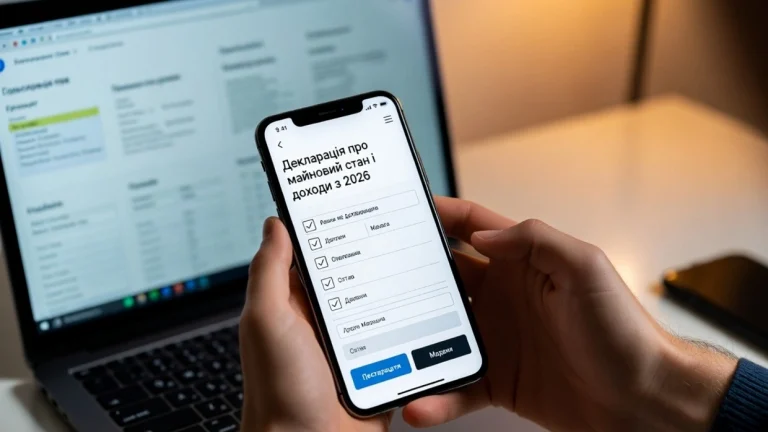


Digital Platform Tax in Ukraine from 2027: OLX, Bolt, Airbnb, Freelancers - Who It Affects and How Much to Pay

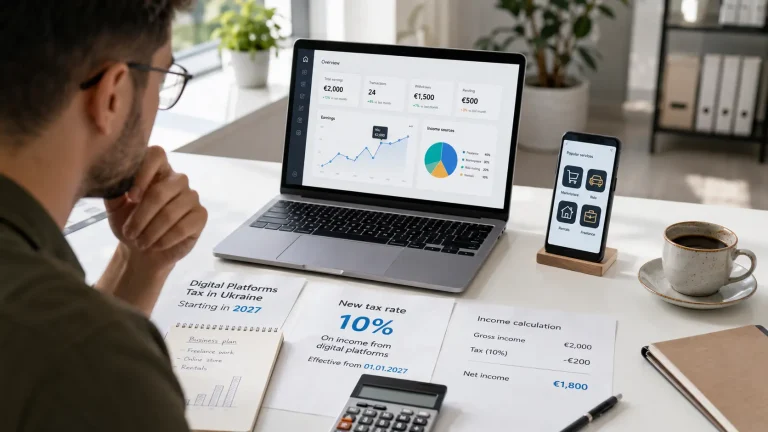
Users most often want to know whether they will have to pay tax on sales through OLX, income from Bolt, Airbnb, Upwork, Fiverr and other digital platforms. If you sell goods on marketplaces, rent out accommodation or take freelance orders - the rules for you will change in the near future. The Verkhovna Rada has adopted a law on the taxation of income earned through digital platforms, and from 2027 platforms will report part of their users' income to the tax authority themselves.
It may sound alarming, but it is too early to jump to conclusions. This is not “another tax on top”: for those who fall under it, a separate reduced regime is provided.
In this article, we will calmly go through everything step by step: who the new rules apply to, how much will have to be paid, who exactly will transfer the tax, when it will all start working and what is worth doing now so that 2027 does not come as a surprise.
Law No. 15111-d: what will change for users of digital platforms
On June 9, 2026, the Verkhovna Rada adopted in the final reading Draft Law No. 15111-d - on amendments to the Tax Code regarding the automatic exchange of information on income earned through digital platforms.
As of June 2026, the law is awaiting the President's signature and has not yet entered into force.
In essence, Ukraine is introducing an approach that already operates in the European Union: digital services will automatically transmit data on their users' income to the tax authority. The goal is to make online sales and service provision transparent, and for many individuals also simpler: the platform itself will calculate and transfer the tax.
Who the digital platform tax applies to
The new rules apply to income from so-called reportable activities carried out through digital platforms. As a general rule, this includes:
- sale of goods - marketplaces such as Prom, Rozetka, Etsy;
- services and freelance work - completing orders through platforms;
- transportation - Bolt, Uklon, Uber;
- delivery - Glovo and similar services;
- rental of accommodation and vehicles - Airbnb, Booking, and others.
Simple example: a designer takes orders through a platform, a driver carries passengers, and someone rents out
an apartment by the day. All of these situations may fall under the new rules - if the income goes through a reportable digital platform.
Does OLX fall under the new digital platform tax?
This is the most common question - and the answer depends on how exactly the payment is made.
- If the platform only publishes your listing and you receive the money directly from the buyer, this situation may not fall under the new rules.
- But if the payment and transaction go through the platform itself - this may already be a reportable activity.
So it is not about the name of the service, but about the transaction model. If there are doubts in your case, it is better to clarify the details during a consultation - it is cheaper than later dealing with tax authority requests.
How much to pay: a 10% rate instead of 23%
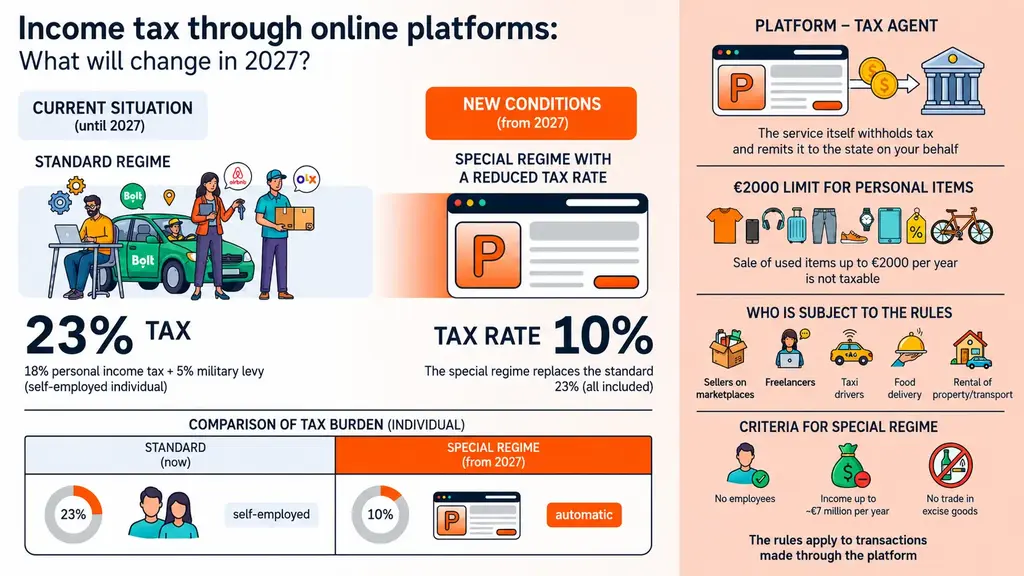
Currently, the standard tax burden on an individual's income is 18% personal income tax plus 5% military levy, 23% in total. The draft law provides for a special tax regime with a 10% rate for individuals who meet the established criteria. Not all platform users will be able to use it.
This is the key idea of the law: not to “punish” people who earn extra income online, but to give them a clear and moderate tax regime.
| Type of activity / example | Rate | Tax exemption limit | Platform reporting threshold | Tax agent | Key conditions of the special regime |
|---|---|---|---|---|---|
| Systematic activity through platforms (sale of goods, services, freelance work, transportation, rental: Bolt, Airbnb, Upwork, etc.) | 10% under the special regime instead of the standard 23% | Not provided for (the exemption applies only to personal belongings) | For goods - 30 or more transactions per year or an amount above €2000* | The platform withholds and transfers the tax, a separate tax return is not required | No employees; income within the limit (about UAH 7 million); non-excisable goods |
| One-off sales of personal belongings (e.g. OLX) | 0%, not taxable | Up to €2000 per year | Fewer than 30 transactions per year and an amount up to €2000 | Not applicable (for personal belongings below the limit) | Sale of used equipment, clothing and other personal belongings; the activity is not systematic |
| Business activity / exceeding the limits of the special regime | According to the selected sole proprietor tax group (single tax) | Not provided for | Data is transmitted to the tax authority | The individual acts independently - by registering as a sole proprietor | Having employees, exceeding the income limit or running a systematic business |
*The “30 transactions / €2000” threshold primarily applies to the sale of goods; for services, rentals and transportation, the rules may differ. The amounts of €2000 and approximately UAH 7 million are reference points as of June 2026; the law is still awaiting signature.
When there is no tax at all: the €2000 limit for personal belongings
The first simplification may surprise many people: one-off sales of personal belongings are not taxed if you sold them for less than €2000 during the year. If you sold old electronics, children's clothing or things you no longer need - this is not a business, and there is no tax here.
It is different when you regularly buy goods and resell them at a markup. This is already a systematic activity, closer to business - and we will discuss it below.
Who pays the tax now: the platform as a tax agent
The second important change concerns who exactly transfers the tax.
Previously, an individual had to figure things out independently, declare the income and pay the tax. From 2027, the platform will do this: it will calculate the tax, withhold it from your income and transfer it to the state. For those who fall under this regime, a separate tax return will not be required - the platform acts as a tax agent.
For many people, this is actually a simplification: there is no need to keep track of every transaction yourself or worry about making a mistake in reporting.
Tax and platform reporting are different things
It is easy to get confused here, so let us separate two concepts that are often mixed up.
These are two different thresholds, and they are not the same thing. Moreover, these figures should not be automatically applied to all types of activity - different rules may apply to services, rentals or transportation.
If your figures are below the reporting threshold, sales of goods may not be included in the platform's report.
The 10% special regime is not for everyone: conditions
Before getting excited about the reduced rate, it is important to understand the main point: 10% is a special regime, and it has conditions. You can use it if several requirements are met at the same time:
- you work without employees;
- your annual income is within the limit (about UAH 7 million; the limit is tied to the minimum wage, so it changes every year);
- you do not trade in excisable goods.
Cooperation with a platform is not “formal employment”
An important point that removes some concerns: the law directly provides that cooperation with a platform is not automatically considered an employment relationship. In other words, you will not be “registered as an employee” against your will - this is about taxation of income, not employment.
When sales through platforms already require registering as a sole proprietor
But what if you have outgrown these limits - hired people, have regular orders, large turnover and a permanent range of goods? Then the activity becomes systematic, and this already looks like full-fledged business activity.
In this case, it is worth considering the sole proprietor format and choosing the appropriate single tax group.
Where exactly the line lies between “I sell my own things” and “this is already a business” is a separate major topic, and this is where many people face the biggest tax risks. If you plan to regularly sell goods or provide services online, it is worth figuring out in advance how to register as a sole proprietor and which single tax group suits you.
Not sure whether you fall under the 10% special regime?
One detail can completely change how your income from platforms is taxed. The specialists at buh.ua will help determine a safe working model for your specific situation.
When the law will take effect and what to do now
The law has been adopted by the Verkhovna Rada, but it still has to be signed and officially published. Formally, the rules will apply from 2027.
The main advice for now is not to panic. There is no need to stop sales or urgently close anything. It is better to do something else:
- calculate your annual income through platforms;
- honestly assess how systematic your activity is;
- if it already looks like a business - choose the right format in advance so that 2027 does not come as a surprise.
It is also worth paying attention to payment “hygiene” now: correctly fill in the payment purpose and do not mix personal transfers with business payments - this reduces the risk of unnecessary questions from the bank and the tax authority.
Common mistakes and risks
- Seeing the law as a “tax on every sale”. This is not the case: there is a tax-free limit for personal belongings, and the rules will only start working from 2027.
- Confusing tax with platform reporting. These are different thresholds - being included in a report does not automatically mean tax is due.
- Ignoring the systematic nature of the activity. Regular resale of goods without registering as a sole proprietor is a risk of additional tax assessments and fines, regardless of the platform.
- Relying on the special regime without meeting its conditions. Employees, exceeding the income limit or excisable goods exclude you from the 10% regime.
- Leaving everything “for later”. Preparing calmly in 2026 is easier than urgently restructuring everything on the eve of 2027.
Frequently asked questions (FAQ)
Do I need to declare every Bolt ride or every order?
No. Under the new rules, the platform becomes the tax agent: it withholds tax from your income and transfers it to the state. For individuals under the special regime, the rate is 10% - provided they work without employees and stay within the income limit.
Do I need to pay tax on selling old items on OLX?
If you sold personal belongings for less than €2000 during the year - there is no tax. An old stroller, phone or children's clothing is not a business. It is different when you regularly buy goods and resell them: this is already systematic activity that requires registering as a sole proprietor.
Does OLX fall under the new law?
Yes, OLX may fall under the new rules if the payment goes through the platform. It depends on the payment model. If the platform only publishes the listing and you receive the money directly from the buyer - the situation may not fall under the new rules. If the payment goes through the platform itself - this may already be a reportable activity.
From what year does the digital platform tax apply?
The law has been adopted by the Verkhovna Rada, but it still has to be signed by the President and officially published. The basic rules are planned to apply from 2027.
What is the tax rate for income earned through platforms?
For the special regime - 10% instead of the standard 23%, with no additional military levy due. The reduced rate can be used only if the conditions of the regime are met.
What happens if I hire employees or exceed the income limit?
In that case, the special regime with the 10% rate does not apply. The activity will be considered systematic, and it would be more correct to work as a sole proprietor under the appropriate single tax group.
Conclusion
The main issue is not that “another tax has appeared”. The issue is different: whether your activity on the platform has become systematic - because this determines the most suitable way for you to work from 2027.
For those who occasionally sell personal belongings, essentially nothing changes. But for those who regularly earn money online, the new regime may even be more convenient: the platform calculates and transfers the tax, and the rate is lower than the standard one. The smartest thing to do now is to calmly assess your income and choose the right format in advance.
Do you work through OLX, Bolt, Airbnb or freelance platforms?
We will help you figure out whether you need to register as a sole proprietor, which tax regime suits you best and how to prepare for the changes without risks.